Prognosticators for M&C's annual forecast really had their work cut out for them this year, their efforts further complicated by the U.S. elections and continuing economic uncertainty. Just how the Obama administration and Congress deal with the "fiscal cliff" likely will affect the industry as a whole.
At least, notes U.S. Travel Association COO Geoff Freeman, the government should have the industry's best interests at heart. "Regardless of which side of the aisle you're on," he notes, "the current administration has been supportive of our industry. This bodes well."
Generally speaking, analysts foresee continued improvement for travel suppliers, though in most cases at a somewhat slower pace than they have enjoyed in recent years. Modest hikes are likely in terms of hotel rates and airfare, with some exceptions. In Latin America, for example, costs could skyrocket in the strongest markets, principally Brazil. In the following pages, we take a closer look at industry segments.
Hotels: Demand Pushes Occupancy, Rates Up
The U.S. lodging market enjoyed record levels of demand in the first half of 2012, with those high occupancy gains responsible for surging revenue. According to hotel data provider STR, though, we're now seeing a shift, in which hotelier revenue per available room increasingly is driven by rate growth as opposed to occupancy. And that trend likely will mean moderate rate increases in 2013 and beyond. "We anticipate room rates to reach 2008 levels, not factoring for inflation," noted STR president Amanda Hite when the company unveiled its forecast in September.
STR projects a 4.4 percent rise in average daily rate for this year and an additional 4.6 percent gain (to $111.01) in 2013. Occupancy, projected to rise 2.1 percent this year, should flatten out to just an 0.3 percent increase in 2013.
The inherent challenge in such projections is the big question mark of the economy, both here and abroad. For example, while PKF Hospitality Research's 2013 forecast calls for a slightly more robust 5.2 percent rise in average daily rate, 1.0 percent increase in occupancy and 6.1 percent RevPAR growth, the consultancy examined other possibilities, too.
One such scenario PKF-HR considered, in its October Hotel Horizons Market Update podcast, is dubbed the "Fiscal Cliff," in which the U.S. falls into another recession next spring. This would result in occupancy declining by a projected 1.8 percent in 2013, and average daily rate increasing by a paltry 1.9 percent. The other scenario -- "Kick the Cliff," in which there are no changes to taxes or spending -- would actually see occupancy rise by 2.1 percent, and average daily rate increase by 4.9 percent, slightly less than in the more expected case.
Proceeding with caution. Economic uncertainties mean planners and travel buyers have been reluctant to make too many long-term commitments thus far. "In North America, we're seeing that the travel buyer is very cautious because of variables such as the economic conditions in Europe," notes Joel Wartgow, senior director of Carlson Wagonlit Travel Solutions Group, Americas. "And because of that, we're expecting very moderate increases in prices for 2013."
American Express Global Business Travel, for its part, expects upper-range hotels in North America to see more robust increases (Click here for "How Room Rates Will Rise" chart).
Differences by destination. As usual, rate increases will vary considerably depending on location. According to Ovation Travel Group, proposed 2013 hotel rate increases from hotels in major global metropolitan areas average 6 percent, based on pre-negotiation proposals.
San Francisco rate-increase proposals top all regions, at 12 percent; Boston and Palo Alto, Calif., properties are looking for 8 percent increases. New York City, Los Angeles and Atlanta rate proposals are about 5 percent higher than this year's, while San Diego looks like a bargain with a 1 percent rate-hike proposal.
Among international destinations, London and Tokyo hotels are seeking the industry-average increase of 6 percent, according to Ovation, while in Paris, rate increases should be closer to 3 percent. American Express expects conservative increases in European hotel rates across the continent, despite the low supply growth due to the economic crisis.
According to CWT's Meetings & Events supplement to its 2013 Travel Pricing Forecast, European meeting costs will remain flat or rise by 2 percent or less next year.
Latin boom. In Latin America, lodging costs could skyrocket in 2013, depending on the country. Per-attendee, per-day meeting-cost increases will be the highest in the world, according to the CWT Forecast M&E supplement, at 9.8 to 12.2 percent. The upshot, writes Tony Wagner, vice president of CWT Meetings & Events in the Americas, is that "group sizes may decrease in the 5-9 percent range, and meeting durations will shrink to offset rate increases."
Hotel rate increases should be highest in Brazil, where CWT expects spikes of 13.3 to 14.8 percent in the first half of the year and 13.1 to 14.5 percent in the second half. CWT's forecast also calls for significant rate growth in Chile, Argentina, Colombia and Mexico. Brazil's rate growth, in particular, will be driven by surging demand that is expected to outpace supply growth for the next few years.
According to CWT's Tony Wagner, "Organizations holding meetings in Latin America do not tend to book far in advance. However, planners may need to adjust their behavior in order to secure space or risk being turned away at the last minute by full hotels and other facilities."
By Michael J. Shapiro
Airlines: Expect Higher Fares, Fewer Flights
Airlines
faced their share of challenges in 2012, notably the rising and
occasionally volatile price of oil. And operational hiccups touched many
people traveling for meetings and business this year, especially
American Airlines passengers. The bankrupt carrier was plagued by a rash
of cancellations this fall, fueled by pilot and mechanic
dissatisfaction with proposed labor contracts.
Meanwhile,
speculation about US Airways acquiring the ailing carrier persists.
Robert Herbst, principal analyst with Airline Financials, says, "If
American management successfully exits bankruptcy as a stand-alone
carrier, we believe it is inevitable that American and US Airways will
merge together."
Kevin Mitchell, president of the Radnor,
Pa.-based Business Travel Coalition, believes the possible merger could
very well lead to higher prices, reduced service to midsize communities
and less flexible consumer-facing policies. On the other hand, he says,
disallowing such a merger after approving the United-Continental and
Delta-Northwest deals could effectively push American and US Airways out
of the competitive market.
Airlines eye profits. Despite all
the challenges, many airlines thrived this year, enough so that in
October the International Air Transport Association forecasted a $4.1
billion profit for the industry worldwide for 2012 -- a full $1.1
billion more than IATA forecast in June. However, Hurricane Sandy,
having severely battered the mid-Atlantic region in late October, likely
will dampen fourth-quarter profits. Herbst predicts that the seven
largest U.S. carriers will lose a combined $450 million to $500 million
in revenue due to the disaster.
Still, the IATA's forecast calls
for global profits to rise again in 2013, to $7.5 billion. The airlines
simply are performing better in a difficult environment worldwide,
according to IATA's director general and CEO, Tony Tyler. That's
especially true in North America, where carriers are flourishing, thanks
primarily to tight capacity management.
IATA expects North
American airline profits to grow again in 2013. Carriers in Latin
America and the Asia Pacific region should see a more modest boost in
profits. European airlines are forecast to be the only region in the red
for 2013.
Expect modest fare hikes. American Express Business
Travel credits demand and tightly managed capacity for projected modest
airfare increases for North America in 2013 (Click here for "Fare Warning" chart), while Egencia advises that North American ticket prices could
climb by as much as 5 percent.
Global expectations vary. In
Latin America, regional carrier consolidation combined with booming
economies leads Amex to project short-haul economy-class increases of 7
to 10 percent, long-haul economy fare hikes of 5 to 8 percent, and
long-haul business-fare increases of 4 to 7 percent.
Airfares in
the Asia Pacific region likely will vary significantly by country, says
Amex, with fares in India liable to rise as much as 8 percent. Yet in
China, domestic fares in particular are likely to remain flat or fall
slightly in 2013.
Amex predicts low single-digit increases for
the Europe, Middle East and Africa region overall, although countries
hit hardest by the economic crisis will likely see declines. In Spain,
Amex projects a decrease in long-haul economy fares of 5 to 8 percent.
Those booking travel in Russia, Poland or South Africa, however, could
see fare increases exceeding the region's average.
By Michael J. Shapiro
Incentives: Economic Concerns Temper Optimism
Incentive
programs are undergoing a resurgence as various sectors of the economy
-- including technology and automotive -- improve, says Fay Beauchine,
president, business loyalty, for motivation firm Aimia U.S. "During the
depths of the recession, many companies cut back or did away with their
programs," she notes. "Now, most industries have brought incentives
back."
Jim Ruszala, senior director of marketing at Maritz
Travel, says he also sees "a steady increase in the adoption of
incentive travel strategies -- from both returning clients and new ones
-- on the horizon."
Another positive sign: Firms no longer are
avoiding high-end properties. "Luxury hotels are back. Customers
understand that the hotel is part of the experience and not just a bed
to sleep in," notes Beauchine, who adds that Aimia also is seeing
interest in upper-upscale brands like JW Marriott and Westin.
Yet
despite this good news, few in the industry are expecting incentive
travel to return to pre-2008 levels in the next 12 months. According to a
fall 2012 Incentive Research Foundation survey, more than a third (36
percent) of the 246 incentive professionals polled said the economy had a
negative impact on their ability to plan and implement programs.
Another
factor is the rising cost of program components, particularly air
travel. Randy Hunt, president and co-owner of McVeigh Performance Group,
told M&C that "consistently high airfares and decreased capacity
have forced incentive clients to cut back on the total number of nights
for programs and F&B spend."
Other trends affecting the incentive industry in 2013 include the following.
Budgets
will remain flat. According to the IRF survey, roughly half the
professionals polled anticipate no change to incentive budgets, while 31
percent expect a slight increase.
Qualifiers will increase in
number. Companies are rewarding more winners, according to 41 percent of
respondents to the IRF survey. Fay Beauchine attributes this to firms
expanding their sales forces in the past few years. She also cites the
growth of nonsales programs, particularly in the health-care industry,
that reward employees for outstanding performance.
Program
design will get smarter. "We have seen an increase in requests for a
third tier of qualifiers added to a two-tier program," says Beauchine.
"This tier includes merchandise, individual travel or gift-card
programs, which widen the circle of inclusion into incentive and
recognition programs."
Maritz's Jim Ruszala says the reality of
program costs surpassing budget increases is leading firms to rethink
program design. "You don't want to take away those aspects that provide
the strongest motivational value for participants, so more investment is
going into better design, which can help you align best with your
budget as well as to what participants value most, such as hosted meals
and awards ceremonies," he says.
Sun and fun will be key draws.
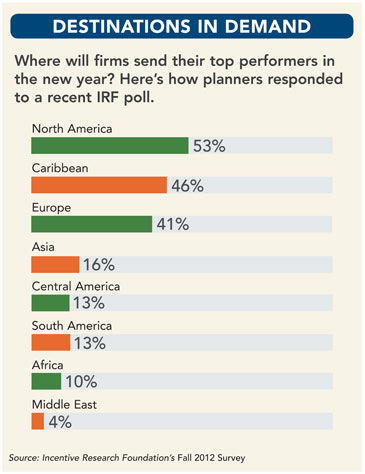
North America is the top choice for incentive travel, according to 53
percent of IRF survey respondents. The Caribbean is the second-most
popular (46 percent), followed by Europe (41 percent).
Warm-weather
spots in North America, especially Cancún, the Riviera Maya and
Hawaii, appeal most to McVeigh's clients, says Randy Hunt. "Europe has
been a challenge, with airfares often higher than the ground portion of
the incentive program itself," he notes.
Hunt also notes that Caribbean cruises and all-inclusive properties are popular due to their perceived value.
Use
of social media will remain strong. Sixty-two percent of IRF survey
respondents use social media tools or techniques to enhance incentive
programs. More than a third (36 percent) use gamification in their
contests and programs. The experts contacted for this article believe
the use of social media for incentive-related purposes can only increase
in the foreseeable future.
Procurement will increase in
influence. The involvement of firms' procurement and purchasing
departments with incentive travel programs is expected to increase to
"some degree" in 2013, according to 51 percent of respondents to the IRF
survey.
By Lisa A. Grimaldi
Conference Centers: Revenue Up, But New Product Lags
While
the hotel industry overall has been gaining ground in the past two
years, conference centers are rebounding a bit more modestly and were
expected to record a 4.1 percent improvement in revenues in 2012 over
2011 in North America.
 "We've seen continued improvement in
2012," says Dave Arnold, CEO East for PKF Consulting. "Occupancies have
rebounded fairly well, but the only places it's booming is in major
cities in the Northeast, in San Francisco, Houston, Miami. We're now
seeing the ability to raise rates, which is key. Some properties are
almost all the way back to inflation-adjusted levels of 2007."
"We've seen continued improvement in
2012," says Dave Arnold, CEO East for PKF Consulting. "Occupancies have
rebounded fairly well, but the only places it's booming is in major
cities in the Northeast, in San Francisco, Houston, Miami. We're now
seeing the ability to raise rates, which is key. Some properties are
almost all the way back to inflation-adjusted levels of 2007."
"New"
is rare. What's driving some of this improvement is that there are
absolutely no new facilities being built that would fit the strict
Quality Standards of the International Association of Conference
Centers. "The only new supply I'm seeing in dribs and drabs is
university centers, whose owners have the land and the built-in market
to get this done," says Arnold. "Most of the capital is for acquisition
of existing product."
Some markets could shrink. Arnold fears for
the properties in more obscure and rural markets. "Sure, things are
almost across-the-board better than they were at the bottom," he says.
"But in the Midwest, in some of the tougher locations, the business is
stable but it's not growing much more than the rate of inflation." And
there might be some places that won't survive -- out in the woods where
centers just don't have enough business to hold them until the market is
better.
By Sarah J.F. Braley
Trade Shows: Steady Gains, But Wildcards to Watch
Exhibition
industry officials are forecasting continued growth in 2013, after
promising reports from second-quarter 2012. According to the Center for
Exhibition Industry Research, the trade show segment saw an overall
increase of 2 percent for the second quarter, year-over-year, including a
4.3 percent rise in attendance.
"Attendance is a leading
indicator, which means when it goes up, other indicators tend to
follow," says Doug Ducate, CEIR president and CEO. He says that next
year will likely see "a nominal 3 or 4 percent growth." Other
predictions include the following.
World events will matter. The
endangered euro, a potential withdrawal of Greece or Spain from the EU,
and/or a slowdown in China would all have a major impact on the global
economy and, consequently, global exhibitions, says David DuBois,
president and CEO of the International Association for Exhibitions and
Events. As such, Ducate and DuBois both are "cautiously optimistic" for
growth for exhibitions at best. "Unless the GDP gets stronger," says
Ducate, "our industry will muddle along at this 2 to 3 percent growth a
year."
Renovations will outpace new centers. On the facility
front, only two new-builds are expected to emerge in 2013, the Music
City Center in Nashville and the Cleveland Medical Mart & Convention
Center. But other developments include newly expanded space at the San
Jose (Calif.) Convention Center and the Ernest N. Morial Convention
Center in New Orleans, both to debut next year.
"We're probably
going to see another dip after these bigger projects are done and more
of an investment in secondary and tertiary markets as they try to
compete," says Todd Voth, senior principal and partner at Populous, an
architecture firm currently working on convention center projects in San
Antonio, San Jose, Oklahoma City and Los Angeles.
Voth says
planners can expect more interesting social and customer-friendly spaces
in convention centers that allow attendees to connect better than
before. "The market is starting to reflect the interests of a younger
generation," notes Voth, "and facilities must meet those needs."
By Michael C. Lowe
The Future of the Planning Profession
As
in other industries, professionals in the meetings realm must find new
ways to prove their value to their organization's bottom line, which
means adding new skills to their repertoire. Here's a look at how the
nature of meeting planning -- and meetings themselves -- are likely to
evolve.
The rise of specialists New technologies and increased
emphasis on experience and engagement will help usher in an age of
specialists who can bring specific, in-depth expertise to meetings.
"The
event industry doesn't have much in the way of defined roles," says
Rohit Talwar, CEO of Foresight Research and consulting firm Fast Future
and author of the IMEX Power of 10 study on the future of meetings. "But
we may begin seeing titles like 'Learning Architect,' a person who
would focus on providing engaging content and speakers, or 'Digital
Strategist,' who would be in charge of building an event's community and
communicating an event's brand."
These new positions, adds
Talwar, means planners just starting their careers can find holes where
talent is needed in cutting-edge areas like social media, and focus on
becoming experts from the outset.
Proving Roi The effort,
still in its formative stages, to "prove that meetings offer long-term
economic impacts that reach farther than just the tourism revenues
generated during the event" will remain imperative, says Talwar.
Smaller meetings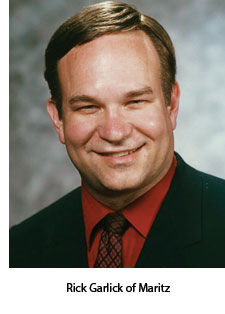 Planners
can expect to see a move toward more regional meetings that might be
linked by teleconferencing instead of major national events, "because of
concerns over loss of productivity and travel costs," says Rick
Garlick, strategic consultant with Maritz Research Hospitality Group and
lead researcher for HSMAI's Future of Meetings report. "Face-to-face is
not going away, but it will continue to be modified."
Planners
can expect to see a move toward more regional meetings that might be
linked by teleconferencing instead of major national events, "because of
concerns over loss of productivity and travel costs," says Rick
Garlick, strategic consultant with Maritz Research Hospitality Group and
lead researcher for HSMAI's Future of Meetings report. "Face-to-face is
not going away, but it will continue to be modified."
Smaller
meetings also will mean an opportunity for smaller spaces and more
unique venues to grab market share from their larger counterparts. "Such
properties can cater to a group's specific needs or provide a more
specialized function," notes Garlick. This also is good news for
secondary or tertiary destinations that don't have convention
facilities.
Both Talwar and Garlick agree that technology will
continue to play a key role in the development and implementation of
meetings. As Talwar notes, "It's important for planners to stay on top
of new developments and find a network of other planners who can share
new ideas and trends."
By Michael C. Lowe