Primed for the New Rules

As stipulated in the federal Physician Payments Sunshine Act,
pharmaceutical and medical-device companies were supposed to make their
first reports this March 31, based on all expenses related to
health-care-professionals in 2012. But numerous delays have occurred,
and as of press time the Centers for Medicare & Medicaid Services
had yet to issue a final ruling that outlines just what those reporting
requirements are.
As a result, companies in the field have had to be proactive in their
data collection, anticipating what they will need to report. "I speak to
many independent planners who plan for multiple pharma, medical-device
and biotech companies," says Pat Schaumann, president of St. Louis-based
Meeting IQ and the founder of the International Medical Meeting
Professionals Association. "They are the first to admit that each
company is doing this differently."
Strategic meetings management consultant Debi Scholar, above, president of
Scotch Plains, N.J.-based Scholar Consulting Group, notes the
discrepancies in interpretation of the law. "For example," says Scholar,
"let's say there is a health-care professional meeting, and a meeting
room costs $3,000. Some pharmas might divide the cost of the meeting
room among all of the attending health-care professionals, whereas
others do not consider the meeting room cost as part of the amount that
must be calculated for health-care professional expenses. Without
documented standards in place, each pharma can interpret their
compliance to regulatory guidelines slightly differently." -- M.J.S.
Strategic meetings management programs have been a best practice among major medical and pharmaceutical companies for nearly 20 years. But in the past year or so there's been a renewed emphasis on SMM, thanks to passage of the Physician Payment Sunshine Act, a key part of the federal Affordable Care Act.
"It's something that's getting a lot of attention," explains Steve O'Malley, senior vice president of St. Louis-based Maritz Travel. "That's because there's a great deal of liability attached to it, it's complex, and it affects everyone in the pharma and health-care sectors," adds O'Malley, who also serves as general manager of Maxvantage, the Maritz strategic alliance with American Express that offers SMM expertise.
In short, the Sunshine Act requires any companies that manufacture drugs or medical devices to report to the federal government any and all payments to health-care professionals and hospitals. These "transfers of value," as the act calls them, include travel expenses, consulting and speaking fees, grants, samples, royalties, food and possibly other forms of payment, depending on how the law is interpreted. The government plans to post the reported payment information on a public website, readily accessible by anyone who wants to see how much any given doctor is receiving from medical manufacturers.
Companies in the pharmaceutical and medical-device sectors have long been subject to guidelines, as well as a slew of state regulations, regarding such payments and interactions. Still, the Sunshine Act has major ramifications for medical meeting professionals, holding them to still more stringent levels of data collection and reporting, and making it absolutely essential to report information on a per-attendee basis.
"There is more reason now than ever before to look at strategic meetings management solutions," notes Pat Schaumann, president of meeting-services providers Meeting IQ and Present China, as well as the founder of the International Medical Meeting Professionals Association.
A strategic meetings management program is typically a company-wide initiative that involves many stakeholders -- the meetings team as well as travel, procurement, risk management, legal, technology and others -- to standardize various aspects of the meeting approval, sourcing and contracting process. The goal is to capture as much meetings data as possible and increase the efficiency of planning processes as well as leverage with suppliers, while also mitigating company risk. Particularly crucial to health-care companies is the ability to produce detailed reports as a result of the effort. "They incorporate so many components that we're now required to track anyway. And now there are penalties, fines and even, in some cases, jail for a violation. So it really becomes a companywide issue with respect to meetings," says Schaumann.
Meetings Under a Microscope
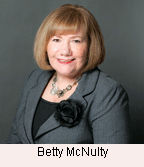
The interest in meetings spend at med/pharma firms is increasingly
becoming more pronounced throughout each company, says Betty McNulty,
general manager, enterprise, of the ACTIVE Network Business Solutions Group. "Procurement has always had a seat at the table with
respect to our SMM solutions," she notes. "But especially in the Life
Sciences sector, there is a greater participation of various areas in
the organization." From procurement to sales and marketing to finance
and R&D, it's crucial that each has detailed data, especially with
respect to interactions with health-care professionals. "It really spans
across all of the different operating areas that have a vested interest
in how these meetings and events occur," she explains, "especially over
the last year or two." -- M.J.S.
A fresh imperative to keep records
The impending reporting requirements are acting as a catalyst for SMMP
development in health-care fields, explains Debi Scholar, president of
the Scholar Consulting Group in Scotch Plains, N.J. That's notable, says
the strategic meetings management expert, because SMM currently is
taking a backseat to tactical meeting planning in many other industries.
"Meetings are picking up and hotels are filling up," Scholar points
out, "but resources are rarely being added to meetings programs right
now. Planners are being asked to do more with less, and it's becoming
hard for people at many companies to find time and resources for
strategy planning. But the pharma industry is the main exception to this
trend; because of the Sunshine Act, they just can't afford to put SMM
on the back burner."
That's despite the fact that medical-meetings professionals still are
awaiting the final requirements on just what must be reported and how.
The Centers of Medicare & Medicaid Services, the government entity
charged with stipulating the precise requirements, could issue that
ruling by the end of this month. Companies originally were supposed to
file their first payments report by March 31 of this year; while that
will almost certainly be delayed, the companies must nevertheless have
been collecting, for the past year, all potentially relevant data to
ensure they are ready to report when charged to do so.
In the meantime, "Most companies have the bones of an SMMP in place, or
at least the inklings of it," Steve O'Malley says of the health-care
firms he works with at Maxvantage. The biggest pharmaceutical clients --
ones his company has been serving for many years -- have some of the
most mature and robust SMMPs in any industry, says O'Malley. The
challenge now, he notes, is processing all of the payment data they're
required to collect: "We've got this whole new stream of data. How do we
put it all together in a way that makes sense? How do we get the best
holistic view so that it's actionable and useful to each company, in
addition to being reportable?"
The need to take a basic SMM program to the next level is something
O'Malley says is coming up in nearly every discussion with prospective
clients these days. "Many really don't have a grip on the right kind of
data that they need to fulfill reporting requirements," he says. "In
many cases, companies purchase technology they think will give them all
the information they need. But buying the technology alone is not an
SMMP. You also have to have the people and the processes in place to get
what you need from that technology."
Representatives from Active Network and Cvent, two major providers of
such technology, say they're seeing more clients looking beyond
piecemeal technology tools. "We're dealing a lot with companies that are
either implementing SMMPs or have an SMM focus," says Lisa Palmeri, a
former pharma planner who is now director of professional services at
Cvent. "They're looking for an end-to-end solution to help them automate
their meeting policies, meeting processes and standard operating
procedures."
However, unlike the largest firms, many small to midsize pharma and
medical-device companies have only recently realized the importance of
SMM, notes Debi Scholar. "Many have not taken it seriously," she says,
"and because the Sunshine Act requirements were delayed again, some have
been able to skirt the implementation of technology and SMM plans a
little longer."
Such lack of concern worries James Vachon, associate director of
corporate meetings and conventions for Millennium Pharmaceuticals, whose
events, meetings and conventions group serves the 1,100-employee
biopharmaceutical company in Cambridge, Mass. While the meetings program
at Millennium enjoys the full support of its parent company, the
Japanese pharma giant Takeda, Vachon has been disheartened to see far
less support at many other small pharmas -- and, in some cases, the
dissolution of meetings groups altogether.
"When you have organizations that don't understand the value of groups
like ours," notes Vachon, "and they don't see the benefits of an SMMP,
you have to ask the question: How are you managing the liability that
comes with all of these regulatory guidelines that you have to follow
and the compliance issues that we have to be conscientious of? A company
can be opening itself up to an enormous amount of liability if it's not
working with the right people. When you don't have a group within the
organization to define who those right partners are, it could be,
especially in this day and age, really detrimental."
Progress without centralization
While the traditional idea of an SMMP often entails some amount of
centralization in meetings management, the case of Millennium
Pharmaceuticals -- in which a subsidiary operates a strategic meetings
program with some degree of autonomy -- is fairly typical in the
health-care industry, according to Cvent's Palmeri. "Most of our
health-care clients are decentralized in terms of their meeting-planning
function," observes Palmeri. "There might be a small core of shared
services that provide some meetings-related support and may be
responsible for writing policies and such, but the actual planning
operation is happening throughout the company in different pockets."
That's due to a number of factors, says Palmeri, including the
prevalence of mergers and acquisitions, the geographic dispersion of
many global companies and the diversity of product lines within many
health-care firms, where the various divisions might have wildly
differing business processes and goals. "They realize that standardizing
all of their meeting processes in these kinds of organizations is
probably not realistic," she notes.
Instead, Palmeri finds that the best practice that has emerged across
many companies in these fields is to look for consistencies among
divisions, rather than imposing them, and use the technology to
standardize those consistencies. "So if they always have to get some
kind of fiduciary approval for a meeting, and if that's the same in any
part of the organization, then they're looking to use the technology to
standardize and streamline that -- even if after that point they have to
branch off into other processes," Palmeri says. The important thing,
she adds, is that they capture information and streamline, to whatever
degree possible, interactions with health-care professionals and, to a
lesser extent, the meetings-approval process.
They then roll that out in a phased, gradual approach. "They're seeing
benefits and they're getting wins from this approach, whereas if they
waited to try to do something more holistic and all-encompassing, they
wouldn't have a success story to tell," says Palmeri. "It's a way to be
able to start building momentum, getting traction on a program that we
know takes years."
Global expansion
Despite the inherent challenges, notes Steve O'Malley, many companies
are now looking "to find ways to enjoy the savings and risk mitigations
that they're now getting here in North America, where SMMP is a
well-developed practice, and extend that overseas to the other largest
markets they serve."
Lisa Palmeri likewise has noted the global push. "This is much more
prevalent than it was three to five years ago," she says. And an even
more recent trend: "We're actually seeing companies based outside of the
U.S. rolling out SMMPs and then expanding them to North America. That's
a switch from what we've seen historically; but we're seeing a growing
familiarity with SMMP in Europe and, to a lesser extent, in Latin
America. It's still emerging, but it's a trend that more and more
markets are embracing."