Crafting Accessible Presentations
To help everyone in the room benefit from educational sessions,
provide speakers with the PowerPoint guidelines offered by the
Association for Education and Rehabilitation of the Blind and Visually
Impaired, available at
bit.ly/9FD0yc. The document covers three aspects
of a presentation that must be considered: the verbal presentation,
handouts (including Braille versions) and any materials that will be
posted online.
In June 1990, a wheelchair-user facing steps to enter a meeting room or a hearing-impaired attendee in need of an interpreter had little legal recourse to have their needs met. One month later, all of that changed when the Americans With Disabilities Act became law.
Over the ensuing 20 years, there has been plenty of back-and-forth between many parties, testing the meaning of each letter of the law. The result: a massive revision of the ADA, which was enacted on Sept. 15 of this year.
The new regulations narrow some of the requirements, after businesses tried to avoid compliance and individuals tried to push the ADA envelope. For example, some facilities made the accessible seats the worst in the house, and some people showed up at hotels and events with exotic animals posing as their "service animal," says Salome Heyward, a disability management consultant in Plymouth, Mass., who provides legal guidance and training to colleges and employers on the ADA and other civil-rights statutes.
The challenges have been effective in fine-tuning the law, she says. "You don't want to make one side happy -- you want to make everybody angry to the same degree. That's how you know you've found the middle ground."
Compliance with the revised ADA regulations is required within six months (by March 15, 2011) for the easier changes, and with 18 months (March 15, 2012) for the more structural changes. Title III of the ADA applies to public accommodations, which includes hotels and convention centers, and the events that take place at such venues. The changes address fitness facilities, pools, spas and golf courses, plus much more strict rules concerning clearance space in bathrooms. The rules also address how hotel reservations are made and require reservations systems to identify the property's accessible features in guest rooms and public spaces.
"It's going to be a challenge for the industry to come into compliance," says Kevin Maher, senior vice president of governmental affairs for the American Hotel & Lodging Association in Washington, D.C. "I don't know if hoteliers want to think about what it's going to cost at a time when they're not making money."
The new rules also address service animals (the scope narrowed to individually trained dogs only, or, in some instances, trained miniature horses) and the kind of assistive transport that must be allowed (wheelchairs, of course, but now also Segway Personal Transporters). A summary of the changes is available from the website of the Department of Justice at bit.ly/dx3l6i.
Also adopted in September were the 2010 ADA Standards for Accessible Design, an analysis of which can be found at bit.ly/c4Z5xE. The standards cover issues such as the accessibility of a facility's main entrance, line-of-sight requirements for accessible seats and measurements for hotel guest rooms.
The DOJ now is looking into regulating guest-room furniture and beds, which troubles Maher. "That affects brand identity," he says.
A Planning Pioneer
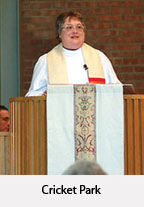
When the Americans With Disabilities Act
became law in 1990, Ciritta "Cricket" Park was working as the deputy
director for the Association on Higher Education and Disability in
Columbus, Ohio. Over the next few years, she and her boss, executive
director Jane E. Jarrow, Ph.D., CAE, became the meetings industry's
experts on applying the ADA, mostly because they had been planning
events for people with disabilities for years. (A 2003 revision of
Parks' 1992 book, Accessible Meetings and Conventions, is available from AHEAD at bit.ly/ctbO4Q.)
"At
first, people were concerned about the financial impact of the ADA,"
says Park, who left AHEAD to start her own consulting business in 1995
and then became an Episcopal priest in 2006. "They wanted to be sure
they weren't going to be sued. They didn't want to have to spend too
much money. Institutional planners wanted to be sure the hotels were
accessible, and hotels wanted to be sure programs were accessible.
Neither one of them wanted to do the other's job."
Today, Park
notes, "People still are looking for loopholes so they can get out of
spending their money. There still are issues with regard to programming.
For instance, now that distance learning has taken off, are people's
websites accessible? Is the classroom setting online as accessible to
someone with a visual or hearing impairment?
"There still is an
opportunity for people with disabilities to be part of the American
dream," Park adds. "We're all in this together, and everyone has gifts
to bring to the table."
Room for improvement While great
strides have been made in the past two decades, many in the disability
community wish facilities and meeting hosts would go even further.
"We
have seen a pretty consistent improvement in Braille labeling of
elevators and the use of tactile numbers," says Ike Presley,
Atlanta-based national project manager for the American Foundation for
the Blind. Presley, who is visually impaired, feels that facilities have
done nothing to make navigating corridors easier for people with low
vision. His wish list includes having access to detailed venue maps
electronically and signage with large letters that not only sharply
contrast with the background (white letters on black, for instance), but
also takes into consideration the wall color behind the sign (e.g.,
dark wall, light-colored sign, dark letters).
On the plus side,
Presley finds that employees in venues and hotels have become more
sensitive. "It's been a while since I saw a hotel employee grab
someone's cane and try to lead them," he says.
Facilities and
events also have become more welcoming for members of the Knoxville,
Tenn.-based Amputee Coalition of America, whose population includes
43,000 veterans who have lost a limb (interestingly, mostly from
vascular disease and diabetes, not combat).
"In 2011, we're
going to the Westin Crown Center in Kansas City [Mo.] because they have
grab bars in the showers, the clearance in the bathrooms is adequate and
they have a great entrance," says ACA president and CEO Kendra Calhoun.
She adds that the group, whose largest event hosts 1,000 attendees,
seeks hotels with an adequate number of accessible rooms and bathrooms,
as well as easy access to meeting rooms. "I've seen hotels with stairs
going to the meeting rooms and a single elevator," Calhoun says. "When
you're trying to move 1,000 people to a general session, that just is
not going to work."
The host's responsibility
For meeting planners, the number and scope of disabilities to be
accommodated can be daunting. How much accommodation is enough?
Contractually,
according to M&C's legal expert, Jonathan T. Howe of Chicago's Howe
& Hutton, the agreement with the meeting venue or hotel should
outline the responsibilities of each party. "The property covers all
those areas it has control over: the lobbies, the rooms, the hallways,"
explains Howe. "The planner, who is taking over the meeting room, is
responsible for seating arrangements, which should be in compliance with
the aisle-width and wheelchair-access standards. But what often gets
missed are the program aspects. Under Title III of the ADA, the
materials must be available in a way that the person with the impairment
can fully participate in the program."
Knowing how to accomplish
that often requires asking attendees to describe their needs. "If you
ask meeting planners if they have anybody in their group who needs
accommodation at a meeting, they will probably say, ‘We don't have
anybody in a wheelchair,' " says industry consultant Joan Eisenstodt, of
Eisenstodt and Associates in Washington, D.C. "Meeting planners need to
ask attendees, ‘What do you need to participate fully?' "
When
making accommodations, planners must cover all events listed on the
program, including receptions. Notes ADA consultant Salome Heyward, "In a
conference environment, most of the work gets done during those social
gatherings. Not providing accommodation is just another way to deny
people access to what is offered. If it's not important, why did you
talk about it in the brochure?"