The relationship between planners and hotels is like a pendulum
perpetually swinging in slow motion between buyers' market and sellers'
market. Today, as the worst of the recent recession fades into history,
the bar is shifting back to the supplier side, with an uptick in room
rates and tighter availability. What's different this time, however, is
that just as market forces are changing, the traditional concept of room
blocks is being challenged in fundamental ways that could affect how
planners do business for years to come.
Defined by the APEX
glossary as the number of sleeping rooms attributable to one event, room
blocks have long been a staple of meetings and conventions. Besides
guaranteeing that attendees will have rooms at a specific rate for the
duration of an event, blocks are considered the gold standard by
convention centers and destination management organizations when they
evaluate whether they want the business, how much meeting space, if any,
they're willing to allot a group on particular dates, and discounts or
perks they might be willing to extend to the organization.
"Blocks,
in theory, work well," says Robert Mandelbaum, director of research
information services at Atlanta-based PKF Hospitality Research. "They
secure inventory for the planner, and the hotel knows that X number of
its rooms will be sold."
But in the past decade, traditional room blocks -- and delegate behavior -- have undergone a sea change. According to a recent M&C Research poll,
more than half of planners say the number of attendees booking outside
the block has risen over the past two years. The main reason is price:
Attendees can find cheaper rooms, sometimes in the designated hotel
itself, on the Internet.
The web is just one factor contributing
to the fall in popularity of room blocks. Others include attendees'
company travel policies, which might require that they stay in preferred
properties. Or, in some cases, the cost of rooms in the block exceeds
the attendees' spend thresholds. And, of course, there was the recession
and the subsequent buyers' market it created. Planners, knowing there
were plentiful low-cost rooms available, were reluctant to book blocks
for all potential attendees only to expose their organization to
attrition fees for rooms that weren't filled.
"Since 2009, it
was 'cut blocks, cut blocks,' often by 20 and 30 percent," says Dave
Scypinski, senior vice president for Los Angeles-based third-party
planning firm ConferenceDirect. "There were so many rooms available, our
clients weren't worried."
However, as Scypinski and other
industry experts have noted, the seller's market is returning. With
scant hotel development and occupancy rates at upper-tier properties
expected to stay at 70 percent for the next three years, according to
PKF, some planners are rethinking the block-chopping trend, while others
are questioning the need for blocks altogether.
Following,
experts weigh in on the relevancy of room blocks in today's market and
how to make them sustainable models for group housing needs.
Underbooking Woes

As tempting as it might seem to be conservative with room blocks, planners should consider the following caveats.
It's a seller's market. Hotels are filling up again, and they might be less willing -- or able -- to hold extra inventory aside if you need to add rooms at the last minute.
Your alternatives might be few. Metropolitan areas like New York City and Las Vegas have plenty of hotel inventory to accommodate delegates who don't go through the block. But in destinations with limited inventory near a convention center -- e.g., Phoenix and Charlotte, N.C. -- sources warn against cutting the block too much, or attendees might end up at properties 30 minutes from downtown.
Another group might win out. Hotels and convention centers might be less willing to block meeting space for your event if you have a small room block commitment. They might hold out in hopes of selling the space to a group asking for more room nights over the same dates.
Illustration: ©iStockphoto.com/ryccio
Right-sizing the block Per M&C's
poll, nearly half of planners now book smaller room blocks in
anticipation of attendees going elsewhere or booking by other means.
Eighteen percent have stopped securing room blocks altogether for
certain events and advise attendees to make their own arrangements.
Another 17 percent are considering such a move.
Jean-Marc Demers,
deputy executive director of the Westmount, Quebec-based Canadian
Institute of Mining, Metallurgy and Petroleum, has progressively reduced
the block for his organization's biggest annual convention to just
2,000 rooms, down from 14,000 four years ago. The CIMMP's 2008 meeting
was the last time he negotiated a room deal accommodating all attendees
-- then found that most booked rooms on their own.
"We tried to
understand the delegate pattern and came to the conclusion there was no
one single reason they booked outside the block," says Demers. Some were
government employees who could stay only in properties that offered
government rates; others found less expensive rooms via the Internet;
still others booked elsewhere based on their membership in hotel loyalty
programs.
To accommodate such differing patterns, Demers says
the CIMMP offered rooms at a broad range of price points, at a wide
variety of hotels. "Even with that, we got pinched," he says.
Though
his group still numbers 14,000 to 15,000 on the peak night, Demers is
sticking with his 2,000-room block to protect his organization from
financial risk. "We are switching to a two-city rotation -- Vancouver
and Montreal -- and both have plenty of room availability, since no
other major events are taking place at their convention centers during
the same time periods as ours," he says. Also, he starts publicizing the
convention a full year in advance and urges attendees to book ASAP, as
the block won't be expanded.
 Others are mulling a similar
strategy. Gregg Talley, CAE, president and CEO of the Talley Management
Group in Mount Royal, N.J., has not yet cut blocks for the association
events he plans, including the annual convention of Alcoholics
Anonymous. However, he admits, "there is always discussion about it,
even to the point of considering cutting most of the rooms and just
booking enough to accommodate the organizations' key leadership."
Others are mulling a similar
strategy. Gregg Talley, CAE, president and CEO of the Talley Management
Group in Mount Royal, N.J., has not yet cut blocks for the association
events he plans, including the annual convention of Alcoholics
Anonymous. However, he admits, "there is always discussion about it,
even to the point of considering cutting most of the rooms and just
booking enough to accommodate the organizations' key leadership."
Adds
Talley, "I think we are fighting a losing battle as to how people get
information and make arrangements, who they work for, and the
relationships their companies have via their procurement and business
travel departments. It's like the airlines. They used to offer
designated meeting fares, but people found cheaper flights on the
Internet and booked those. The Internet taught everyone that if you wait
long enough, you can be a better shopper and get a better deal. We
can't control that, and it increasingly exposes our organizations to
incredible risk."
But as the hotel market recovers, there's
considerable risk in failing to secure rooms, too. After trimming some
blocks over the past few years, Perry Juliano, director of event
services at SmithBucklin, the Chicago-based association management firm,
is looking to add rooms for many of the meetings and conventions he
oversees for four different groups, including the Building Service
Contractors Association International. "Clients had been conservative
with their blocks," he says, "but now they're scrambling for space. For
the contracts I'm working on now, hotels can meet our commitment but
don't have extra rooms if we need to add to the block. We can then end
up in an overflow situation, spending more."
Juliano isn't
worried that clients who are boosting their blocks will end up with too
much space and paying a fortune in attrition, even for events he's
planning several years out. "We go in with the opportunity, per our
contract, to reduce the block at least once along the way," he says.
"Our contracts typically say we have to fill 80 percent of the final
adjusted block. The key to all this is communicating with the hotel."
Juliano
notes that room blocks often are critical to holding meeting space at
the property, often at little or no cost. "Securing a block also
protects the room rate for participants, since there is no telling if
rates will increase in the future," he says. In cases where plans are
made years in advance and rates might go down significantly, Juliano
advises writing a contract that allows for prices to be adjusted
downward in times of economic recession.
He's not overly
concerned about competition from online booking sites, either. "In
negotiations, we make sure that our block rates are the lowest public
rates around, including on the web," he says. Juliano has had situations
where attendees have found lower prices on the web, but "we have called
the hotels out and they typically take the offer down right away."
Proving value
For years, the room block was the industry standard used by hotels and
convention centers to determine how much meeting space, typically free
or discounted, they'd make available to the group. But with the recent
volatility of such blocks, suppliers and planners are looking for new
ways to determine the economic value and impact of events.
 "If
you want to book a convention center at a certain date, the hotel block
is still the most manageable data for planners to share with suppliers,"
says Greg Ortale, president and CEO of the Greater Houston Convention
& Visitors Bureau. "Some planners believe they should be able to
book their convention space way in advance, before they even block
rooms, but as they typically are not paying full rate for the space, we
may not be able to accommodate them. It's the center's and CVB's
responsibility to ensure that we secure the event with the biggest
economic bang for the community."
"If
you want to book a convention center at a certain date, the hotel block
is still the most manageable data for planners to share with suppliers,"
says Greg Ortale, president and CEO of the Greater Houston Convention
& Visitors Bureau. "Some planners believe they should be able to
book their convention space way in advance, before they even block
rooms, but as they typically are not paying full rate for the space, we
may not be able to accommodate them. It's the center's and CVB's
responsibility to ensure that we secure the event with the biggest
economic bang for the community."
If planners don't book a big
block, or don't have a recent history of room blocks to share with the
CVB or center, Ortale says, one alternative is for planners to share
their attendance lists with suppliers, proving the total number of
attendees to previous events.
Another tactic: The Washington,
D.C.-based Destination Management Association International recently
released a new tool, the Event Impact Calculator, for determining the
value and overall revenue an event can bring to a community.
"I
always contended we need a new model of valuation for meetings and
conventions," says Christine Shimasaki, CDME, CMP, who created the tool.
Shimasaki, the managing director of DMAI's empowerMINT.com, explains
that the calculator loads in dozens of details and revenues directly and
indirectly attributed to a specific event. "It helps CVBs and DMOs
decide which conventions have had the most impact on a destination. It
also helps them understand room-night demand, even outside the block,
and allows them to make business decisions about things like whether to
give $30,000 in rental space for free."
The tool also is
designed to assist planners, who may use it free of charge. "It can help
them to understand the total value of their meeting to their hotel, the
hotel chain and the destination, beyond the room block," Shimasaki
says. (For details, visit destinationmarketing.org.)
Bed fillers No
matter what size block an organization secures, the main objective --
for both planner and hotel -- is to fill the rooms. And that remains a
huge concern. In fact, getting attendees to book within the designated
room block was cited as one of the biggest challenges for one-third of
planners surveyed in M&C's recent poll. But many have found
ways to make it more attractive to delegates who might be tempted to
seek rock-bottom rates online or stay at the two-star property around
the corner.
"There are many sticks and carrots you can use," says
Dave Scypinski. Among tactics his clients have found successful:
early-bird registration rates for attendees who book by a certain date,
and special rates on food and beverage for those who stay at the host
property. A less nuanced approach simply prohibits people from
registering for the event if they don't first book rooms in the block.
 "We
emphasize that they are helping the organization by booking through the
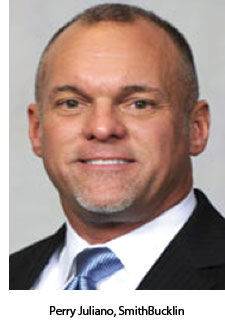
block," says SmithBucklin's Perry Juliano. He also recommends working
with hotels and DMOs to negotiate special amenities, such as waived
resort fees, comped internet access, and discounts at local stores and
restaurants.
"We
emphasize that they are helping the organization by booking through the
block," says SmithBucklin's Perry Juliano. He also recommends working
with hotels and DMOs to negotiate special amenities, such as waived
resort fees, comped internet access, and discounts at local stores and
restaurants.
Todd Ryan, director of sales and marketing at the
Phoenix Sheraton Downtown, recently raffled off a Sheraton signature
Sweet Sleeper bed to help one association client fill rooms in the
block. "It benefits both of us to fill those rooms," he stresses.
Another
strategy involves bundling housing and meeting registration, whereby
attendees get a discount on event registration if they sign up for both
in one transaction. One of the associations Juliano oversees increased
the number of attendees who booked in the block by 30 percent with this
tactic.
Planners should be sure to stress the networking
opportunities, too. "If they stay at hotels outside the block, attendees
will have fewer impromptu networking opportunities, such as organic
meetings in the lobby or bar with colleagues and suppliers," Juliano
notes, "and that's a large part of why attendees come to meetings."