Social responsibility might be a hot concept in the corporate world, but it's long been a principal of the association community.
For two decades, ASAE (formerly known as ASAE & The Center) has honored associations for outstanding community service with its Summit Awards. This year's winners represent groups that provided relief to the Haiti earthquake victims, life-saving care for infants, a statewide campaign against hunger and more.
Following are details on six award-winning programs sponsored by associations.
American Academy of Orthopaedic Surgeons 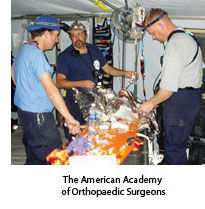 In the aftermath of the January earthquake that devastated Port-au-Prince and surrounding areas of Haiti, this 36,000-member, Rosemont, Ill.-based physician group established a central command center to help deal with the crisis.
Among the group's efforts were creation of a database of members interested in volunteering, and a database of U.S. hospitals willing to receive patients. The AAOS also made contact with various emergency-aid organizations and helped set up and coordinate the delivery of live-saving supplies.
To date, more than 470 of the association's members have traveled to Haiti and provided care to thousands of patients, and another 560 are on call for deployment.
American Academy of Pediatrics According to the World Health Organization, about one million babies die each year from birth asphyxia, the inability to breathe immediately after being born. Many of those deaths can be prevented by simple measures such as keeping the baby warm and suctioning the baby's mouth after delivery. To promote these techniques, the Elk Grove Village, Ill.-based AAP (which has 34,000 members), in conjunction with groups including WHO and Save the Children, started Helping Babies Breathe.
The initiative, launched during the Global Health Council held in June in Washington, D.C., included a daylong training session with 100 international advocates who were supplied with training materials to bring back to their home countries. The program targets the 63 countries participating in Millennium Development Goal 4, which aims for a reduction in child mortality rates by two-thirds from 1990 levels
by 2015.
American Automobile Association  For
90 years, AAA's School Safety Patrol Program has promoted safety and
instilled leadership skills in school-age children. The program
currently includes some 585,000 child patrollers in 30,000 schools
nationwide who volunteer both before and after school to help classmates
get to school safely by manning busy school intersections, parent
drop-off/pick-up zones and school buses, and presenting traffic safety
lessons to their peers. AAA has documented 392 cases since 1949 in which
patrollers saved the life of a child or adult who was in imminent
danger.
For
90 years, AAA's School Safety Patrol Program has promoted safety and
instilled leadership skills in school-age children. The program
currently includes some 585,000 child patrollers in 30,000 schools
nationwide who volunteer both before and after school to help classmates
get to school safely by manning busy school intersections, parent
drop-off/pick-up zones and school buses, and presenting traffic safety
lessons to their peers. AAA has documented 392 cases since 1949 in which
patrollers saved the life of a child or adult who was in imminent
danger.
Food Bank for New York City The
1,000-member Food Bank for New York City's Tax Assistance Program
provides low-income New York City residents with free and low-cost tax
preparation services and information on how to access credits they are
entitled to, such as the earned income tax credit, which alone can be
worth up to $7,637 to families.
Since 2002, the initiative -- one
of the largest programs of its type in the country -- has completed an
estimated 242,000 tax returns for low- to moderate-income New Yorkers,
helping to provide them with a total of $537 million in tax refunds.
Minnesota Grocers Association For
the past three years, the 1,100-member St. Paul-based Minnesota Grocers
Association has partnered with America's Second Harvest Food Banks in a
statewide campaign to increase awareness and raise funds and supplies
to fight hunger. The association works with a partnership of grocers,
industry vendors, consumers and community food-support agencies. To
date, the group has raised more than $1,200,000 and 700,000 pounds of
food to provide nearly 6 million meals; the 2010 campaign is expected to
exceed those results.
For
the past three years, the 1,100-member St. Paul-based Minnesota Grocers
Association has partnered with America's Second Harvest Food Banks in a
statewide campaign to increase awareness and raise funds and supplies
to fight hunger. The association works with a partnership of grocers,
industry vendors, consumers and community food-support agencies. To
date, the group has raised more than $1,200,000 and 700,000 pounds of
food to provide nearly 6 million meals; the 2010 campaign is expected to
exceed those results.
National Business Aviation Association  Spearheaded
by the Washington, D.C.-based NBAA, some 1,000 volunteers from the
aviation community banded together as Corporate Aviation Responding in
Emergencies to coordinate relief flights to Haiti following the
earthquake.
Spearheaded
by the Washington, D.C.-based NBAA, some 1,000 volunteers from the
aviation community banded together as Corporate Aviation Responding in
Emergencies to coordinate relief flights to Haiti following the
earthquake.
The program accomplished much good work, including:
• Bringing in 1,500 people, including doctors and other first responders;
• Transporting food, water and medical supplies to remote areas;
• Evacuating the ill and injured to hospitals in the United States; and
• Serving as a link between relief, religious and medical groups.
The
initiative continues as part of a long-term rebuilding effort. To date,
it has arranged 715 flights with 3,800 passengers and the delivery of
more than 1,400,000 pounds of critical supplies. In all, 125 aircraft
have been activated to help those in need.
With the assistance of
the NBAA, Corporate Aviation Responding in Emergencies has become
incorporated and is in the process of achieving independent association
status.