"The challenge for this industry is to help people on the outside understand what it is that we do," says Bill Reed (pictured) of the American Society of Hematology.
Your job title is second only to your name on your business card, LinkedIn profile, convention name tag -- perhaps even your résumé. It's an important identifier not only of what we do for a living, but, to a large extent, who we are.
That title also influences our professional reputation and opportunities for advancement, insist career coaches and human-resources executives. While they vary greatly from company to company and industry to industry, job titles and responsibilities are tightly interwoven. They set the scene for expectations because they convey an immediate message of where we stand in the business hierarchy and what our responsibilities entail.
That's precisely why "meeting planner" is facing scrutiny by many in our business. While some might argue that it's shortsighted to get hung up on a title, others counter that "planner" is limiting and does it not accurately convey the depth or complexity of the role. Even more problematic, some argue, the title of meeting planner undermines their standing within their organizations and with key outsiders, like potential clients and vendors.
In a recent poll by M&C that drew hundreds of respondents in less than 48 hours, fully 73 percent said they did not believe the title of meeting planner accurately reflects the responsibilities of the job, and 69 percent agree that when they tell someone outside the industry that they plan meetings, "they think I'm a party planner or a travel agent." (Go to Research and online at mcmag.com/research for more.)
"The title is so vague that many people don't understand that meeting planning is a career, a profession, and not just a task," says 20-year veteran planner Kristin Torres, executive director, meetings and events, for the Denver-based National Cattlemen's Beef Association. "It doesn't automatically put you top of mind for leadership when they are looking for managers to have a seat at the table. I am fortunate that my title has always reflected my level within the organization, but many planners simply don't have that recognition."
What's in a name?
In 2014, the study Job Titling Practices was published by New York-based compensation consulting firm Pearl Meyer & Partners. The results, based on data provided by 248 organizations, were both intriguing and confusing. While 80 percent of respondents said job titles are intended to reflect the corporate hierarchy, and more than 92 percent said titles define an employee's role, fewer than 40 percent felt job titles were important and/or expected them to convey authority and responsibility.
But titles absolutely do matter, especially for those considering a new career opportunity, according to Michelle Peters, founder of Superior Township, Mich.-based Resumes Transformed, a full-service résumé-writing, career-consulting and personal-branding firm. One dilemma is that when you've held the same title for years but your job has evolved, the title no longer reflects your skills and experience.
"A job title communicates to the world what you do," says Peters. "It tells potential employers where you're at in your career and what they might be able to expect if they hire you. When you have to explain that you did a lot more than your title implies, you sacrifice prime résumé real estate, and your reader might assume you are not a good fit."
In Colleen McQuone's experience, too much emphasis can be placed on the title of meeting planner, even by those in the industry, particularly hoteliers and destination marketing organizations. Before founding Atlanta-based McQ1 Meetings & Events Services, McQuone was a program manager at a large pharmaceutical company overseeing five planners and an $11 million budget. Yet, when she applied to attend several hosted-buyer events, she was turned down. "Because meeting planner wasn't my title, I didn't have references from hotels that have worked with and knew me, so I didn't get approved," McQuone says. "Are we so blind in this industry that we see the planner role in only the person who signs the contracts? Are we so oblivious? I practically had to demote myself so I could fit into the box they wanted me to on their application forms."
Earning Federal Respect for Event Planning
Some victories for the way careers are perceived are quiet ones -- they don't make the evening news or result in major promotions or industry accolades. This is one of those.
In June 2016, the United States Department of Labor, which had always classified meeting and event planners under its Hospitality and Tourism Competency Model -- along with dishwashers, hotel workers and bus drivers -- made a significant change to its model. For the first time, meeting planners would be referred to as "meeting, convention and event planners," and they would be recognized as a separate business category, distinct from the lodging and tourism sectors.
In reviewing its hospitality classification, the DOL had reached out to Janet Sperstad, CMP, program director for the meeting and event management program at Madison College in Madison, Wis., a program that she founded in 2002. "I have no idea how they got my name," she notes. "I told them that I'm not in the hospitality business -- I'm in event management." The DOL, she says, was intrigued and wanted to know more about what her job entailed.
After reviewing the DOL's industry model, which includes job-specific skills, duties, educational requirements and average annual pay by state, Sperstad knew some major changes had to be made if event planning was to be rightfully broken out as its own sector. "Event planning was so far embedded within the hospitality section, you couldn't even find us," she says. "And when you finally did, it was based around event services, like catering."
To help educate the DOL, Sperstad called on Marsha Flanagan, vice president of learning and experience at the Washington, D.C.-based International Association of Exhibitions and Events, for assistance. Together they compiled a dossier of best practices, including the requirements for the certified meeting planner (CMP) and certified in exhibition management (CEM) designations, which they felt were key to addressing major gaps in the DOL competency model.
Sixteen months and dozens of emails and conference calls later, Sperstad knew she had finally made headway when "one of the senior directors at the DOL looked at me and said, 'There is a big difference between an exhibition and a trade show.' I realized they were finally getting the nuances of event planning and were understanding our role."
Sperstad is not wasting any time on moving the needle even further. "Actually, I'd like to see us moved out of hospitality and into business and marketing. That's where we belong," she says. "It almost doesn't matter what the title is as much as the competency skills required for the job. We need to raise the literacy about what this profession is. I figure if I am in this fight, I may as well swing for the fences."
Playing up strategy
What should meeting planners be called? According to the M&C poll, which supplied four options and allowed for fill-in alternatives, 61 percent chose "meeting and event strategist," 29 percent opted for "business and event strategist," and 13 percent identified with "event strategist." Significantly, 29 percent wrote in their own suggestions (the fourth choice), which included event director; event experience producer; business meeting strategist; and manager, strategic meetings and events, among others.
Candid write-in comments, however, came down squarely on both sides of the debate. "I'm not really sure, and that's the issue," commented one planner. "We do so much that whatever title we use, it should reflect what we contribute to the bottom line. I love the word strategist being part of the title, but I have grown weary of the word event. Anyone can call themselves an event planner. That devalues us as true professionals."
Others argued:
• "Sorry, but everyone who plans meetings isn't a strategist, and it dilutes the value of the title for those who are strategic vs. those managing just the tactical aspects."
• "I'm not convinced that strategist is the best word. I find even that too limiting and too trendy."
• "I like strategist, but that makes it even harder to describe what we do! We are logisticians, consultants and planners. Most people's heads would explode at strategist!"
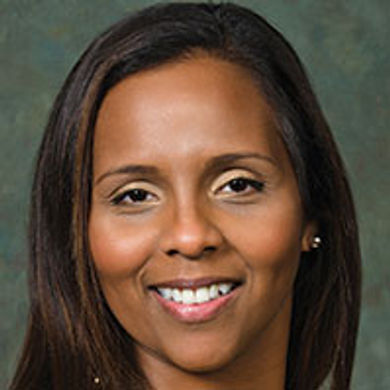 Monique Rochard-Marine
CMM, CMP, CTSM
Monique Rochard-Marine
CMM, CMP, CTSMMonique Rochard-Marine, CMM, CMP, CTSM (for Certified Trade Show Marketer), captures all of those concepts in her title: senior manager, meetings, events and trade shows, for St. Paul, Minn.-based Cardiovascular Systems, Inc. The term meeting planner doesn't suffice for her responsibilities overseeing a high-end meetings budget and creating high-profile events that drive the company's brand culture and build strong client relationships. Under her direction, meetings at the medical-device company have been restructured and rebranded, and employee retention has dramatically increased.
"Our actions and our roles are strategic," notes Rochard-Marine. "We operate at a director level, but we are viewed as an administrative function, so we can't justify the higher title. But we are way more than administrative. We are the magicians who make what seems impossible possible. And at the end of the day, we make sure everyone is happy, without them knowing what we've been through to get to that end point."
Kate Demarest, CMM, CMP, is not sold on any industrywide title switch that includes the word strategist. "I think too many planners believe the details translate into value/promotion," says the director of global events for Atlanta-based NCR, a provider of consumer-transaction technologies. "To be a successful leader, you have to separate from the details of event management and bridge to the value of business management. Title changes won't do it, and they can undercut the value of those who do separate the tactics of events from the strategy of face-to-face marketing."
Meeting planners have been complaining about their titles for more than 30 years, according to Dave Lutz, managing director of Aurora, Ill.-based Velvet Chainsaw Consulting. Actions speak louder than titles, he says. "Title alone will not change how people view you. The ideas that you bring to the table and your actions will. So, don't just sit in the meeting and take notes. Add to the conversation. Logistics can be outsourced, but the more you get involved in the learning end that leads to performance, that's what gets leadership's attention."
"I feel very strongly that this conversation is an important one," says Bill Reed, CMP, FASAE, senior director, meetings and community engagement, for the Washington, D.C.-based American Society of Hematology and immediate past chair, board of directors, for the Professional Convention Management Association. "But we have to make sure the message does not get conveyed that being a meeting planner is less or lower than something else. Because a brilliant event strategy without well-done logistics is a disaster, and vice versa."
Association vs. Corporate
A related issue to the "what should I be called" debate is the perceived division between association and corporate meeting planners. To understand how the role of meeting planner is viewed from the C-Suite, PCMA recently held several focus session with CEOs of associations. The outcome, said PCMA board chair Mary Pat Heftman (pictured), was enlightening. Not only were the CEOs vocal on the value they place on the skill sets of meeting planners, they also wanted to know how to keep training their people, so they could retain them.
"We have to stop thinking of association events as different from those of corporations," says Heftman. "Because, regardless of your tax status, the purpose of meetings and events is to strategically deliver a message that resonates."
Battling perceptions
In 1994, when Dallas-based Meeting Planners International changed its name to Meeting Professionals International, it was in reaction to a seismic shift in the meetings industry. The intent at that time, the organization explained, was to recognize an audience that played critical roles beyond that of meeting planning. That included audiovisual professionals, marketers, destination management companies and others.
Paul Van Deventer, MPI's current president and chief executive officer, who took the organization's helm at 2013, says it also was a tactical move to elevate the perception of the planning profession. "It was the beginning of a recognition that acknowledged that although logistics are critical, there is so much more beyond meeting planning that is not seen or appreciated," he notes. "If we want to justify this industry or our roles, we have to be aware of the ROI that meetings and live events produce, and the planners behind them. There is a real thoughtfulness behind the strategic planning of events."
But MPI's name change only went so far. In M&C's poll, 84 percent felt that the meetings industry should make an effort to better position the planning profession as highly strategic.
"The challenge for this industry is to help people on the outside understand what it is that we do," says Reed. "We have been talking to ourselves for too long. We have to demonstrate to the outside that when you are a meeting planner, it is about vision, return on investment, branding -- and not only whether the floral centerpiece was beautiful. I run a $40 million business, so to equate me with a wedding planner is an insult."
In Rochard-Marine's view, "the underlying problem is that meetings are always part of something else, like marketing, procurement or operations. The list goes on. The way I see it, meetings need to evolve to a specialized department that is all about meetings and events -- where they can stand on their own and not be questioned."
Van Deventer says MPI has made a concerted effort in recent years to broaden its educational content beyond logistical programs to a curriculum offering more courses on branding, strategy and creating an event experience. Eighteen months ago, the organization launched a new master experiential series, which it markets to senior planners involved in festivals and sporting events. "It is a much bigger, complex opportunity for planners to learn, and the response has been phenomenal," says Van Deventer. "It is broadening our audience and getting us involved in new areas of the industry."
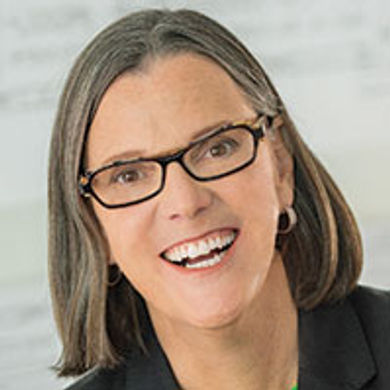 PCMA board chair Mary Pat Heftman
Mary Pat Heftman, executive vice president, convention and strategic alliances, for the Chicago-based National Restaurant Association and current chair of the board of directors of the Professional Convention Management Association, says the job-title debate is front and center at PCMA and has been building for years. "What gives me pause about 'meeting planner' is it is used in such a wide swath across an entire industry made up of trade shows, private events and corporate events of every size, scope and strategic priority," she says. "Yes, it's reflective of a part of our industry, namely logistics. But not of the entire business."
Heftman says PCMA already has begun transitioning away from meeting planner to event strategist, and is using it more often in communications and marketing. "We think it encompasses the work so many of our members are doing, and it also translates to people who are not in an actual traditional planning role but are responsible for events," she says. "I think as individuals, we have an opportunity to make sure our role is seen as much broader, with a higher profile, than just the planning function."