Naomi Romanchok, CMP, is a veteran independent planner who has seen it all, from the hilarious to the harrowing. It was the latter that occurred on a sunny day in Bermuda not long ago, during a golf event she organized, when a participant, an older man, had a heart attack at the seventh hole. Thanks to Romanchok's calm ability to react appropriately during an emergency, the man was made as comfortable as was possible, calls were quickly made and soon he was being airlifted off the course to a nearby hospital. Fortunately, he survived.
"Once you get over the shock that this thing is happening, your mind kicks in and you pull all your experience out of the bag," says Romanchok, who is based in Fairfax, Va., and taught meeting planning for 10 years at Northern Virginia Community College. It helps that she is armed beforehand with a contingency plan, which she tweaks after each incident (one year, she had five meetings in a row where she had to handle a medical emergency).
Unfortunately, too many meeting professionals are not well prepared. According to this month's M&C Research poll (see "On-Site Emergencies"), 40 percent do not have an emergency-response plan for their events, and 40 percent neglect to review their facility's disaster-response plans.
Of course, at any type of gathering, there are countless ways that something could go horribly wrong. A bus could crash, a person could fall down a flight of stairs, a freak storm could flood the meeting space. Planners have to be prepared for anything.
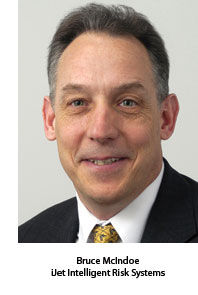 "An emergency is when you have an incident that requires external resources outside of your own ability to manage or that has external visibility," says Bruce McIndoe, president and co-founder of the Annapolis, Md.-based risk-management firm iJET Intelligent Risk Systems. "A crisis is an incident that has escalated to where it can impact the finances or reputation of the organization." The number-one element that interrupts a meeting is weather, says McIndoe, followed by transportation incidents, slips and falls, and petty crime.
Where We Go Wrong
Here is risk-management firm iJet's list of excuses -- and solutions.
The organization does not know what to do in an emergency. Don't be reactive. Get a basic plan in place and know where to get help.
Out-of-date contact numbers. Get cell, home and office numbers, and e-mail addresses you'll need in an emergency. Periodically update.
Primary/backup persons are unavailable. Get multiple backup contacts.
Cell phones don't always work. Locate a pay phone. Rent satellite phones for rural assignments. Verify the facility's public-address system.
Third-parties are left out of the loop. Talk to your vendors and include them in all emergency planning. Run drills.
No response resource retained. Who would you turn to for a threat against an employee? A car accident? Make a list of incident types and answer the question, "To whom should I turn?"
Protocols are not maintained. Plans need to be reviewed at least annually. Train staff on procedures and review prior to each event.
Protocols are too complex. Streamline. In an emergency, you will only have time for the basics.
Inconsistent skill level on the team. Get training for the team that will be called on to deal with crises.
Cost sensitivity delays response. Deal with where the funds will come from before the event. Any delay can increase costs and cost lives.
When weather strikes Washington, D.C.-based
consultant and independent planner Joan Eisenstodt is one of the meeting
world's greatest proponents of having an emergency plan in place; she
learned this lesson early in her career with relatively minor incidents,
such as needing to switch hotels on the fly when the association she
was working for discovered its rival opposites were holding an event at
the same place over the same dates. She began preparing for every
eventuality. So while Eisenstodt didn't expect a tornado in Minneapolis
at one meeting, she had a plan in place when the warning was sounded.
"I
got on the radio and told the center's staff to get everyone out of the
meeting rooms and into the designated gathering point -- the exhibit
hall," she says. "We also had assigned a channel on the event radios
that would work in any emergency." Attendees were kept informed
throughout, until an all-clear was sounded and the tornado passed
without touching down.
Planners need to operate with that "what
if" mindset and act calmly, Eisenstodt adds, having seen her share of
meeting professionals stymied by "crises" that were minor problems and
easily solved. It's important to act swiftly and decisively, she
stresses: "You deal with the people first, and then you move forward."
Bruce McIndoe was at an event in San Diego when a 5.6-magnitude earthquake
hit, shaking the conference center and stunning the attendees, sending
them for the doors. "The conference organizers wanted to make an
announcement about what people should do, but nobody knew where the P.A.
system was at the venue," he says. "It took them 30 minutes to make an
announcement." Lesson learned: Once you determine that a facility has
the right amount of space for your group, find out what its emergency
plans and resources are.
What would happen in case of a tornado,
hurricane, earthquake or fire should be outlined in your contracts and
should be modified for each meeting, depending on your destination. As
M&C's legal expert, Jonathan Howe, principal of Chicago's Howe &
Hutton firm, has said in these pages, in the wake of 9/11 and
hurricanes such as Katrina and Rita, the force majeure clause has become
more crucial than ever. (To view a sample clause, go to
mcmag.com/webexclusives.) This paragraph allows both the group and
the hotel to cancel an event without any monetary penalty. It should
outline the steps the selected facility will take (including emergency
medical attention and evacuation) in the event of a disaster, whether
natural or man-made.
Howe also suggests separating acts of God
clauses, which address events outside of human control, from force
majeure, rather than lumping them in the same paragraph. "You really
don't need an act of God clause in the contract," he says. "If a hotel
is damaged, the court has no ability to force the owner to rebuild it in
time for the meeting."
Howe suggests putting partial force
majeure language in the contract. "Let's say people in Duluth can't get
to the meeting because of a severe winter storm, but you want the
meeting to go forward," he says. "Put in the contract that in the wake
of a storm, you won't have to pay for the people who can't make it."
And
in the planning process, particularly for outdoor events, outline
details for canceling or postponing. Sandy Biback, CMP, CMM, who runs
Toronto-based Imagination+Meeting Planners Inc., tried her best to
convince a client that this was important, to no avail, and the result
was an extra disaster. On the morning of the event, a first-time
fundraiser held in western Ontario, Biback woke up to no power -- she
had slept through a tornado. Her client insisted on proceeding, even
though all the vendors and entertainers were willing to postpone for a
week. "We found some generators, the band went acoustic and we found an
old-fashioned loudspeaker," says Biback, "but it was all a failure -- no
money was raised." It's difficult to pull the plug at the eleventh
hour, but, she stresses, sometimes it's the smartest move.
Weather
problems come in myriad guises. Think exposure to 100-degree F days on
the golf course (have plenty of sunblock, water and hats to hand out)
or outdoor evening events when the temperature drops (hot chocolate,
blankets and maybe a jacket as a giveaway item).
"Unfortunately,
planners get pushed into situations where they want to take advantage of
low rates in certain destinations at a risky time," says McIndoe. He
cites a meeting in Colorado Springs, Colo., that hosted an evening event
with a Renaissance theme. "It was out in this field in September, and
it was colder than anyone had expected. They opened up a tent and had
about 200 blankets. Problem solved. Had they not done that, people might
have gotten hypothermia or left earlier."
Of course, no one can
predict how bad a snowstorm actually will be or what path a hurricane
eventually will take. In fact, the National Hurricane Center won't even
release until later this spring its predictions for this year's season,
which runs from June 30 to Nov. 30. But keeping an eye on developments
via the Weather Channel or related mobile-device app is paramount, as is
knowing how you will answer attendees' questions about hotel rooms,
flights and the meeting itself if the weather takes a turn for the
worse.
Preparing for Medical Emergencies
The two parts of an
M&C checklist adapted from Julia Silvers'
Risk Management for Meetings and Events can be found at
bit.ly/fRmSay and
bit.ly/foEHTk. Here are a few of Silvers' points:
• Create an event-specific risk assessment identifying hazards and possible emergency medical needs, evaluating areas such as attendee demographics, the event's purpose, activities and site features.
• Events with fewer than 500 attendees and close to a medical facility typically require only that staff member(s) trained in first aid be present.
• Consider hiring an EMT for events of more than 500 people. For events in the thousands, use a ratio of one EMT for every 1,000 to 3,000 people.
• Events involving strenuous or risky activities, at-risk attendees, special circumstances or individuals (e.g., VIPs or performers), or other risk factors should consider hiring on-site paramedics, registered nurses or physicians.
• For large events or expansive event sites, set up numerous medical aid posts (e.g., first-aid stations, on-site ambulance, infirmary and/or mobile hospital).
Urgent medical problems To
devise a plan that effectively meets the challenges of a medical
emergency, start with the basics. "It's easy," Romanchok says. "How far
is the nearest hospital? Where's the nearest 24-hour pharmacy? What's
the emergency-response time for your facility?"
Certainly, when
someone at a meeting needs immediate medical attention, dialing 911
comes first. But it also helps if several people on staff have first-aid
training. Romanchok has taken Red Cross classes and knows how to use an
AED (automated external defibrillator), a skill that came in handy at
an event when the singer in a band complained about chest pains and a
shooting pain in his arm just before performing. "Someone was calling
911 while I was using the AED," she says. The singer ended up in the
hospital, but the band went on as planned.
"What you do first is a
function of where you are," says McIndoe of iJet, who thinks all
meeting professionals should be certified in CPR and know how to use an
AED. "Being in a cruise meeting or at a hotel or in the Australian
Outback clearly dictates what resources you have available. Those first
few minutes literally can be life-saving."
Before the event,
planners should designate a staff person in charge of identifying areas
of trouble and evaluating the site with an eye to safety. McIndoe
assigns what he calls a "safety pup," someone who has a reputation for
seeing problems before they happen. "This person should walk the venue
and think about all the things that could go wrong, looking for sharp
edges, uneven surfaces, walls, or step-offs without a barrier or
handrail," he says.
Being alert during the event can help keep
one accident from multiplying. "I once was at an outdoor gathering on a
lawn, where they had set up bars and food stations, and there was a
200-foot-long area that was two steps down with no hand rails," McIndoe
recalls. A woman talking in a group of people backed up without looking,
fell backwards, and broke both her arm and her ankle. Later, four more
people were injured on those steps. "That was incredibly negligent on
the part of the planner, who should have put up a barrier once the first
incident happened," McIndoe notes.
The worst-case medical
scenario, of course, is when someone dies. Planners should understand
that in this instance, it's not in their purview to play coroner. "If a
person is limp and nonresponsive, call 911 immediately," McIndoe says.
"Maybe the person is revivable, time being the critical factor.
Hopefully that's done in parallel with starting CPR, not making any
layman's assumption that the person is dead."
In situations where
it is crystal clear that a person has died, experts say it's important
to avoid disturbing the scene, control the area around the person and
call the authorities. But also have knowledge of who in your group is
the correct person to contact the family, and who to tap as the
organization's spokesperson if the media becomes involved.
The Worst That Can Happen
In October 2008, the ultimate catastrophe took place at a gun show near Springfield, Mass.: An eight-year-old boy aiming a 9-mm micro-Uzi at some pumpkins killed himself when the gun kicked back, spraying bullets. The legal outcome of that tragedy was just decided this January, when the show organizer, former Pelham, Mass., police chief Edward Fleury, was found not guilty of involuntary manslaughter and three counts of furnishing machine guns to minors in the death of Christopher Bizilj.
Fleury told reporters after the verdict that he would not return to law enforcement and is considering a new career path, such as nursing. According to news reports, Carl Guiffre of Hartford, Conn., and Domenico Spano of New Milford, Conn., who supplied the guns for the expo, are charged with involuntary manslaughter for their role in the death and are awaiting trial. The father, Charles Bizilj, was not charged; prosecutor William Bennett said he had suffered enough.
Think on your feet
One planner, who asked to remain anonymous, will never forget her
experience on Sept. 11, 2001. She was in Reno to set up a show. "I had
started the day in the hospital, ironically, as I had thrown my back
out. Watching TV, I saw the second plane hit the tower, and I jumped out
of bed. I knew it was going to be one of those days."
Suddenly
she had to deal with the minute-by-minute horror of the unfolding news,
including the death of a staff member on the plane that hit the
Pentagon, even while juggling the complex logistics of her show. "It was
just chaos," she says.
First, she met with the staff to make
some decisions -- go forward with the meeting? With the exhibits? Cancel
and file an insurance claim? "We canceled the exhibits but we did go
forward with the sessions, albeit on a much more somber note," she says.
She and her team met regularly as the situation evolved and took care
of issues as they arose, even bringing in a local clergyman to help
attendees handle the grief.
Joan Eisenstodt believes planners
should take improvisation classes -- as she has done -- to get better at
handling the unforeseen. "Most planners do very badly with the little
things -- the paper cuts, I call them, like the coffee break is late and
they flip out," she says. "Improv teaches you to think on your feet, to
carry the thought forward." And that ability, along with first-aid
training, can help planners manage when unfolding situations threaten to
spiral out of control.
Tip: For M&C's checklist on "Emergency Plan Components," go to bit.ly/e5PfJL.