 A good way to get young professionals more involved in your association is to organize a volunteer committee with a mandate to create initiatives that will cater to the interests of the under-30 crowd. "We like to create events that appeal to young professionals as well as find a way for them to be heard in our association so they feel like they're being listened to," says Lauren Hefner, vice chair of ASAE's Young Association Executives Committee. Here is her five-step process for starting such a committee:
1. Assess the need. "First, look at your industry and find out how many young professionals are a part of it," says Hefner. "Member surveys are a good start, but you can also use free resources like checking out industry Facebook pages or LinkedIn networks." If the industry demographic strongly favors an older crowd, then it might not be worth it to invest in programs geared toward Millennials.
2. Involve the board. Once the research is done, present your findings to the association's board of directors. "Getting the board involved is important because they not only have the final say whether the committee gets approved, but they also can provide support and insight," says Hefner. "Don't be afraid to involve industry veterans in the young professional's team. They force us to take a step back and really think about our ideas."
3. Create a business plan. Building a strategic plan of action is crucial to determining the committee's (and ultimately the association's) goals when it comes to involving young professionals. Hefner suggests using metrics, which will largely depend on your association's specific goals, to evaluate the committee's progress down the road. "It's important to know what success looks like so you'll know when you reach it," says Hefner. Tapping established programs from other associations to determine best practices and goal setting is one way to get started.
4. Call for volunteers. Reach out to young professionals in your association and throughout the industry to join the committee, though it's important to think outside of the box. "Make sure you're not just using the normal channels to reach them," says Hefner. Social media is always a good arena when it comes to Millennials.
5. Show support. Once the committee is up and running, it's important for the association and board to acknowledge and support its presence. "The needs of young professionals are often different from those of industry veterans who may be in senior positions, so it helps to be flexible and understanding," says Hefner. "Unlike members in other committees, they might not have the time, money or resources to meet in person on a monthly basis, so allow them to chat via webcast or on a conference call."
The After-Hours Party for AllWill young
meeting attendees go to planned nighttime events or strike out on their
own? The planner's challenge is to make affiliated events appealing to
all ages.
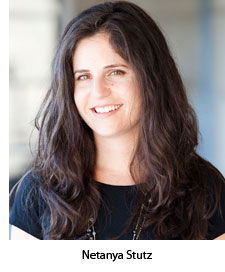 Netanya Stutz, senior marketing manager of the American
Hotel & Lodging Association, has organized an annual event called
"Not Your Boss's Party," meant for young meetings professionals at
several of AHLA's national conferences. Below are her tips for making
the event a must-go:
Netanya Stutz, senior marketing manager of the American
Hotel & Lodging Association, has organized an annual event called
"Not Your Boss's Party," meant for young meetings professionals at
several of AHLA's national conferences. Below are her tips for making
the event a must-go:
1. Choose a desirable setting. An
empty room at the convention center might be convenient, but it's not
going to make people excited to come. Instead, pick a trendy pub, hotel
bar or outdoor venue. If a member has office space to host events,
that's another great way to keep it relevant and help attendees make
industry connections.
2. Subsidize costs. Picking up all
or part of the tab will help attendees focus on socializing rather than
their bill at the end of the night. "Many young professionals aren't in a
place in their career where their jobs will pay for them to attend
networking events, so cost should be minimal," notes Stutz. One good
tactic is to provide two drink tickets per attendee, or arrange for the
venue to offer a happy hour or drink specials.
3. Mix and mingle.
The host sets the tone for the event, so it's important to mingle with
others even if it's more comfortable just hang out with familiar faces.
"As the host, introduce yourself to others in the room, and introduce
people with similar interests," says Stutz. Look for those standing
alone and bring them into a group. Remember, the purpose is to make
everyone feel welcome.
Other Casual Events for Young Professionals As
chair of Metro Edge, a young professionals' association in Sacramento,
Calif., Alexis Fitzpatrick, 30, tries to organize "events that are more
open, where a suit and tie are not necessary." Some examples:
As
chair of Metro Edge, a young professionals' association in Sacramento,
Calif., Alexis Fitzpatrick, 30, tries to organize "events that are more
open, where a suit and tie are not necessary." Some examples:
• Lunchtime forums.
These $15 educational sessions are deliberately low key. "We keep it
very casual and allow people to bring their own lunch, depending on the
location," says Callista Wengler, chair of the events and networking
committee for Metro Edge. "We also try to cap the events at 30
attendees, because young people are more apt to stand up and ask
questions if there aren't 200 people starring at them."
• Trivia night.
Metro Edge holds a quarterly trivia night at a local bar for members to
mingle and test their knowledge. Attendees are randomly grouped into
teams, which forces them to interact. Questions can range from general
knowledge to industry-oriented to city-specific. "It's much less
intimidating to talk to new people when you are in a small group and you
are working together toward a common goal," says Wengler. "It's also a
great way to get to know people outside of the basic 'what do you do for
a living' type questions. A person's knowledge on a particular subject
can say a lot about where their interests lie."
 • Sports tournaments.
To raise money for their charity, the Junior Achievement of Sacramento,
Metro Edge organized a dodgeball tournament and supplied beer and food
from the restaurant Chipotle for players. "It's always easier to connect
when you share a common goal with someone, even if it is beating
someone else," says Wengler, who notes that such outings tend to be more
appealing to a younger, more active crowd. To help ease the logistics,
Wengler suggests seeking out a local recreational league, like XOSO Sports in Sacramento.
• Sports tournaments.
To raise money for their charity, the Junior Achievement of Sacramento,
Metro Edge organized a dodgeball tournament and supplied beer and food
from the restaurant Chipotle for players. "It's always easier to connect
when you share a common goal with someone, even if it is beating
someone else," says Wengler, who notes that such outings tend to be more
appealing to a younger, more active crowd. To help ease the logistics,
Wengler suggests seeking out a local recreational league, like XOSO Sports in Sacramento.