Planner Deborah Borak, SMMC, relies heavily on web-based
site-selection tools to source hotel venues, and she's not alone -- 73
percent of respondents to this month's M&C Research survey
(page 20) called the online RFP process either extremely or somewhat
helpful. "Having these tools available now has saved an immense amount
of time," says the director of global accounts for ConferenceDirect in
Denver. Indeed, the online automation of sites such as McLean, Va.-based
Cvent and San Diego-based StarCite provide planners with robust search
functionality over enormous global databases of hotels. Borak
acknowledges some inefficiencies and potential drawbacks to the online
request-for-proposal process, but the time saved vs. the old fax and
manual-entry methods is extraordinary, she says. "To have these tools
now is fantastic."
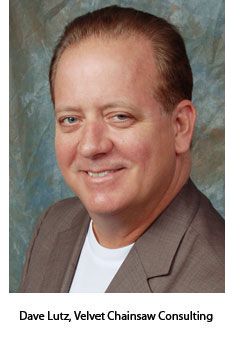 But what Borak sees as hiccups, others see as
portents of doom. "We have a big problem," consultant Dave Lutz asserts,
"and if we don't stop the momentum, where we're going is not
sustainable."
But what Borak sees as hiccups, others see as
portents of doom. "We have a big problem," consultant Dave Lutz asserts,
"and if we don't stop the momentum, where we're going is not
sustainable."
Lutz, the managing director of Velvet Chainsaw
Consulting, moderated a panel discussion about online RFPs, or e-leads,
at the Cvent Corporate Meetings Summit held this past March, where he
expressed deep concerns about the sheer volume of leads coming through
the various online platforms. Because these tools make it easy to
include as many hotels as a planner wishes for just one event RFP, sales
forces are being overwhelmed with leads they might have little chance
of closing.
Representing the hotelier perspective on the panel
were Doreen Burse, senior global account director for Bethesda,
Md.-based Marriott International; Michael Dominguez, vice president,
global sales, for New York City-based Loews Hotels and Resorts; and Eric
Mannino, executive director of lead generation for Nashville-based
Gaylord Hotels.
"I really believe that group business should not
be commoditized," Lutz says. But blanketing a market with in excess of a
dozen RFPs does just that, the way he sees it. "Hotels start throwing
lower-level resources against selling, because their RFP volume requires
it. The more this business moves toward commoditization, the more we're
going to lose the professionals who made a difference when meetings
really mattered."
Mike Mason, CEO of online-sourcing platform
Zentila, says hotels are struggling with what he characterizes as "lead
spam." "Planners can send an RFP to 40 or 50 hotels at once," Mason
says, "and salespeople have to guess how real the lead is. They can
spend all their time now just responding to online RFPs, and even then, a
lot of online submissions just sit there, and the loop is never
closed." Zentila, a relatively new tool, limits the number of RFPs that
can be submitted for one meeting to eight hotels.
Crafting a Better E-RFP
The key to creating a worthwhile electronic request for proposal is to be as transparent and complete as possible. Such was the advice provided at Cvent's recent Corporate Meetings Summit. Following are some specific tips.
Discuss flexibility. If you're flexible with respect to dates or space, state that up front, advises Eric Mannino, executive director of lead generation for Nashville-based Gaylord Hotels. This will save hotels from pitching possibilities that don't meet your needs.
Tell them your decision date. At a big-box hotel, there might be 20 salespeople selling to their respective markets. "We are all fighting for that same space," notes Mannino. "Knowing when you
will make your decision can help me sell that internally."
Provide history. "What is your historical meeting spend, F&B and out-of-room spend?" asks Mannino. "Will attendees typically eat on-site and network? It's the total value of your meeting that's important to us."
Tell them why. Provide some detail to explain your needs. For example, "Let us know that you need to get quick information because you're presenting tomorrow," suggests Michael Dominguez, vice president of global sales for New York City-based Loews Hotels and Resorts. "Even if you're looking at 13 sites, we want to understand why. Any time you can answer the question 'why?,' you're going to get a better response from us because we understand what you're looking for."
Pumped-up volume Planners
sending RFPs through Cvent do so to an average of 13 hotels per event,
the company says. And hoteliers are definitely noticing an increase in
electronic requests. The number of e-leads Marriott received last year
was 44 percent higher than in 2010; half of all the group RFPs Marriott
currently receives come from online channels. Marriott's closure rate on
those RFPs, however, is 50 percent lower than for what comes through
the more traditional channels of phone or e-mail.
"I'm not
saying that's a bad thing, per se," says Marriott International's Doreen
Burse. "We love leads, but it's forced us to take a look at the way
we're deployed, and how we manage the e-lead process."
Marriott
is able to respond to every RFP, says Burse, but only through what she
calls "e-lead triage." Someone receives the lead and must quickly
determine where the RFP is to be routed and the priority it will have.
"We're going to handle a complex, three-day, multi-venue meeting very
differently than we would 20 rooms for two nights," she adds.
Likewise,
New York City-based Loews Hotels has had to dedicate more resources to
better organize and respond to the influx of leads, notes Michael
Dominguez. "It's become a cost of doing business for us," he says. "But I
don't look at it as a big problem, I just look at this as a process
that we're all learning." There are worse problems to have, Dominguez
adds, noting that "in '09, nobody was talking about how we had too many
leads coming in."
Playing the field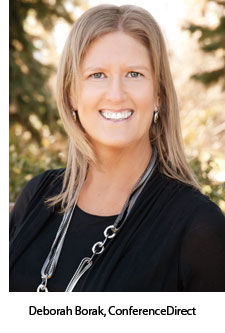 In Cvent's March panel, there was a general implication that the
proliferation of e-RFPs was driven in part by inexperienced planners --
that contacting so many properties for a bid indicates a lack of focus.
But that isn't necessarily the case, says Deborah Borak. She admits to
exceeding Cvent's 13-property average and confesses she tends to contact
16 or 17 hotels with an e-RFP. "It depends on the group," Borak says.
"For an association convention that could utilize any of those
properties, yeah, I think you have to do your due diligence for the
client."
In Cvent's March panel, there was a general implication that the
proliferation of e-RFPs was driven in part by inexperienced planners --
that contacting so many properties for a bid indicates a lack of focus.
But that isn't necessarily the case, says Deborah Borak. She admits to
exceeding Cvent's 13-property average and confesses she tends to contact
16 or 17 hotels with an e-RFP. "It depends on the group," Borak says.
"For an association convention that could utilize any of those
properties, yeah, I think you have to do your due diligence for the
client."
The key, explains Borak, is how you're using the
platform. If she's contacting 17 hotels, she isn't going to ask them for
a lot of specifics. "I don't need to know exactly what meeting room
you're putting them in," she says. "I just need to know that you have
space, and that you have the dates available, and what's your rate out
of the gate. And then the rest of this stuff we'll start getting into a
little deeper once we narrow the list down, and we come back and really
start the negotiation process."
Borak says that fully one-third
of the properties she contacts typically can't accommodate the group.
"So even if you're sending out 16 or 20 RFPs, you've now dropped down to
the average. I can't send RFPs to six hotels and then have five of them
not have the availability."
"Maybe there needs to be two parts
to the process to get to a short list before we get to the detail,"
acknowledges Loews' Dominguez. "If you're only sourcing four to six
hotels, it's fairly reasonable to be asking for a lot of information. If
you're looking at 13 to 18 hotels, it would be much better to say
rates, dates and space."
It's incumbent on both sides to be clear
and concise. "Hotels say they're getting too many RFPs, but sometimes I
get bids from hotels that make me wonder why they're even taking the
time to respond," says Borak. Even when she is very specific about space
or rate requirements, she often receives responses that fall well
outside of what she requested.
"Just give me the dates, rates and
space," reiterates Borak. "You don't have to include your menus. I
mean, the number of hotels that list every item that's on their
continental breakfast? It's a waste. I think if they really read the
RFP, and made sure they were responding based on what I asked for, it
wouldn't be that overwhelming."
Similarly, having misleading
details in the online hotel profiles is extremely inefficient, says
Borak. Too often properties might list themselves in the wrong
geographic area or as having facilities that aren't actually on-site.
"If the information isn't correct in there, then it's a waste of time
for everybody," she notes.
Relationship matters
At the heart of electronic RFP effectiveness, or lack thereof, is really
the same stuff that has defined planner-hotelier negotiations all along
-- the nature and strength of the relationship. Learning how that
relationship can thrive through these technology channels, though, is
what the industry still is figuring out.
"I utilize technology
for almost everything," says Katja Morgenstern, CMP, senior project
manager with Meeting Consultants in Atlanta, Ga. "But when it comes to
sourcing venues and I have the opportunity to have that personal,
one-on-one interaction, I like to use that."
Morgenstern thinks
platforms such as Cvent are valuable for preliminary research,
especially for cities she's not familiar with, but when it comes time
for the RFP and decision-making, "I would much rather do one-on-one
contacts, or use a DMC I'm used to working with that knows my needs and
will only source my meeting to select venues."
When those venues
don't have space they often recommend an alternative, Morgenstern adds.
"By talking to them I'm still developing the relationship, and they're
more willing to help find another venue, even if it's with a competitor,
simply because they know that you've thought of them and they want to
help you." Morgenstern believes she gets better treatment and
negotiating leverage when she contacts venues directly.
Hotelier
Michael Dominguez doesn't think technology need supplant that
interaction. However, he says, "if you are waiting to build a
relationship until the RFP is delivered, it's too late. You've missed
it. The idea is to get on the road and know that customer. If you
already know who we are, you're going to know what you're buying from
us. Then I'm not concerned about the lead process."
Deborah
Borak agrees that timing is everything. If she doesn't have a
relationship with the property already, immediately upon submitting an
e-RFP isn't the best time to get chatty. "I still get those calls, where
they say, 'I just wanted to reach out and say hi,'" she explains. "When
we get to the short list, I'll reach out to you and have that
conversation. First I just really need you to respond."