Forty-nine of the top 50 markets will suffer the effects of falling hotel-room occupancy rates in 2009, according to a recent report by Atlanta-based PKF Hospitality Research. But broaden that snapshot to take in the multitude of second- and third-tier cities that comprise the heart of America, and a different picture emerges -- a much brighter one.
While major-league cities were enjoying double-digit room rate increases and near-capacity occupancy levels over the past five years, many smaller destinations were quietly plugging away at downtown revitalization projects and new infrastructure to bolster their offerings. Many of them finally are ready to strut their stuff.
There is no better time than now for planners to look at these cities, says Chad Church, manager of industry research for Hendersonville, Tenn.-based Smith Travel Research. "In the last five to 10 years, some of the smaller destinations have really focused on their appeal," he notes. "They are building convention centers and improving their hotel product. This downturn may prove to be an opportunity for them to lure business away from the major players."
According to Michael Gehrisch, president and CEO of Washington, D.C.-based Destination Management Association International, major hub cities that depend largely on corporate traffic will lose out the most in 2009 as corporations cut back on air-travel spend. The next in line, he notes, will step up and deliver. "I think the smaller cities that are the centers of universities or that have strong state government, like Austin, will do quite well, because unlike the majors, which rely largely on corporate travel, they will remain insulated," says Gehrisch.
What's more, he adds, because many second- and third-tier cities are considered drive-to markets, they will attract even more regional meetings. "The falling price of gas increases the interest in holding regional meetings, which is going to be very strong again," says Gehrisch. "Because they aren't paying for a rental car, people won't mind staying on a day or two to explore. All these budgetary considerations add up and increase the destination appeal of these cities."
After conducting in-depth research and consultation with several lodging research analysts, M&C has selected the following as cities ready and eager to capture planner attention in the coming year.
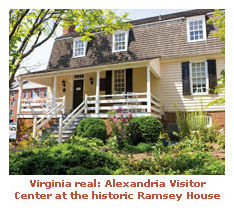 Alexandria, Va.
Alexandria Convention and Visitors Association
(800) 388-9119; visitalexandriava.com
With more than $200 million invested in new luxury hotel development and upgrades of existing properties in the past two years, Alexandria is poised to step out of the shadow of its more powerful neighbor, Washington, D.C.
Last January, San Francisco-based Kimpton Hotels & Resorts opened its first area property, the 241-room Hotel Monaco, with 8,000 square feet of meeting space, and also took over management of the historic 48-room Morrison House. This March, Kimpton will add the 107-room Lorien Hotel & Spa in the city's historic Old Town section. In addition, last November, the 319-room Westin Alexandria opened with 20,000 square feet of meeting space.
Alexandria also has become a magnet for new culinary talent. Dublin transplant Cathal Armstrong, owner of both Restaurant Eve and Eamonn's–A Dublin Chipper in Old Town, was named one of Food & Wine magazine's best new chefs last July. Morou Ouattara, a contender on the Food Network's Iron Chef series, has skipped across the Potomac River from D.C. to open his own Old Town eatery, Farrah Olivia.
While Alexandria is close enough to our nation's capital (about six miles) for visitors to tap into a wealth of world-renowned attractions, the city has made a name for itself as an art destination. AmericanStyle magazine has consistently named Alexandria to its list of top 25 midsize destinations in the country.
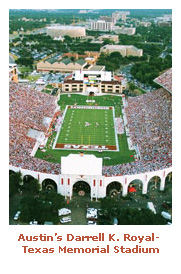 Austin, Texas
Austin Convention & Visitors Bureau
(800) 926-2282; austintexas.org
Both a college town and a major technology center (more than 3,300 technology companies are located here, including Dell Inc.), Austin is the nucleus of the Central Texas economy.
In recent years, the city's central business district has undergone a major revitalization, and its tourism sector has seen tremendous growth in new hotel, retail and cultural development. In fact, the city has so many major projects in the pipeline -- among them a new federal courthouse, various hotels, a public library, an art museum and an expanded MetroRail system -- that last May, Forbes magazine named Austin number three in its top-10 list of recession-proof cities.
In 2008, Austin beefed up its roster of cultural attractions. The 3,000-seat Bass Concert Hall at the University of Texas Performing Arts Center completed a $14.7 million renovation, and the highly anticipated Long Center for the Performing Arts, home of the Austin Symphony Orchestra and Ballet Austin, opened on the site of the old Palmer Auditorium on the shores of Lady Bird Lake. Meanwhile, the Austin Museum of Art has unveiled plans for its new 40,000-square-foot home, which will be part of a multipurpose downtown development.
Several hotel projects are in the pipeline, which will bump downtown Austin's room count from 5,200 to 7,000 by early 2010. White Plains, N.Y.-based Starwood Hotels & Resorts Worldwide will open two new properties this year -- a 120-room Aloft and a 250-room W hotel. Last December, Starwood broke ground on the 340-room Westin at The Domain, which will feature 13,000 square feet of meeting space and is expected to be completed in 2010. In addition, plans are on the table for a 300-room Westin with 15,000 square feet of meeting space, to be located in the city's Warehouse District, and a 1,000-room Marriott with 50,000 square feet of meeting space, which will serve as a headquarters hotel for the Austin Convention Center.
 Bloomington, Minn.
Bloomington Convention & Visitors Bureau
(866) 435-7425; bloomingtonmn.org
When the Mall of America opened in the summer of 1992, this Midwest city, which lies between its more famous neighbors, Minneapolis and St. Paul, became an overnight mecca for shoppers. But there is much more to Bloomington than retail.
Recent economic investment projects in the "third Twin City" include a new light-rail transit system connecting Minneapolis/St. Paul International Airport to the Mall of America, with several of Bloomington's hotels within walking distance of one of the stations. The former Grand Lodge at the Waterpark of America, with 5,300 square feet of meeting space, was renovated and rebranded a Radisson. And in January 2008, the new 257-room Hilton Minneapolis/Bloomington opened with 9,000 square feet of meeting space.
And at a time when airlines are cutting routes and capacity, Bloomington stands to benefit next month, when Southwest Airlines begins service between Minneapolis/St. Paul and Chicago's Midway Airport, out of which Southwest serves a total of 50 cities.
Bloomington also prides itself on a commitment to open spaces. One-third of the city (8,000 acres) is designated parkland, and it is home to the Minnesota Valley National Wildlife Refuge, one of only four urban wildlife refuges in the country.
This August, Bloomington will host the 91st annual PGA Championship, to be held at the prestigious Hazeltine National Golf Club, one of three professional golf courses in the city.
M&C Web Exclusive: The Charms of Chattanooga
Once considered one the country's most polluted cities, a result of its metals manufacturing industry, Chattanooga, Tenn., has since become a poster child for eco-friendly destinations amid more than $2 billion and two decades of downtown development. The city recently took the number-three spot on RelocateAmerica's top 100 places to live.
As part of Chattanooga's massive $120 million Waterfront Redevelopment project, which included a $30 million expansion of the Tennessee Aquarium and a $20 million expansion of the Hunter Museum of Art, more than 22 miles of once inaccessible riverfront have been reclaimed for public use, and a fleet of electric shuttle buses runs between downtown hotels, restaurants and attractions. This also is a very walkable and cycle-friendly city, with pedestrian-only bridges, trails, and passageways connecting the city to the riverfront and 28 miles of bike trails.
Central to the city's downtown revitalization was the $50,000 expansion and greening of the Chattanooga Convention Center -- the facility uses natural light, fresh-air ventilation and a rooftop system that collects rainwater for irrigation -- which increased total exhibit space to 100,800 square feet.
Other projects abound. Construction is under way on BlueCross BlueShield of Tennessee's new $300 million headquarters and on the state's first LEED-certified, mixed-use development. Last July, German automaker Volkswagen, citing Chattanooga's commitment to the environment, announced it had chosen the city as the place to build its new $1 billion assembly plant, which it expects to be fully operational by 2011.
Chattanooga also is in the midst of a lodging boom, with six new hotels poised to open by year-end 2010, including a 120-room Hotel Indigo, a 134-room Hampton Inn and a 109-suite Residence Inn with 5,000 square feet of meeting space. In addition, the new 186-room Doubletree Hotel Chattanooga opened last November with 11,000 square feet of meeting space.
Contact: Chattanooga Area Convention & Visitors Bureau, (800) 322-3344; chattanoogafun.com -- C.A.S.
 Durham, N.C.
Durham Convention & Visitors Bureau
(800) 446-8604; durham-nc.com
For
the past 40 years, Durham has made a name for itself as a premier
medical research center. Today, with 36 percent of the city's total
payroll generated by the health-care industry, its title as the City of
Medicine is well deserved.
The accolades won in 2008 are even
more impressive: America's "foodiest small town" (Bon Appétit), best
place to retire (Black Enterprise), number-three best place to ride out
a recession (BusinessWeek) and number-16 best green place in America
(Country Home).
A portfolio of new hotel developments will add
1,101 rooms to the city by year-end 2011, bringing Durham's total room
count to 8,553 rooms. Scheduled to open later this year are the
125-room Hotel Indigo, the 105-room Four Points by Sheraton and a
100-room Courtyard by Marriott. Opening in 2010 is the 150-room Element
Raleigh-Durham International Airport as well as a 207-room Westin.
Durham
also has added to its rich list of cultural attractions and expanded
its airport. Last November, the $45 million, 2,800-seat Durham
Performing Arts Center opened. And in October, Raleigh-Durham
International Airport unveiled phase one of its new $570 million
Terminal 2. When completed in 2011, the terminal will include 40 shops
and restaurants, as well as six commissioned works of art. In June of
this year, Delta Airlines will begin daily nonstop service between RDU
and Paris-Charles de Gaulle International Airport.
 Indianapolis
Indianapolis Convention & Visitors Association
(800) 323-INDY; indy.org
If there were a competition among cities for the title of overachiever
of the decade, the winner would be Indianapolis, the country's 13th
largest city, which has poured billions of dollars into ramping up its
infrastructure, including an expansion of its convention center,
construction of a new sports stadium, growth in hotel inventory and the
unveiling of a new terminal at its airport.
The Indiana Convention Center is on target to complete by 2010 an
expansion that will increase its exhibit space to 566,000 square feet.
Last August, the new 63,000-seat Lucas Oil Stadium, home to the state's
Indianapolis Colts football team, added another 179,000 square feet of
meeting and event space that is connected to the convention center by a
covered walkway. In November, Indianapolis International Airport
unveiled its new $1 billion terminal, parking garage and two additional
runways, and approved $8 million for a supporting hotel.
Indianapolis also is an easily traversed city. More than two-thirds of
the 6,000 downtown hotels are linked by skywalks. Meanwhile, the city
is in the midst of a hotel boom that will increase its inventory by 5
percent, more than double the 2.2 percent average national growth,
according to Smith Travel Research. In the pipeline is a $425 million,
four-hotel downtown development. The project, which will total 1,623
rooms, will include a 1,005-room JW Marriott, which will feature 40,500
square feet of meeting space.
Some organizations already have noticed the changes. In November 2008,
the National Collegiate Athletic Association selected Indianapolis as
one of the cities to host the women's basketball Final Four tournaments
from 2012 through 2016, to take place at the newly renovated NCAA Hall
of Champions.
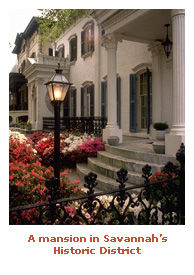 Savannah, Ga.
Savannah Area Convention &Visitors Bureau
(877) SAVANNAH; savannahvisit.com
Key to Savannah's appeal as a meetings and tourism destination are its
stately antebellum mansions, ornate ironwork and Southern hospitality.
In November 2008 it was ranked eighth on Condé Nast Traveler magazine's
list of top travel destinations in the United States.
But this Southern gem has seen continued investment in its hotel and
meeting facilities since the opening of the Savannah International
Trade and Convention Center in 2000, which gave it substantial clout.
In 2008, two new hotels opened: the 97-suite Cambria Suites and the
63-room TownePlace Suites Savannah Airport. The 246-room Hilton
Savannah DeSoto recently completed an $11 million revamp. On tap to
open in 2009 in the city's historic district is the 151-room Avia
Savannah and the 75-room Bohemian Hotel at Savannah Riverfront.
Adding to its destination appeal is Savannah's walkability. Most of the
city's meeting hotels are within walking distance of numerous
restaurants, entertainment venues, galleries, antique shops and
nightlife. In October 2007, the city's Hilton Head International
Airport opened up a new $35 million parking facility that increased its
parking inventory to 3,690 spaces.