Embracing disruption: Joe D'Alessandro, president and CEO of San Francisco Travel, helped forge a promotional partnership with Airbnb.
The exponential growth of the sharing economy is in full swing as more consumers effortlessly hail Uber rides, book Airbnb rooms and vacation in home rentals via the likes of HomeAway and FlipKey. The unprecedented success of these services has left many cities struggling with how to regulate them, while local hospitality and taxi companies cry foul. Now, the pushback that began as a homefront battle at the city level has morphed into an unfolding global confrontation. Among some recent developments:
• In May, Berlin outright banned Airbnb and any other short-term home rentals in an attempt to protect affordable housing.
• Also in May, at the Global Sharing Cities Roundtable held in Amsterdam, Netherlands, mayors from many major destinations -- including Amsterdam; Athens, Greece; Barcelona, Spain; New York City; Paris; Seoul, South Korea; and Toronto -- met as part of an effort to discuss more than 50 sharing-economy initiatives. An objective was to find common ground on how to regulate the likes of Airbnb and Uber, which are encroaching on local business.
The mayors agreed that a standard rules playbook would give cities a common framework and more leverage, rather than individual destinations approaching the issue on an ad-hoc basis. "Having the 20 or 30 biggest urban markets of the world operating under entirely different rules doesn't do much good for anyone," Wiley Norvell, New York City Mayor Bill de Blasio's communications adviser for housing and economic development, told Bloomberg News. "We want consumers and tourists to have some consistency, city to city." The group of mayors expects to publish its first white paper on the subject this October.
• In France, Uber drivers have faced rioting during taxi strikes, and this past June a French court fined two of the company's top executives for running an illegal transport service using nonprofessional drivers.
• In China, following a series of protests by taxi drivers and several well-publicized raids of Uber offices in several cities by police, who accused the company of operating unlicensed taxi services, the Chinese government in late July issued its first rules for ride-hailing companies. Guidelines were established for registration, fares, driver employment and payment.
Back in the U.S., similar controversies and actions are roiling the ground-transit and hospitality sectors.
A battle takes shape
Earlier this year, residents of Austin, Texas, overwhelmingly voted to drum Uber out of town, because the company refused to comply with city regulations requiring fingerprinting and background checks of its drivers. Uber subsequently threatened to pull out of Houston if the same regulations were enacted there.
New York and San Francisco, however, are arguably the two U.S. cities where anti-Airbnb sentiment continues to play out the loudest. In the Big Apple, two leading groups -- the 270-member Hotel Association of New York City and the larger and better-funded Washington, D.C.-based American Hotel & Lodging Association -- have kept up a steady barrage of attacks on the home rental company, which is now valued at $25 billion. Each association has commissioned separate reports in the past year to bolster its cause, while intensifying lobbying efforts in the halls of city and state government to push for regulation.
In October 2015, the HANYC released a report it had commissioned, titled Airbnb and Impacts on the New York City Lodging Market and Economy, conducted by Mineola, N.Y.-based HVS Consulting & Valuation. It pegged Airbnb's negative impact on the city's lodging industry at $2.1 billion, and claimed the city had lost out on some $450 million in lodging tax revenue as well as $226 million in tax revenue for local, state and federal governments during the 12 months from Sept. 1, 2014, through Aug. 31, 2015. Airbnb struck back at the report, insisting that because of New York State's "outdated" laws, the lodging service did not have the authority to collect and remit taxes, something it is now doing for multiple cities around the world, to the tune of US$88 million in 2015.
This past January, AH&LA took a different tack, releasing a study it had commissioned at a cost of $100,000 that found nearly 30 percent of Airbnb's revenue, some $116 million, in 12 major U.S. markets was generated by illegal rentals -- hosts operating as full-time commercial landlords who skirt city-mandated fire and safety regulations and take affordable housing out of already tight housing markets.
As Paul Sacco, president and chief executive officer of the 1,600-member Boston-based Massachusetts Lodging Association, puts it, "We have the toughest fire, health and safety regulations of most of the states in this country, and we adhere to them, and these folks do not. If you act like a lodging establishment, then you should function like one."
However, in July, just days after saying he would sign a state senate proposal to apply hotel taxes to online lodging services like Airbnb, Massachusetts Gov. Charlie Baker (Rep.) changed his mind and said the proposal was too broad, and that it conflicts with his no-new-taxes goals.
Troy Flanagan, vice president of state and local government affairs for AH&LA, says the escalating pushback is in response to Airbnb's evolution from spare-room rental platform to major hospitality player. "Many cities, counties and states are taking a look at the growing trend of this new lodging platform and trying to figure out what it means to their community," he notes. "And wrapped up in that is tax collection, affordable housing and the impact on jobs."
Innovation Is Disruptive Progress
When Harvard Business School professor Clayton M. Christensen coined the term "disruptive innovation" in his 1995 bestseller, The Innovator's Dilemma, he could not have predicted the rapid growth of today's multibillion-dollar global sharing economy. But he might as well have been addressing the likes of heavy hitters such as Airbnb and Uber. A disruptive innovation, he opined, is one that creates a new market and value network, which eventually disrupts the existing market, displacing established leaders and alliances.
For real progress to be made, disruptors have to be given a seat at the table, believes Don Welsh, CEO of Washington, D.C.-based Destination Marketing Association International. His aim is to include them in helping destinations achieve optimal growth. "The core responsibility of a DMO is to maximize economic impact from all segments of business," says Welsh. "Airbnb is bringing economic impact to destinations through a different channel, and my feeling is we need to embrace them."
Welsh wasn't always such a fan, though. In fact, he admits to having a bias against the online rental company when it first started making inroads in Chicago, where for five years he helmed Choose Chicago, the city's tourism bureau. But he couldn't ignore the data: In 2015, Airbnb users consumed up to 800,000 room nights, which translated into an economic impact of $47 million in the Windy City.
"I believe they clearly played a role in helping us achieve record visitation results, economic impact and new jobs," says Welsh. "Many cities are wrestling with how to regulate them and collect lodging taxes. That's an important issue for DMOs, which are funded to varying degrees by hotel taxes. But I think Airbnb is a vital part of the growth of destinations, whether people are coming for leisure, business or conventions."
At DMAI's annual meeting this past August in Minneapolis, Chip Conley, Airbnb's head of global hospitality and strategy, was the keynote speaker at a general session titled "Embracing Innovation: How Destinations are Figuring out Airbnb and the Sharing Economy." Conley spoke about how his personal hotel experience (he founded Joie de Vivre hotels in San Francisco and still privately owns many other properties) has shaped the company's hospitality program.
Putting laws on the books
While lost revenue sparked the interest of local New York lawmakers, claims of illegal housing ignited a firestorm that ultimately led the state legislature to approve a bill this past June making it illegal to advertise short-term apartments for rent online in New York City. That measure, which would impose penalties of up to $7,500 for offenders, was headed to Gov. Andrew Cuomo's desk for signature at press time.
Airbnb counter-attacked with a post on its website: "While we're disappointed the hotel industry managed to force through this legislation, we were inspired by our community of hosts and guests who spoke out in favor of fair rules for home sharing."
The company says that it will urge Cuomo to reject the measure, which it deems unfair to New Yorkers who they say are being unjustly penalized "simply for listing that they would like to share their homes."
The affordable housing crunch is also playing out in San Francisco politics, with the city taking a strict approach to illegal apartment rentals. Legislation passed on June 7 requires home-sharing companies like Airbnb to list on their websites only those properties that are registered and in compliance with city rental laws, or face a daily fine of up to $1,000. Weeks later, Airbnb sued the city, claiming that its board had violated the Communications Decency Act, a federal law that prohibits government from holding websites accountable for content posted by their users.
Embracing disruption
Even as San Francisco's city government continues battling Airbnb on housing regulation issues, Joe D'Alessandro, president and chief executive officer of San Francisco Travel, the marketing arm of the San Francisco Convention & Visitors Bureau, believes the shared economy is good business for the City by the Bay. In July 2015, San Francisco Travel became the first such entity to form a promotional partnership with Airbnb.
 Don Welsh, DMAI
"From a DMO perspective, we have to be mindful of what customers want, and if they want to stay in shared-economy lodging, we would never say no," says D'Alessandro. "Once they play by the same rules as our hotels, we will welcome them." And, he added, Airbnb has upheld its 2014 agreement with the city to collect and remit the 14 percent per-night hotel tax on its nearly 9,500 listings, which in 2015, according to Airbnb, amounted to $14.5 million dollars for San Francisco, with an overall economic impact of $56 million for the city's local economy. By contrast, the city collected $394.3 million in lodging tax revenue from hotels for the fiscal year ending on June 30, 2015.
Working together, San Francisco Travel and Airbnb provide local businesses with tourism information highlighting their neighborhoods to help them attract Airbnb guests. According to D'Alessandro, who championed the partnership, a city has an obligation to embrace its local business community. Airbnb, Lyft and Uber, he points out, all started in San Francisco, each born from the necessity to fill a need. "Visitors were always complaining that we didn't have enough taxis to go around, and that has totally disappeared," he notes. "We have a very limited hotel capacity, and Airbnb has been helpful because people can still come to our destination, especially when we have citywide conventions."
Making Corporate Inroads
Even as Airbnb faces legal challenges around the globe, business travelers and meeting attendees continue to use the platform in droves -- Airbnb estimates that 10 percent of its bookings are made by people traveling for business. Corporate travel managers are eager to get their hands on Airbnb data, as their travelers likely are using the platform whether it's within policy guidelines or not.
This past July, Airbnb inked commercial agreements with American Express Global Business, BCD Travel and Carlson Wagonlit Travel, making it possible for the travel management companies to offer clients Airbnb properties as lodging options. In turn, travel managers can more seamlessly integrate Airbnb data and track their travelers.
"We're now making it simple for travel managers to say yes to Airbnb," says Lex Bayer, the company's head of global payments and business travel. "We're also excited about this because we think when travel managers do start looking at the data, they're going to be very impressed. Airbnb offers advantages compared to other accommodation providers. It's much more affordable, and we have way more breadth of inventory. We're in 191 countries, with more than 2 million listings."
For planners of large conventions, Airbnb currently is developing widgets that will make it easy for them to share the company's options near the convention venue with their attendees. Bayer doesn't yet have a timeline for when those tools will be available.
-- MICHAEL J. SHAPIRO
Coming to terms on taxes
Mindful of leaving woefully needed tax monies on the table, some 190 cities around the globe, including Chicago; Philadelphia; Phoenix; Portland, Ore.; San Diego; San Jose, Calif.; and Washington, D.C., have partnered with Airbnb and hammered out home-sharing laws that speak to individual community needs.
A new ordinance passed this past June by the Chicago City Council allows home sharing on a short-term basis in every neighborhood, ward and zone, with no cap on the number of nights per year during which a host can rent. In addition, the tax revenues generated from the new ordinance will help fund the city's program to help the homeless.
Meanwhile, the Arizona House of Representatives has approved a bill, SB 1350, which would prevent any cities and counties in the state from banning short-term rentals. That bill also put in place a tax-collection structure where monies collected by the various online home-sharing companies will go toward the Hospitality Studies Scholarship Fund.
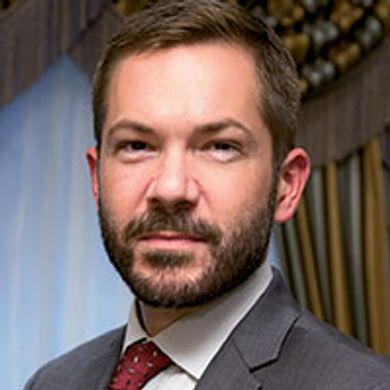 Troy Flanagan,
American Hotel & Lodging Association
Troy Flanagan,
American Hotel & Lodging Association"Rather than assuming outdated regulatory approaches are adequate for short-term rentals, Arizona policymakers proved forward-looking," said Matt Kiessling, short-term rental policy lead for the Arlington, Va.-based Travel Technology Association, in a statement applauding the bill's passage. "By recognizing that regulatory predictability encourages innovation, improves the local economy and solidifies tax revenue, Arizona has set itself apart as a leader in smart, common-sense policymaking regarding the shared peer-to-peer economy." At press time the bill awaits signing into law by Arizona Gov. Doug Ducey, a noted champion of the sharing economy.
AH&LA, however, is concerned that cities might be striking hasty regulation treaties without having all the right data. The organization maintains that pushback is necessary and growing ever more urgent as the threat of commercial operators running illegal hotels continues unchecked.
"We are trying to inform policymakers that there is a distinction between the sharing economy as applied to the lodging sector vs. people who are running illicit hotels in violation of state laws," says AH&LA's Troy Flanagan. "If they had more transparent, quality data and better cooperation, the policymakers in those communities would have the tools they need, but some are trying to enforce regulations without them."