When Kristin K. Mirabal, CMP, draws up the short list of places to host the 40 events her department plans annually worldwide, she considers all the typical parameters: hotels, meeting space, airlift and cost. But what can make or break the decision, she says, is another critical consideration: Can the city or region further the strategic goals of The Optical Society, her Washington, D.C.-based employer?
Mirabal is among a growing group of meeting professionals who see a distinct advantage to choosing locales that have some connection to their business -- either in industries, institutions (such as hospitals) or knowledge centers (e.g., universities) -- that can enhance the meeting and give attendees a better experience.
While there is no official name for this approach to site selection -- strategic destination analysis, strategic business intelligence and mission-based site analysis are some of the terms used by sources for this article -- it is a trend that is picking up steam. Mirabal conducted a brief campfire session on the concept during the IMEX Frankfurt trade show in Germany this past May; it received so much interest that she was asked to organize a panel on the subject for the Professional Convention Management Association's Convening Leaders meeting, set for January 2014 in Boston.
Following,
M&C looks at how planners and, increasingly, destinations, are using strategic destination analysis to guide site selection and help companies and associations better achieve their event goals.
Strategic planning in action
Mirabal and the planning team at The Optical Society began using strategic business analysis, as she calls it, eight years ago, at the same time the 18,000-member association, which includes physicists, engineers and academics in the biomedical, communications, optical fiber and optical laser fields, became more strategic overall in conducting its operations. For meetings, that can mean gathering in a city or country where use of optics is growing, where cutting-edge research is under way or where technological breakthroughs are transforming the industry.
For example, Mirabal's team selected Mumbai for a workshop taking place this month, because India is a huge user of optics in manufacturing. The meeting, which will be co-located with a larger trade show, also affords members the opportunity to visit factories and see technology in use (India is the capital of diamond cutting and a leader in the use of laser-cutting tools), as well as share knowledge with local counterparts.
Strategic business analysis also led the group to Munich, Germany, a city that has one of most innovative global auto industries (an optics-rich business). The association meets in the Bavarian capital semiannually to take advantage of ready access to car-manufacturing plants (BMW, Mercedes and Porsche are all headquartered in the region), as well as to tap auto executives as speakers.
Of course, the investigative process sometimes reveals that an intriguing destination is not a good fit for the business mission, as Mirabal recently found during a visit to a country with a small but growing optics-manufacturing base. "I met with their ministry of science and technology to see if the native industry was mature enough to bring events there," she says. "We found that while the country had a good infrastructure for events, it was not yet a hotbed of activity in the field." The association has put off holding events there for the time being.
While The Optical Society was an early adopter of strategic destination analysis, other groups and associations have recently moved to this model. For example, Greg Talley, president and CEO of the Talley Management Group, a Mt. Royal, N.J.-based association management and event planning firm, notes that "now we are talking about creating an enhanced value of an event, beyond beds and heads."
One of Talley's clients, a literacy group, currently is deciding between three cities to host its 2015 annual convention. "We told our sources -- suppliers and destination management organizations -- in those cities that the mission of the organization is to improve literacy, and two of the destinations got it; they made the extra effort to get their local government and mayors involved," he says. One mayor wanted to tie the convention to a local yearlong effort around reading, and both cities worked to introduce the group to their connections in the community that could support the event. At press time, a final decision had not yet been made.
The strategic trend is not limited to U.S.-based organizations. As Philippe Fournier, president of planning firm MCI France and president of the Brussels, Belgium-based Joint Meetings Industry Council, notes, "European associations and corporations are now choosing their destination according to such principles."
Fournier adds, "Of course, easy access, enough hotel rooms and correct meeting space are vital, but most destinations have that. Groups now ask, 'Will the destination help increase my business, develop our brand, enhance our core values and give meaning to the participants attending my event?'?"
Destinations that 'get it'
As more groups look beyond basic site-selection criteria, destinations are taking notice. "I see cities and countries now that not only market the beauty of the area but include economic data about the region and emphasize the business potential of the area," says Fournier.
Following is a sampling of global destinations that industry pros singled out for successfully leveraging their region's business acumen and knowledge to secure some prestigious and lucrative international events.
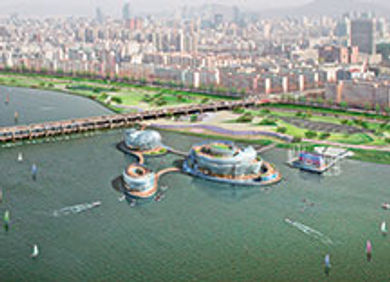 Seoul, South Korea, is rolling out
the welcome mat for international
groups that align with native "growth
engines" like digital content, media
and tourism services.
Seoul, South Korea, is rolling out
the welcome mat for international
groups that align with native "growth
engines" like digital content, media
and tourism services. • Seoul, South Korea. In 2010, the South Korean capital's government selected eight areas of business (biomedical; digital content, news and media; business services; tourism and conventions; IT convergence; design and fashion; finance, and green industries) as the growth engines of the country's economy. Based on the government directive, the Seoul Tourism Organization/Seoul Convention Bureau (
miceseoul.com) is working on targeting international groups in these sectors.
The bureau offers financial incentives to all international groups that meet in the city. For events that fall into one of the eight target areas, the bureau confers an additional 5 percent bonus.
Since targeting these sectors, bookings of international association meetings grew by 12 percent in 2012 over the previous year, according to the SCB. Among the future bookings Seoul has secured in targeted fields are the International Congress of Parkinson's Disease & Movement Disorders and the World Organization of Family Doctors World Conference, both taking place in 2018.
To further attract international groups and help them enhance their events, the Seoul Tourism Organization/Seoul Convention Bureau will launch two groups in 2014: an advisory board made up of city stakeholders and an ambassadors group composed of business leaders and association executives.
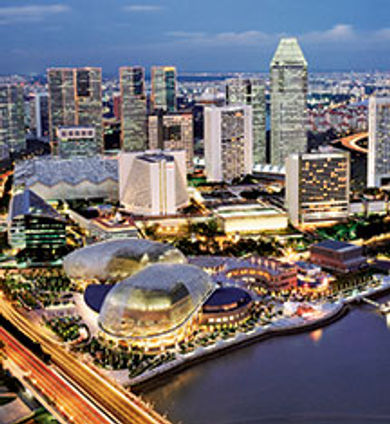 Planners find Singapore in sync
with global biomedical and banking events.
Planners find Singapore in sync
with global biomedical and banking events. • Singapore. Since 2006, the Singapore Exhibition & Convention Bureau (bit.ly/1gqdDAD) has been on a mission to create, grow and attract business events centered on the country's key economic drivers: biomedical sciences; information and communication technology; digital media; environment and water technologies; banking and finance; transportation and logistics, and tourism.
In addition to working with local universities and industries to provide speakers and content for meetings in these targeted fields, the SECB helps to package several business events in complementary sectors. For example, the bureau was instrumental in creating the annual Singapore International Water Week, held in conjunction with World Cities Summit and CleanEnviro Summit Singapore, which showcases the latest water technologies and findings from research institutions.
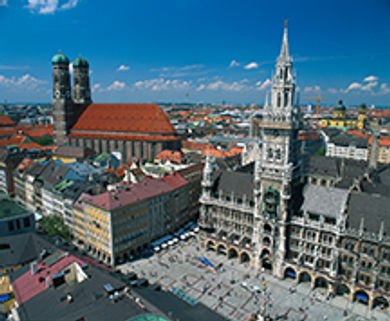 Groups such as automobile and
optics makers are giving the manufacturing
center of Munich, Germany, a close look.
Groups such as automobile and
optics makers are giving the manufacturing
center of Munich, Germany, a close look. • Germany. Since 2010, the German Convention Bureau (gcb.de/en) has focused on attracting groups in fields that coincide with the country's six "areas of expertise" -- transportation, logistics and traffic; medicine and health; chemical and pharmaceuticals; energy and environment; financial services, and technology and innovation.
"We work with the government and national companies to organize factory and plant tours, find keynote speakers and arrange opportunities for local industry leaders to share best practices with attendees," says Laura d'Elsa, regional director, USA and Canada, for the GCB. "We think it is increasingly important to provide content for events. It's not enough for a destination to be pretty and affordable."
As part of its strategy, the GCB has created a map (bit.ly/16aENJS) highlighting where industries are concentrated (e.g., automakers in Bavaria and financial centers in Frankfurt). The bureau also acts a conduit between agencies like the Federal Ministry of Education and Research and groups by making introductions and working to facilitate speakers, research and more.
While the GCB spearheads the country's overall strategy for attracting groups in its main industries, local DMOs are making similar efforts as well. For example, Leipzig in Eastern Germany is a center of cytometry (tumor research). Leipzig Tourism and Marketing began capitalizing on the city's leading position in this field, approaching tumor research associations and, as a result, securing a citywide convention for the International Society for Advancement of Cytometry, which took place in 2012.
 Sydney, Australia, seeks to draw
groups in research, pharma and more.
Sydney, Australia, seeks to draw
groups in research, pharma and more. • Sydney, Australia. "Destinations that will be the leaders in the next decade will be those that are strategic and can prove that hosting a conference permits industry-specific learning experiences and connections that will lead to legacies that extend far beyond the closing ceremony," says Lyn Lewis-Smith, CEO of Business Events Sydney (businesseventssydney.com.au), the DMO for Australia's largest city.
To that end, BESydney has worked closely with the state government over the past few years to bid and secure events in six fields: digital, creative, education and research, professional services, advanced manufacturing (which includes pharmaceuticals and medical equipment) and tourism. The DMO works with groups in these fields to facilitate speakers, spur research that can be used as content and arrange company/facility tours.
"Our private and public sectors are becoming more well-informed and proactive in embracing the myriad opportunities presented by hosting business events in their relevant industries," says Lewis-Smith.
The strategy is paying off: Business Events Sydney already has secured five events in the industries it is targeting, worth some $30 million in business to the city. All will take place at the new International Convention Centre Sydney, set to open in 2016.
"Events are held to achieve outcomes," Lewis-Smith notes. "Successful host cities will also be those that understand an association's or planner's individual objectives and can show how they can help them meet and exceed these in an effective and meaningful way."