 Just about everyone in the meetings industry is feeling the effects of the global recession. Many were willing to share their tales with M&C, as well as their strategies for handling hard times, from stepped-up networking and cold-calling to local charity work.
Following are first-person accounts of planners in the trenches. Their individual experiences vary, but all share a can-do attitude and a commitment to being on top of their game when the economy recovers.
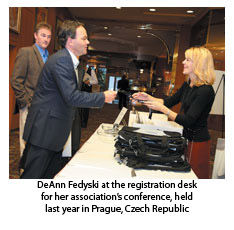
DEANN FEDYSKI
Association/conference manager, KCA – Public Relations, Meeting Planning & Association Management
Chandler, Ariz.
We do public relations and special events for meetings and associations. My main job is to serve the executive director of one of our clients, Manufacturing Enterprise Solutions Association International. We plan two conferences annually for them, one in North America and one internationally.
This year's event was booked for September in Orlando, but now we're contemplating moving it to spring 2010, or possibly negotiating a cancellation.
Back in December, we made a decision to stand firm and make an investment in the conferences, even if we suffered a loss, because we want to provide value to our members. Our next move is to poll our entire membership. We'll try to determine the perceived attendance in spring 2010 and ask them what other things we can do to provide value, such as regional events and webcasts. Our main objective is to determine what our members want, and the cost of that.
In the end, we believe there is nothing like face-to-face meetings. Their networking value cannot be replaced. People pay for that, in addition to education. We're hoping to reschedule, which will mean we're still compensated for our work. We may need to make money off of other activities, but we've just barely scratched the surface with that. We have to research the options, figure out how much staff is needed and determine cost.
So far, there have been no layoffs. That and salary cuts are the last things we want to do -- once we have business again, we'd have to start over with a new team. We're saying, "Let's see how long we can hold tight."
SASHA NANUS
President and executive producer, MPA Events/Manhattan Performing Arts Co.
New York City
When I started MPA Events back in 1983, it was more of an entertainment company, but as things evolved we became more of a full-service event company. Our clientele has become much more corporate. I've worked with Lehman Brothers, Merrill Lynch, HSBC, Goldman Sachs and Deutsche Bank.
Even going into the 2008 holiday season, things were not bad. But this year I see a big difference -- people and companies are really scaling back. And that affects everyone who works with me, because this is a freelance business.
I'm trying to be positive. Even though we are a small, boutique office, it feels good to have a team, to feel like we're all in this together. I'm realizing I have to do a lot more hustling and cold-calling, rather than relying on past contacts. I'm also trying to be inventive with what I offer, and to adjust my pricing.
I've also been thinking a lot about who is still doing events. Is it, for example, alumni groups? The insurance industry? Robust companies like Walmart? We have to expand, but it's difficult. For a couple of years I felt like, "Oh, this is great, I have my clients and it's set" -- but then this happens. Now I really have to reinvent.
JANICE PETRELLI
Owner, Perfect Planning
Jacksonville, Fla.
I've been in the industry for 10 years. When I moved to Florida four years ago, I started Perfect Planning. About 85 percent of my business is corporate; I put together incentives, golf meetings and vendor appreciation events. But we also do weddings and private parties, too.
I've been able to minimize costs because it's always been just me at the company. I handle all the logistics. Working from home cuts back on costs, too. I have an entirely freelance staff, which I use on location, but I would love to have a larger staff and an office in the next year or two.
I am a two-time cancer survivor, so there have been many personal challenges for me this year. The last event on my books was in November, but I've been able to stay afloat due to money saved from my previous career in automatic data processing. Plus, I still do freelance work for three other companies.
In the meantime, I've been taking this time to open new doors and put myself out there. I'm a part of some networking groups, including Business Networking International and our chamber of commerce in Jacksonville. I attend county meetings and social events. I'm looking into joining Women Business Owners.
Here's a trick I use to make connections: At hotel events, I look at the board to see what groups are there and if they use a third party. If you don't ask, you won't know. You have to get out there.
 LESLEY KYLE, CMP
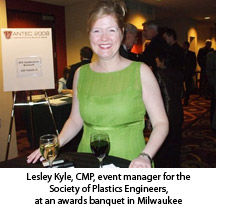
Senior event manager, Society of Plastics Engineers
Brookfield, Conn.
I am responsible for event management and education for all of my association's meetings, which could draw anywhere from 15 to 3,500 people. For some of our events, attendance has waned. I plan 75 seminars a year for 10 to 25 people, and recently I've had to reschedule five of them for June, when we hope the economy will pick up. I've also lost one person from my department.
We're facing a similar problem with our membership. To help fix that, we've been spending a lot of time marketing through social media, such as Facebook and LinkedIn. We've set up a group on Facebook for our annual event. Staff members go in and populate the site with updates. It's growing exponentially and is very exciting to watch. We gain a couple hundred new members every month. It's a great way to spread the word about us -- at no cost. Pretty soon we'll be working with Twitter as well.
One way we've been able to make some money is through on-site training programs. Rather than having staff travel for a conference, some firms are opting to hire instructors to conduct training on-site. This is a real paradigm shift we have noticed. We've received a handful of requests a month, and now we're getting many more.
It's tough to find balance in this job, but our business is cyclical; there will be an end to this downturn. I've tried to keep a social life going -- and a sense of humor.
Also, it's very important for planners to keep up their skills, especially if they can't travel. Stay active with free webinars on topics like F&B and attrition. They're all over the web.
TONY CUMMINS, CMP
Planner/consultant, The Meeting Department
Dallas
I've worked in the industry for 17 years. Three years ago, I branched out as an independent planner. My primary focus has been hotel contract negotiation and site selection. But now you need to be open to anything and everything. Early this year I got a call from an organization looking for special event planning. Three years ago, I probably would have said, "No, I don't do catering." But not now. I did the event for them, and it went extremely well.
That's not to say it hasn't been stressful. I'm watching my expenses and budget more closely.
Networking has been very helpful. I am a member of a small group of 15 independent planners here in Dallas, most of whom have their CMPs or CMMs. As small business owners, we have special needs that must be addressed. So, we meet once a month and have someone come talk about issues affecting us, such as marketing, business management and taxation. We call on each other and help each other out.
The key is to be grateful for what I do have, rather than thinking about the negatives. I can't say I exercise more or eat better; rather, it's a matter of mental adjustment we must embrace, both as a nation and as people in the work force.
.jpg)
JENNIFER D. COLLINS, CMP
President and owner, The Event Planning Group
Washington, D.C.
My company is a strategic meetings management firm that assists corporate, nonprofit and government groups. We've been in the business for 12 years and pretty much can do it from soup to nuts. We tend to specialize in education, science and health, and we have a growing list of loyal clients.
Clients are still putting on events, but they are looking at where they can lower and streamline their costs. People are just taking a real hard look at each particular aspect of the meeting or event and adjusting expenses relating to it.
The other thing I have noticed recently is that "no decision" is becoming a decision; if the venue hasn't been secured and certain things haven't been put into place, the event is just not going to happen.
I've had clients say, "We still need to have this event. However, we want to make sure there are no misperceptions about what is being spent." For instance, décor is more subtle.
My team and I will continue to do what we do. We have to be sure we remain out there, participating in industry events. Because of that, we will be in a continued position to prosper when the economy does come back.
Another way I am dealing with the downturn: I'm not watching the news.
MELISSA BIELE, CMP
Independent consultant
San Francisco
As an independent planner, I'm contracted by different companies to manage and run their programs. Thus far, I've specialized in the high-tech and pharmaceutical industries, with an emphasis on tech "road shows," trade shows, user conferences and sales kickoffs. In years past, I have always been so busy that I never had to look for business. I never had to worry. I went right from one project to another.
After last Thanksgiving, I began to get cancellation calls. It's a real lesson about not putting all your eggs in one basket: I thought I was sufficiently diversified, but probably 70 percent of my work was in high tech. The word from the tech firms was that there was to be no travel and no spending, and that anything that was going to happen would happen in the latter half of 2009. I'm hoping that the trend is going to be the same as post-9/11 -- that while there are layoffs, companies still have to have meetings and will hire more independent planners.
I've definitely been networking with a lot of people and getting the word out. Anyone who says, "Oh, I have a friend who does meeting and event planning, do you want me to talk to them about you?" -- I absolutely say yes. I'm taking work that in the past I probably would not have taken, because when things like this happen, you worry more about paying the bills, rather than questioning, "Is it worth my time to do this?"
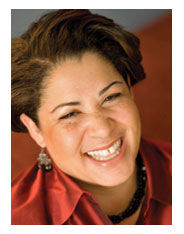
KARLIE TANNER, CMP
Special events director, Simply Mumtaz Events
Burbank, Calif.
At Simply Mumtaz, we do about 75 corporate and nonprofit events a year, with some fundraising, social events and weddings mixed in, too. Since our clients are cutting back on the scale of their events and occasionally canceling, we're looking outside of our client base and soliciting different kinds of business. Now we're open to clients with tighter budgets. Previously, we were trying to expand and market ourselves as high-end planners, but we're willing to discount our prices -- for now. For example, we might charge $1,000 or $2,000 less than we would typically. We're thinking that we need to get through it and still make some money.
Also, we've had to make some adjustments to the bottom line. For example, normally we pay $20 to $25 an hour for people who handle our standard mailing projects. Now, the rate is $15 an hour.
We're hoping that the summer will take a turn. We've been doing cold-calling and really trying to reach out to people. Our message is that we're out there and willing to work with them.
Figuring out creative ways to do business is a lot more work, but we're trying not to be negative or focus on the fact that money's not coming in like we'd like it to. Right now we're redoing our marketing packet, and we're considering creating an electronic version. Also, more time is being spent on the newsletter and researching new business opportunities. I hope our positive attitude translates to my clients and vendors; we're still available and willing to work within their budgets.
Volunteering is a great way to get out there. I think education and wellness are important, so I volunteer for those types of events. I try to network with people, in hopes that they will remember me.
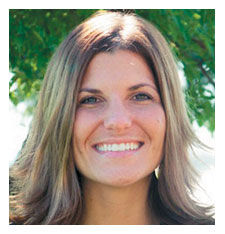
MICHELLE LIZAK, CMP
Manager, special events, U.S. Central
Kansas City, Kan.
I'm basically a one-man show. I plan 50-plus events a year that range from 10 to 175 people involved in financial services for corporate credit unions. When things get crazy, we bring in a contractor, but usually it's just me.
Fortunately, we have been very lucky -- the state of the economy hasn't adversely affected us. We have always been fiscally responsible and have made sure that ROI is attached to all our events. Our budgets have to be approved by senior management, so meetings always have had to serve the needs of the company. They are driven by business objectives; they primarily cover financial topics such as training and budgeting. We don't do incentives at U.S. Central.
That said, some activities and extras have been scaled back. Last summer, some of our meetings began to see lower attendance, so we decided to hold them every 18 months instead of annually. Our management took a hard look at whether they were necessary.
Overall, we're more conscious of what we can do to ease the process of attending our conferences. For one, we make sure destinations and hotels are cost effective. It's not the name of the hotel the matters -- it's the room rate. That's something that has changed. It has required revising our way of thinking. We're taking a harder a look now at these kinds of choices.