Image Finder
One surefire way to avoid copyright or trademark infringement is to use
Creative Commons (search.
creativecommons.org), where hundreds of millions of videos, songs, images and more are uploaded by license-holding users around the world and can be then downloaded at no cost. Planners can use these materials without fear of violation; however, some works require accreditation, while others stipulate that they cannot be altered or changed. Before using works from the site, read the licensing agreements for each specific item.
 Social media has vast and fast-growing potential in the meetings world, but planners should proceed with a healthy dose of caution -- and some good legal advice. The very nature of sharing online messages, images and videos can lead to serious problems, says Terrence Canela, Esq., associate general counsel to the American Institute of Architects. "They're fixed, fast and unforgiving. Once you post it, it's just out there where millions of people can see it immediately."
Following are common pitfalls for planners and how to avoid them.
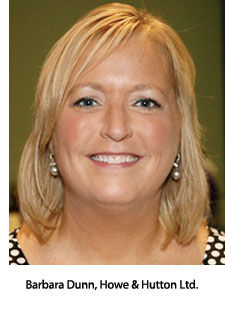
Copyright/Trademark Infringement Copyright laws protect original works of authorship, which include everything from pictures to videos to text. For planners, this issue surfaces most often in marketing materials. "There's such an eagerness to market a conference or event that planners are quick to grab photos or other materials off the Internet from anywhere and everywhere, and use them without understanding the laws and permissions," says Barbara Dunn, St. Louis-based attorney and partner with Howe & Hutton Ltd. Violations typically arise from downloading a photo of an exhibitor's booth or the headshot of a speaker from a website and plugging it into a brochure or posting it on a conference's Facebook page without first receiving permission from the source.
Social media sites like the photo management and sharing application Flickr exacerbate the matter by allowing millions of users to easily upload images (six billion had been uploaded by August 2011), which enables other users to find and download those photos with a few clicks of the mouse, without realizing they might be infringing on copyright laws. Meanwhile, distributing copyrighted content via social networks, where posts can be viewed by millions in an instant, increases the chance of that material being seen and potentially reported to the copyright owner. "This new method of communication has made violations more visible to a broader audience," says Dunn.
The ramifications of copyright infringement vary. "The worst that could happen is that the organization could be held liable, and a client could sue for damages," notes Dunn. Planners who use copyrighted matter in printed materials also run the risk of having to trash bins of costly brochures should they receive a notice to cease and desist (which happened to one of Dunn's clients).
Obviously, it's important for planners to determine who owns the rights to any image, video or text they plan to reuse. "You can't assume anything is there to appropriate for free unless it explicitly states that," says Canela. Look for existing copyright information or credits right at the source, and make a formal request to the copyright owner or author to reproduce the desired item(s).
A safe option is to seek out copyright-free materials. One excellent resource is Creative Commons, a nonprofit organization that allows the sharing and use of literally millions of images, songs and videos at no charge. (For details, see "Image Finder" at left).
Much like copyright violations, trademark infringement commonly occurs when a planner uses a logo, name or graphic that is trademarked by an organization, without that organization's consent. Just the simple act of using a logo in a blog post or tweet can be asking for legal trouble.
"When planners negotiate contracts with sponsors and exhibitors, they should get permission up front and in writing to use trademarked images and logos," advises Dunn, who notes that such images often must be used in a certain format, color or size, since the organizations behind them are "legally responsible for making sure their trademark is used consistently."
Trademark Tip
Unlike copyrights,
official trademarks must be registered through the government. Before using an icon, logo or new name for a conference, check with the
United States Patent and Trademark office to clear any potential violations.
Defamation To defame a person or
organization is to harm that person or entity's reputation by libel
(lying by means of written or printed words, videos or pictures) or
slander (lying by spoken words or gestures). In legal terms, defamation
doesn't even have to be a deliberate act, as long as the result is harm.
The ease of posting to social media gives the meeting planner a
responsibility -- and liability -- with respect to the truth of what is
being communicated.
 Planners who tweet or post on platforms such
as Facebook need to "make sure anything they're putting out there is
not defamatory," says Dunn. That would include false statements
presented as true and of a harmful nature to an individual or company,
such as catering, audiovisual, speaker bureaus and other suppliers.
Planners who tweet or post on platforms such
as Facebook need to "make sure anything they're putting out there is
not defamatory," says Dunn. That would include false statements
presented as true and of a harmful nature to an individual or company,
such as catering, audiovisual, speaker bureaus and other suppliers.
Joshua
Grimes, managing attorney at Philadelphia-based Grimes Law Offices,
LLC, recently came across a potential defamation situation in the
industry: A third-party planner held a meeting at a bed-and-breakfast
and was contractually entitled to a 10 percent commission, but the owner
refused to pay up, stating that the B&B's salesperson did not have
the right to authorize such a deal in the contract. The planner
considered taking legal action but decided it wasn't worth the time and
trouble. Instead, she considered using social media to exact her revenge
before receiving legal counsel from Grimes that dissuaded her.
Grimes
cautions planners against venting or negatively reviewing suppliers
online, but if they must, he recommends sticking to the facts and
avoiding unnecessary antagonism. "We have freedom of speech, but what we
don't have is the right to tell an untruth about someone, especially if
it's intended to be heard by others," he says. "Even if there's some
truth to the statement a planner makes, if it unnecessarily trashes
someone else, he or she is risking some sort of litigation or dispute
that no one wants to deal with. A lot of people write negative reviews
online, and 99 percent of the time nothing happens, but you don't want
to be that one percent."
Attendees with quick fingers open the
door to more concerns. "Planners should have processes in place if
someone on staff or even an attendee posts something remotely defamatory
on the conference's Facebook feed or under a Twitter hashtag used by
the conference," Dunn advises. "Organizations can be caught in the
headlights, so planners need to be ready for social-media crisis
management."
If harmful comments, even those from attendees, are
left to sit on an event's Facebook page, or if they're circulated via a
conference-sanctioned hashtag, "the planner arguably could be
considered a publisher of the defamatory statement" and could be held
liable, says Dunn. Furthermore, an organization may be held liable for
the actions of the meeting planner. (See "Who's to Blame?" at left)
To avoid such scenarios, planners must regularly monitor any
meetings-related social media channels -- or designate someone to do so
-- and take down any potentially actionable material.
When it
comes to "retweeting" a defamatory statement made by an attendee (or
anyone else, for that matter), notes Dunn, the retweeter could be liable
for defamation by republishing a false statement with harmful
intentions.
Privacy Issues With the
proliferation of camera phones, it's tempting for planners and
attendees to post pictures from an event in progress. But can planners
subsequently post those images on the conference Facebook page or tweet
them to other followers? Our legal sources say it's usually fine to post
photos of large group settings or people from a distance. However, to
avoid potential headaches, planners should include consent forms in
registration materials and/or post notices around the conference space
alerting attendees that photos will be taken and might be sent over the
social media airwaves.
"Do attendees have reasonable expectation
of privacy at a 5,000-person reception? No," says Terrence Canela. "Is
someone going to sue you over that photo and win? Probably not, but
having notices and prior consent to use photos will help your
organization avoid unnecessary risk."
Common sense is called for,
too. Planners should exercise courtesy when taking or using photos of
their delegates. "If you have a close-up shot of just two people from an
event, it might not be the best idea to use it on the cover of next
year's brochure," says Dunn. "If you really want to use it, let them
know." Never publish photos of attendees who are drunk and/or behaving
inappropriately.
Although social media tends to promote the
sharing of experiences and expertise, users also can get into legal
trouble for sharing trade secrets or proprietary information. "Whether
it's posting confidential materials to a forum or sharing the contents
or an image of a contract over Facebook, planners should be cautious,
because some of those materials might have monetary value," says Dunn.
Planners could potentially be sued for theft of information.
Antitrust violations
An antitrust suit can occur when there are "conspiracies or agreements
among competitors to unreasonably restrain trade," says Dunn. A
potential milieu in which this could occur would be a meeting planner's
group on LinkedIn or a Google group forum.
For example, if a
planner were to urge a group of hundreds of peers not to use a certain
hotel unless the property offered everyone a specific rate or other
concessions, that could be cause for an antitrust suit, says Grimes,
since a large group of planners are colluding to influence the market.
"If it's just two or three people involved, it's probably not
actionable, but if the hotel can prove there were 100 planners in this
discussion, they might have a case."
Social media sites often log
complaints about a waiter's sloppy service or the like, but those in
the meetings industry need to be careful to avoid carping that might
sound like a call to action. While Dunn notes that an antitrust case
generally requires an extremely influential commenter who truly has the
power to sway the market, it's best to steer clear of such commentary.
Complaining
amongst peers is common in any business, but there was a time when such
venting and commiserating was done over an intimate drink at the bar,
notes Dunn. Now, however, "social media allows them to be publicly seen
and potentially recorded."