Personalization is the latest trend to hit trade show marketing. Show organizers looking to catch the attention of potential attendees are shifting their efforts to targeted marketing strategies, which requires breaking down a mailing list from one lump group into smaller segments, so they can send more relevant information to specific demographics.
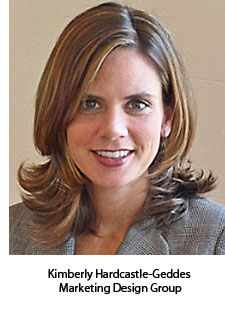 "The days of mass marketing are numbered," says Kimberly Hardcastle-Geddes, vice president and chief account strategist for Marketing Design Group, a firm that helps trade shows design and implement their marketing strategies. "Customer demand is starting to reflect the personalization perpetuated by the filtering, following and friending options available on e-mail, Twitter, Facebook and LinkedIn."
In other words, the public is getting used to choosing the content they receive and how they receive it. The concept of a passive consumer who sits back and absorbs mass-marketing messages is a thing of the past; today, there's just too much information coming from too many sources.
"Marketing is no longer about a company blasting a one-way dialogue to the masses," affirms Erik Mintz, director of event marketing at Constant Contact, a provider of online marketing tools. "Technology and social media have made the experience more of a two-way conversation, where businesses are more aware of their customer's wants and needs."
This new marketing model was pioneered by online sellers such as Amazon, which sends recommendations and notices about deals based on previous purchases and product searches.
"Consumers are beginning to expect this kind of personalized experience everywhere," says Hardcastle-Geddes. "Because people are being bombarded with messages, the more relevant you can make yours, the better."
From a practical standpoint, a personalized marketing campaign makes sense because it gets the right information into the right hands, but on an emotional level, it also makes a prospective customer feel included. "It's a way to let the recipient know we know who they are," says Libby Landen, vice president of marketing for the National Retailers Federation, who helped grow the organization's annual show from 18,500 total attendees in 2009 to 21,719 in 2010. "The more we can cater to specific groups," she adds, "the more invested in them we appear, and that's the connection we're trying to build."
The following is a step-by-step guide for developing your own targeted marketing effort; those who would prefer to hire an agency to outsource the task can read more about third-party marketing services on page 48.
The path to creating a personalized marketing campaign from scratch for the first time is often long and tedious. "It's important to remember that this process happens over time," says Hardcastle-Geddes. "Do what you can with the resources you have, put your plan in writing at the beginning and focus on what will give you the best return on investment."
Here are some basic guidelines for getting started.
1. Set goals. "Think about your objectives and whether personalized marketing makes sense," says Hardcastle-Geddes. "Don't just jump right into a new technology if you're not sure it will help you achieve your goals."
Start by determining what you're trying to accomplish and whom you're targeting. Whether it's an underrepresented group, a specific geographic area or a certain industry segment, it's important to set the target before trying to hit it.
2. Know your market. A personalized marketing campaign begins with detailed profiles of potential delegates. "The attendee database has become much more important," says Hardcastle-Geddes. "It's not just about having the right names anymore, it's about having a collection of highly individualized information about each person so you can really pinpoint your messages."
It's typical for a database entry to include the first and last name, an e-mail address and maybe a job title, but when it comes to a more personalized style of marketing, data can include a broad range of characteristics, including geographic location, type of company, the last time he/she attended a trade show, hobbies, educational sessions the person attended in the past, and booths visited at the last trade show.
Determine whether you already have the necessary information for a marketing campaign that targets your goals by assessing your database's strengths and weaknesses. This assessment will help point you toward the next step. (If you already have all the desired data, you can skip step three, although it never hurts to strengthen your list with even more details. "The more information we gather about a potential attendee, the better," says Landen.)
3. Get the data you need. Once you've found the holes in your database, it's time to fill in the gaps. Data retrieval can take many forms, whether gleaned from business cards, industry associations, Facebook and/or myriad other sources.
One reliable method is to use the survey attached to the conference registration form, says Susan Newman, senior vice president of conferences and marketing for the National Retail Federation. When attendees sign up for NRF's annual convention, known as Retail's Big Show, Newman makes sure ask them about basic demographics, like their title and location, in addition to how much purchasing power the registrant has, specific job responsibilities, total annual spending on purchases, and the type of store or business. As a result, organizers receive a flood of data about each participant that will help with the marketing effort for the following year.
For new show organizers without such data to draw from, the job is considerably trickier. "If you're trying to create a personalized marketing strategy for a new show, figure out who the prospective attendee is and then reverse-engineer it," says Newman. "Who are they? What are their attributes? What other events do they go to? What online communities are they active on? Which associations do they belong to? Do what you can to find out as much about them as possible."
4. Create categories to target. Once the database is set, organizers should begin segmenting their list of names into categories that likely require different approaches in marketing. "This is where a targeted, personalized campaign really takes shape," says Hardcastle-Geddes.
The way you segment your audience largely will depend on the budget of the campaign and the type of show, says Roger Halligan, CEO of H+A International, a marketing agency that specializes in trade shows. An organizer for a cooking-equipment show might break up targeted groups by title -- e.g., restaurant owners, chefs, retailers -- while an organizer for a travel industry show might find it more effective to segment the audience by niches such as airlines, hotels, food and beverage, travel agents, meeting planners, etc.
Any sizable database can be divided into an endless amount of segments, and it might not be necessary to reach out to each one individually, notes Halligan. Depending on the marketing budget, you might want to create personalized campaigns for only the two or three most important groups. "The great thing about creating a personalized marketing campaign is that it forces your organization to step back, think and really look at which groups you want to reach, as well as where your marketing is falling short," Halligan says.
5. Strategize the approach. Once the categories for marketing are set, organizers can begin determining what to offer to which group.
"We decided to target market segments that were underrepresented in our clients' past shows and created a campaign that spoke to them, including information on specific seminars that might be interesting to them or exhibitors they would want to meet," says Hardcastle-Geddes.
Now you're ready for the implementation phase, and today's technology offers more options than ever for running a targeted marketing campaign.
Running the Campaign The following are some of the major tools trade show organizers are using to personalize their marketing efforts.
• Dynamic-content e-mail
merges an organizer's database with an e-mail template with
customizable fields to generate personalized and relevant e-mails
automatically. "Instead of one overarching, generic e-mail,
dynamic-content e-mail technology makes it possible to send highly
targeted messages with very little effort," says Hardcastle-Geddes.
For
instance, an event organizer running a travel industry trade show could
create an e-mail template with a greeting, a body paragraph and a list
of conference events. The content for each section of the template would
vary based on the industry segment of the prospective attendee.
Thus,
when the organizer sends an e-mail to Joe the travel agent, the
template automatically populates itself with a personalized greeting
(Dear Joe), a body paragraph written specifially for travel agents, and a
list of events relevant to the interests of that audience.
Providers of such e-mail templates include EngageMail and Itrios. Reach out to your IT department for suggestions and guidance before getting started.
 • PURLs(or personalized URLs)
are another simple way to attract attention via the creation of a
personalized web address (e.g., mcmag.com/john.doe) and web landing
page. The personalized web address has the same effect as
dynamic-content e-mails by "drawing attention through name
customization," says Marty Thomas, founder and owner of Purlem, a
Chicago-based company that offers PURL marketing services. When the
recipient visits that PURL, however, they will end up on a page that can
be personalized with his/her name, company and information that might
be of interest to that person, such as events or sessions. "The landing
page can be as specific and personalized as the data provides," Thomas
notes.
• PURLs(or personalized URLs)
are another simple way to attract attention via the creation of a
personalized web address (e.g., mcmag.com/john.doe) and web landing
page. The personalized web address has the same effect as
dynamic-content e-mails by "drawing attention through name
customization," says Marty Thomas, founder and owner of Purlem, a
Chicago-based company that offers PURL marketing services. When the
recipient visits that PURL, however, they will end up on a page that can
be personalized with his/her name, company and information that might
be of interest to that person, such as events or sessions. "The landing
page can be as specific and personalized as the data provides," Thomas
notes.
• Text-only e-mail is a somewhat counterintuitive
tactic that still can work wonders in a marketing campaign. While
technology makes it easy to create complex messages with graphics and
images, Hardcastle-Geddes suggests going back to basics and drafting a
text-only e-mail that appears to be a personal invitation from a
recognizable figure who is associated with the show (after getting
permission from said individual, that is). From one recent effort, "We
received more than 500 return e-mails from people who thought they were
receiving an actual letter," says Hardcastle-Geddes. "This requires no
budget, and it's incredibly easy to do, but the important thing to
remember is that it can't sound like a sales message -- it must be
informal and personal."
• Mobile e-mail. Distinctly
separate e-mail messages should be formatted for the smartphone-toting
demographic, say several organizers, who advise using a limited number
of graphic elements. "For mobile users, the screens are much smaller, so
we don't want to overwhelm readers with all of the pretty pictures they
might find in a normal e-mail," says Landen. "We want them to be able
to see the text and read about what we're offering without crowding out
that text with graphics."
Landen uses software such as Magnet Mail
to help the process. Organizers can draft one e-mail complete with
photos and graphics, but when the recipient opens the message, it will
reformat depending on the device.
Another tactic in mobile
marketing is to keep the meat of the message at the top of the e-mail,
so users don't have to scroll down too much to get the gist, suggests
Hardcastle-Geddes. "We're really trying to make it as easy for people to
get our message as possible," she notes.
Text-message marketing
is a highly controversial method, and few organizers M&C spoke with
had integrated such a ploy into their strategy. For one thing, it's a
highly personal form of one-on-one communication, and for another,
charges can accrue to recipients for messages received, depending on the
terms of the recipient's service provider.
Event Marketing Agencies
The following are three experienced firms that plan personalized marketing campaigns for show organizers.
Frost Miller(301) 718-8512Helmed
by industry veteran Kevin Miller, this Bethesda, Md.-based agency is
an integrated marketing firm with services ranging from graphic design
and copy writing to web development and media planning. Clients include
MINExpo International and the Worldwide Food Expo.
H+A International(312) 332-4650Founded
in 1984, H+A International specializes in corporate and trade show
marketing. The Chicago-based firm's services range from social media to
strategic planning to organizing special events. Clients include
ChemShow, the International Home and Houseware Show, and the Macworld
Conference and Expo.
Marketing Design Group(619) 298-1445The
San Diego-based Marketing Design Group has provided show organizers
with trade show marketing services such as strategy development, direct
and e-mail marketing, social media strategies and public relations since
1977. Clients include AWFS Fair Vegas, the Baby Time Expo and the
Institute of Management Accountants Conference.
 • Apps
with banner ads also offer notable visibility for those seeking mobile
phone users. For the National Association of Convenience Stores' annual
show, Core-Apps, a company that develops apps for trade shows, created
one with a circulating banner ad atop the dashboard (or home page),
prime real estate for marketers.
• Apps
with banner ads also offer notable visibility for those seeking mobile
phone users. For the National Association of Convenience Stores' annual
show, Core-Apps, a company that develops apps for trade shows, created
one with a circulating banner ad atop the dashboard (or home page),
prime real estate for marketers.
While an organizer who plans a
show for plumbers might not get ad space on an app for a competing
plumbing trade show, says Core Apps CEO Jay Tokosch, he or she can get
creative by looking for mobile-app ad space at a partner or sister show,
or on other apps, such as those developed for industry associations.
Organizers
who create their own trade show apps should take advantage of the
possibilities beyond the day of the actual show, says Jessica Levin,
president and president of Seven Degrees Communications, a marketing
consulting and event engagement company. "Once the app is on an
attendee's phone, an organizer can send notifications about next year's
show, registration deadlines and discounts," she notes. "This might seem
similar to texts, but there are two major differences. First, mobile
users choose to download the app, so they're making a conscious decision
to have that software on their phone. Second, with a well-designed app
they can choose to turn their notifications on or off." Apps give users a
choice to opt in or out of notifications at any time, a feature not
available with text messages.
• Social media platforms
"allow us to communicate directly with our audience," says
Hardcastle-Geddes, whose team replies to every social media comment or
question within 24 hours when they're working for a client. "People
don't always understand who's running the event," she adds. "Social
media has helped put a face to the trade show and give it personality.
It makes people feel like there's someone behind the event who
communicates and cares, and
that they're part of a real community."
Libby
Landon and Susan Newman at the National Retailers Federation take
social media a step further, letting some of their attendees do the
marketing for them. Services such as Exhibitor Invites and eventSocial
evaluate registrants' online networks (both social media and e-mail)
and give them the option to send personalized invitations to colleagues
through one or more platforms (including Facebook, Twitter, LinkedIn and
Gmail) in exchange for a small incentive, such as discounts on show
materials or registration.
For NRF's annual show, exhibitors
sent out some 286,000 e-mails to colleagues through Exhibitor Invites,
which yielded 1,339 registrants. Of those, an astounding 77 percent, or
1,043, were not in Landen's original database.
Attendee-to-attendee
is the most powerful forum in event marketing, says Len Ostroff,
president and CEO of Three Stage Media, the company behind eventSocial.
"There's a certain credibility to a recommendation from a trusted friend
or colleague that is significantly more valuable than normal marketing
materials," he says.
 • Direct mail
might seem quaint today, but it remains a way to get potential
attendees' attention via modern personalized tactics, such as variable
data printing, or VDP. This is a form of digital printing that allows
elements like text and graphics to be changed from one piece to the
next, allowing organizers to personalize direct mail in a similar
fashion to dynamic-content e-mails.
• Direct mail
might seem quaint today, but it remains a way to get potential
attendees' attention via modern personalized tactics, such as variable
data printing, or VDP. This is a form of digital printing that allows
elements like text and graphics to be changed from one piece to the
next, allowing organizers to personalize direct mail in a similar
fashion to dynamic-content e-mails.
For example, Roger Halligan
of H+A International cites one message with a superhero theme, in which a
graphic depicted a costumed character of the gender of the intended
recipient, along with a personalized message emblazoned across the
character's chest addressed to "Dear Roger the Remarkable," "Dear
Beatrice the Brave," etc.
Though VDP tends to cost more than
basic printing processes, Halligan thinks its well worth the ability to
grab a potential registrant's attention with the customized message. "It
allows a marketer to pull potential registrants in further with
incentives or content they would consider valuable," he says.
For
organizers who are unable to budget for VDP, Hardcastle-Geddes suggests
a couple of easy low-cost alternatives. "When we send out brochures, we
create different covers relevant to each of the segments we're
targeting, so it seems like we created the piece just for them," she
says. "On smaller items, we create a small space near where the address
goes to add a customized message. It's really simple and effective."
Note:
It's important for organizers to keep their databases accurate and
clean, especially if direct mail is used. "Every year, clean out your
data by making sure you remove anyone who unsubscribed or any company
that went out of business," says Hardcastle-Geddes.