Incentive programs can play a critical role in boosting the bottom lines of financial and insurance companies. Many rely on the lure of incentive travel to spur agents -- who often sell product lines for several companies -- to focus their efforts on the firm offering top sellers an enticing prize. "Incentives are part of these businesses' DNA," says Steve Bova, executive director of Financial & Insurance Conference Planners.
Because so many FICP members are responsible for organizing such events, the Chicago-based association launched its first-ever study on incentive programs this June. The survey asked 91 planners about their programs for 2015 and beyond. Following, industry professionals share their insights on key findings, as well as other trends and patterns shaping financial and insurance incentive programs today.
1. Programs are steady or growing. For the majority of respondents (74 percent) to the FICP survey, the number of programs their companies organize has remained the same in recent years, while 17 percent said the number of programs planned for 2015 and beyond is on the rise.
Another positive sign: Two-thirds of the planners surveyed said their firms are not combining incentive programs with other events, as many did in order to trim costs during the recent recession. "Incentive programs are now standing on their own," says FICP's Steve Bova. "If they are combined with other events, it's because they share synergies, and not for financial reasons."
2. Success is a challenge. The number of agents qualifying for incentive programs (typically based on total commission/revenue generated) is flat or increasing, according to 85 percent of respondents. Nearly two thirds of planners (62 percent) say their companies are reconsidering qualification processes to counteract the rising number of winners (for example, setting higher goals).
Sheila R. Cleary, second vice president, recognition and conferences, at the Montpelier, Vt.-based National Life Group, finds the increase in qualifiers creates a new imperative: "As our programs become more successful, finding destinations that are a draw, are of high quality and can accommodate growing numbers is critical," she says.
The slowdown in hotel development in recent years has made that challenge even more difficult. "Supply and demand are cyclical, and we are in a long period of little new-build in places where we typically meet," notes Cleary.
Simply finding destinations than can accommodate her largest group -- some 600 qualifiers strong -- is not easy. But Cleary, who serves as chair of FICP's board and was instrumental in launching the survey, says she doesn't automatically shy away from places that appear too small on paper. "I give partners the opportunity to be creative; I let them come up with ways to utilize the destination and find alternative spaces, such as art venues, for bigger groups."
Isabel Mahon, director of sales, incentive/insurance, for Toronto-based Fairmont Hotels & Resorts, has several clients who are struggling to fit their larger pool of program qualifiers. "They're getting limited in the types of hotels and locations they can use, so some are turning the programs into waves [back-to-back programs of smaller groups], rather than trying to get everyone together at one time," she notes.
Other Trends
Following are additional findings from the inaugural FICP incentive survey.
One quarter of financial/insurance incentive programs have between 250 and 499 participants; 24 percent have 100 to 249 attendees.
Spring breaks: March through June are the busiest months for incentive programs, while November and December are the least popular months.
83% of financial/insurance firms always or frequently require business sessions during their incentive programs.
40% of respondents said they always or frequently have a mobile app for their incentive programs.
3. Europe is hot. While incentives are held both domestically and internationally, fully 85 percent said at least one program per year is held outside the United States.
Europe appears to be a current favorite for the financial/insurance set. "I'm getting great leads for Europe," says Isabel Mahon. "People who were looking on the continent eight years ago now are looking again. It's totally back in play, and there are no more concerns [about negative corporate perceptions]."
Padraic Gilligan, managing partner at SoolNua, a hospitality marketing consultancy that works with financial/insurance clients, concurs. "Europe is back on the radar because of the strong dollar. Planners are now looking outside of classic destinations like Paris, London and Rome -- which, despite favorable currency exchange, still remain expensive -- to second-tier locations like Bordeaux, Budapest and Berlin." He adds that these destinations offer better value overall, as well as "the excitement of a new place that qualifiers haven't yet been to."
With so many financial/insurance firms going overseas, the companies in this competitive field who stay domestic are feeling pressure. One planner, who requested anonymity, says her firm currently is not offering international incentives. "But after seeing the survey results, I'll share the data with my company to make the case for going overseas," she says.
4. Budgets are flat. Despite increasing travel costs and a greater number of qualifiers, incentive program budgets are stagnant. "This puts more pressure on planners to continue to deliver the same level of program that their winners are accustomed to," says FICP's Steve Bova.
Planners accept that they have little negotiating clout with the airlines, but many are successful in negotiations with hotels. National Life's Sheila Cleary works with her hotel suppliers by leveraging her overall buy with chains (her company holds 80 events annually) and communicating her budget challenges with hospitality partners. "We try to come to an agreement where both sides feel good," she says. "Hospitality partners who understand our predicament and work with us will be the most successful when we go back to a buyer's market."
Fairmont's Isabel Mahon is among the suppliers willing to work with her clients to help stretch a budget. "We consider the whole package of what they spend, including food and beverage costs," she says. "If we have a good relationship with the seller and they are honest about their situation, we can try to manipulate things." One significant strategy is to move the program dates to the shoulder season (before or after peak season) in the desired destination.
5. Four nights is the norm. Program lengths for financial/insurance incentive trips largely have remained the same in recent years. The most typical duration for a program is four nights (44 percent), followed by three nights (26 percent) and five nights (20 percent).
As one respondent to the FICP survey told M&C, four nights is essential for long-haul trips. "It gives everyone enough time to arrive, see some of the destination and unwind."
Another planner said her firm is moving to a five-night format in 2016 because her trip is in Hawaii, "and we feel that four nights is not enough to travel that far."
programming notes
Here are some ways financial and insurance planners keep their program designs fresh and appealing, per FICP's recent survey.
• Incorporate free time into the agenda.
• Avoid doing the same thing (destination, theme, activity) twice.
• Invite families to join winners on the trip.
• Showcase the uniqueness of the destination.
• Offer a range of physical and non-physical activities.
6. Outsourcing is in. Survey respondents were unanimous in saying they hire destination management companies to handle at least one service for their programs.
The most common DMC service used, according to fully 100 percent of those polled, is ground transportation, followed by activities/tours, décor, entertainment, and meet-and-greet services. Other tasks for which planners hire DMCs include audiovisual (62 percent), travel arrangements (57 percent), registration (36 percent) and speaker selection/management (36 percent).
Sheila Cleary also works with DMCs to find evening dinner venues, secure restaurant reservations and coordinate dine-arounds.
Outsourcing is particularly vital to the financial/insurance market, says SoolNua's Padraic Gilligan. "These are corporate meeting planners whose companies have decided to in-source the meeting and incentive planning activities," he notes, "so, naturally, these departments tend to work directly with DMCs and suppliers, rather than with third parties or incentive houses."
7. Activities must be unique. "There is more supplier choice than ever for buyers," says Gilligan, "so DMCs and other suppliers who have been innovative with marketing and product development do well, while anyone who still thinks its 1995 or 2005 -- and there are many of them -- is dying a slow death."
Among the ways DMCs are keeping programs fresh is by letting participants go behind the scenes at attractions, getting off the beaten track and avoiding the tourist traps. "Program qualifiers have never been so well traveled, so it's no longer about just taking them to a destination," says Gilligan. "It's about how the destination can be presented, so participants can be constantly surprised and delighted."
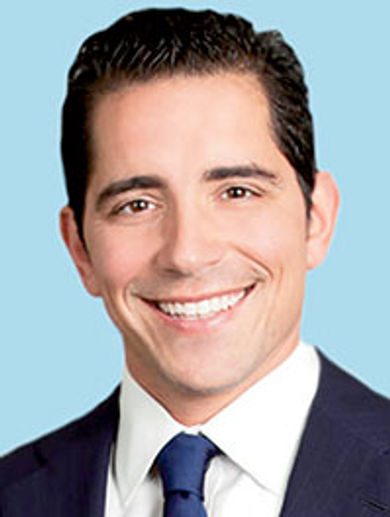 Cosimo Bruzzese, Briggs Inc.
 Cosimo Bruzzese, vice president of business development for New York City-based DMC Briggs Inc. and a member of FICP's hospitality partner advisory committee, agrees that clients increasingly are looking for new, authentic ideas.
Bruzzese says his clients want to give top performers experiences -- for example, cast meet-and-greets after a Broadway show or a live Saturday Night Live taping -- rather than fancy décor. "These are the next level of incentives -- unique activities participants can post on Instagram and Facebook right away."
8. Lead times are shorter... and longer. Lead times for financial/insurance incentives -- as in other industry segments -- remain tight. Sources point to several reasons: Planners generally don't know the total number of attendees until the end of the incentive qualifying period. In other cases, some firms are offering short-term " pop-up" programs to push certain products.
One planner put the blame on the C-suite: "We can't get executives to focus on what they want to do on-site until very close to the event, so it's hard to book the right space when we don't know the needs."
While short-term booking is still the norm, Isabel Mahon is seeing a trickle of long-term events from clients. "Some already are looking at 2017 and 2018," she says. "Seven years ago, financial/insurance planners booked three years out, and once again, planners today realize they need to plan ahead to get preferred dates and space."