Meeting outside the United States presents a world of unique challenges for planners. Setting a smooth course often involves a lot of trial and error, as seasoned planners can testify. We asked international planning pros to share their hard-won advice with M&C readers.
1. Define meeting-space needs. Making sure that meeting space at hotels in international destinations is available for the entire time required (including set-up time, overnight holds and break-down) is a hot button for John Huffman, vice president, sales and marketing, for Robbinsville, N.J.-based Meeting Alliance.
"There have been many times when I've asked a hotel's sales manager to send me a proposal based on the required meeting space being held on a 24-hour/overnight-hold basis during a meeting," Huffman says, "and I've received a proposal back that lists the daily meeting times running until 5 p.m. and the corresponding meeting-room rental fees. When I see this information in the proposal, I then contact the sales manager to confirm if the space will truly be available on a 24-hour/overnight hold, and whether the daily meeting-room rental fees listed in the proposal reflect that requirement."
To avoid such exchanges in the future, Huffman now asks the hotel's sales manager at the outset to include a sentence in the proposal that clearly states meeting-space hours and daily fees, and highlights any additional fees that might be charged.
2. Hire local A/V. Rather than traveling with an A/V team and equipment, Leslie Zeck, CMP, CMM, director of meetings for the Alexandria, Va.-based International & American Association for Dental Research, uses local A/V services.
"Most overseas hotels are equipped with or have access to the latest technology. Don't spend unnecessary dollars or take risks in shipping expensive equipment that you can easily rent," Zeck says. Another plus: A/V equipment is usually priced significantly lower outside of the States, whether you use the venue's in-house suppliers or hire a local vendor.
When contracting for A/V services, Zeck recommends including photographs and descriptions of the specific equipment required, so nothing is left to chance.
3. Avoid shipping. Shipping materials to international meetings is among the biggest headaches for Agnes Canonica, general manager, the Americas, for global planning firm MD Events. "It gets very expensive," she says, "and at times, depending on the country, it is unreliable."
Canonica recommends working with a local destination management company to get printed materials, collaterals and signage made locally. She also prefers to source gifts and giveaways locally to avoid shipping costs, custom broker fees, additional import taxes and the risk of the items not clearing customs.
"This is why site inspections are extremely important, including meeting with your entire supplier network and vetting who will work on your program," says Canonica.
If the program is last-minute and small enough, packing materials in your checked luggage is an option, Canonica notes. However, she warns, be sure you have all of your meeting documentation -- attendee list, hotel contract, etc. -- to show customs to verify the business purpose of carrying such cargo.
Foreign Aid
When working and traveling abroad, consider these handy tools and apps, curated from
M&C's
Savvy Planner tips:
• Wallet-sized and durable allergy-translation cards from
SelectWisely explain a traveler's specific food and drug allergies in the language of your choice. Cost: About $14.99 per card.
• Viber, the popular platform that lets users text and call for free via Wi-Fi and 3G, recently introduced a new public chat feature that lets you broadcast your conversations to others.
• Track purchases on international trips with
Simply Declare. The app automatically calculates the grand total in U.S. dollars, so you'll know when you're near the customs-exempt limit. It also stores receipt photos and converts currency.
• Dufl, an app-based packing service, will store, launder, pack and ship an entire trip's wardrobe to your destination. Cost: $9.99 for closet storage plus $99 per trip (includes roundtrip shipping, cleaning and processing).
• Should you take a plane, train, bus, taxi or ferry to get to your destination?
Rome2rio.com helps users determine the quickest, easiest options -- at no cost.
4. Know 'courtesy-hold' policies. Whenever the Meeting Alliance's John Huffman asks an overseas hotel's sales manager to place a courtesy hold on meeting space, he always specifies that it should be held on a "first option" basis, meaning the space will be held exclusively for his group over a specified time period until a contract is signed, something most U.S. properties offer. He also requests written confirmation of this promise.
"Over the past few years, I have learned that many European hotels extend what is called a 'shared option' courtesy-space hold," says Huffman. "This means that one or more companies might be holding meeting space and/or guest rooms over our requested dates, and whoever signs a contract first gets the space, which can lead to confusion and disappointment if the client isn't aware."
 Ping He, global general manager,
Asia/Pacific, Maritz Travel
Ping He, global general manager,
Asia/Pacific, Maritz Travel 5. Understand local business practices. It's critically important for anyone organizing events outside the States to approach other countries with "informed empathy and an open mind," says Ping He, global general manager, Asia/Pacific, at Maritz Travel. "The right approach will help you open the door to good relationships and will build trust. Japan, for example, is a country ruled by the notion of law and order. It's part of the Japanese DNA, and can often be perceived by non-Japanese as inflexibility."
Rules are rules, notes He. "If you were to submit a single name for a double-occupancy room, for instance, your request would be rejected. The Japanese would rather let the room stay empty for the night than book it with just one person." Instead, she advises planners to request a single room when just one delegate will occupy it, as per the local custom.
6. Get the timing right. When planning international events, Agnes Canonica always checks holiday calendars for the destination as well as the countries of visiting attendees to avoid conflicts. For example, she will not schedule events on major Roman Catholic holidays in most Latin American countries.
Likewise, when creating the meeting agenda, she considers the local norm of business hours and meal times. For example, in Spain she holds off-site dinners after 9 p.m., due to late dining customs there, and avoids starting meetings before 9 a.m. in Latin America.
7. Create a VIP arrival suite. For attendees who arrive bleary-eyed and exhausted from an overnight international flight, there's nothing worse then hearing "your room isn't ready."
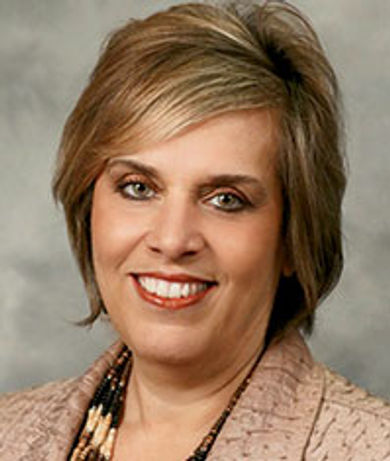 Victoria Ascione, owner,
V Event Management
Victoria Ascione, owner,
V Event ManagementWhen participants are arriving early from afar, Victoria Ascione, CMP, CMM, recommends setting up a VIP room in the hotel, where guests can relax, unwind, and feel welcomed and comfortable until their rooms are available. For a recent Paris program, Ascione, owner and chief event strategist of Coral Springs, Fla.-based V Event Management, provided a hot breakfast in the lounge, complete with coffee as well as Bloody Marys and mimosas. "We also arranged for access to the hotel fitness center and spa, so guests could shower and freshen up," she says.
Ascione also had a local tourism representative stationed in the hotel lounge to offer guests suggestions and maps for places of interest within easy walking distance. An on-site grab-and-go station was stocked with bottled water, fruit and healthy snacks for attendees to take with them as they explored the city.
"Although guests are always anxious to get checked into their rooms, a VIP hospitality lounge makes the wait a little easier and shows that you care. It's definitely a good first impression," Ascione says. (Note: If your budget allows, Ascione recommends booking guest rooms for the night before, ensuring beds for weary morning arrivals.)
8. Request private dining. Food and beverage works a bit differently in international hotels than in domestic properties, according to Kelly Gallagher, director of sales for New York City-based Site, Search & Select. "For example, overseas, breakfast typically is included in your room rate, and is offered as a buffet in the hotel restaurant," she says. "It's rare that a full breakfast is served right in the meeting space."
For lunch, says Gallagher, international hotels generally offer groups either a standing buffet in the foyer of the meeting space, or they expect attendees to go to the lunch buffet in the restaurant.
"While this is the norm, with the right information up front, hotels can accommodate private meal space," notes Gallagher. However, she adds, the private space might come at an additional cost and should be specified in the contract.
9. Reach out to the DMO. Karan Spanard, principal for New York City-based Maryada Strategies, always enlists one important ally before she begins planning her international events: the destination marketing organization (aka the national tourism office or convention and visitors bureau).
"Not only are they very familiar with what the city or region has to offer, but they can introduce you to key local contacts -- hotels, special-event venues, speaker sources, incentive tours, transportation, etc.," Spanard says. "Many DMOs have offices in the U.S., and, best of all, their services are free of charge."
10. Check passports. In your pre-event communications, stress that attendee passports should be valid for at least six months beyond the dates of their travel, says Karan Spanard. Many countries have this requirement, and airlines might deny boarding to passengers if passports don't reflect the extra time.
For her own peace of mind, Spanard scans and emails a copy of her passport to herself or uploads it to her Dropbox account. "This can help expedite the process of replacing your passport if you lose it while out of the country," she says.
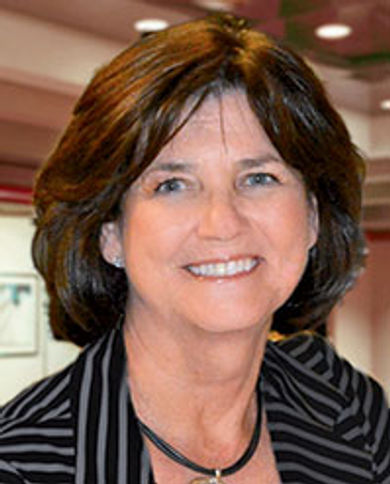 Pat Durocher, president,
Global Cynergies
Pat Durocher, president,
Global Cynergies11. Rethink electronic RFPs. While eRFPs are widely used in North America, they are not the standard practice of doing business with hotels in many countries. Typically the conversion (or booking) rate on such communications is very low, says Pat Durocher, president of Scottsdale, Ariz.-based Global Cynergies. "Given a choice, the hotel might respond to other types of requests (email, phone calls) that they believe have a higher percentage of conversion.
"Asian and European hoteliers behave very differently toward eRFPs," Durocher adds. "Asian suppliers have adapted to these systems in a manner similar to their counterparts in North America, while we often hear from our European suppliers that eRFP systems are impersonal, and that they are unable to communicate effectively without human conversation."
Durocher offers the following suggestions to ensure better responses:
• Use a short version (one or two pages) of an eRFP, and ask specifically for what you need.
• Include only those questions that are truly relevant to the event.
• Provide enough details about your event to encourage a proper response.
• If you're flexible, be clear that alternative dates are possible.
 Michael Hudson, president/CEO,
Site, Search & Select
Michael Hudson, president/CEO,
Site, Search & Select12. Book right-sized space. Pay close attention to the size of the meeting space offered for your group's size, cautions Michael Hudson, president and CEO of Site, Search & Select. "While U.S. attendees are used to a fair bit of elbow room in a meeting, international hotels tend to offer tighter quarters than they are accustomed to."
On your initial request for proposal, he suggests, "be clear to state your required square footage for each room, rather than your number of attendees, or there could be some back-and-forth on the size of your meeting room."
13. Know your Wi-Fi needs. Wi-Fi in many hotels outside the U.S. can be a pleasant surprise to planners -- many properties offer complimentary service throughout their properties, says Global Cynergies' Pat Durocher. "Many times, basic Wi-Fi is included and, yes, that covers multiple devices."
The caveat, she says, is that Wi-Fi speed might be an issue, although many properties typically offer the option of upgrading to faster service for a fee. As with so many meeting details, "just get everything in writing, so there are no surprises," Durocher says.