This year London will dominate the headlines -- and for all
the right reasons. London and Great Britain again will dazzle the world
with a deft hand at pageantry, planning and performance in celebration
of the Queen's Diamond Jubilee and the Summer Olympics.
Those
who thought last year's royal wedding of Prince William and Katherine
Middleton was extravagant should hold on to their fascinators. That was a
relatively modest affair when compared with what's in store for 2012.
The Jubilee, which marks only the second time in 1,000 years that a
British monarch has reigned this long, is positively historic. While it
will be celebrated all year, the highlight is the national long weekend
of June 2-5, when Queen Elizabeth II will lead 1,000 boats down the
Thames. Related events will include concerts, fireworks and a "big
lunch," during which the nation is encouraged to participate in a
countrywide picnic.
Since she is often referred to as the Queen
of England, it's understandable that many Americans fail to see the
significance to anyone outside of Great Britain. People forget that Her
Majesty also is Queen of Canada, Australia, New Zealand, most of the
Caribbean and parts of Africa, Asia and the South Pacific. In total, she
is Queen to 16 countries plus 14 British Overseas Territories, such as
Bermuda, and head of the 54-country Commonwealth, which includes
oil-rich Brunei, South Africa and immerging markets like India and
Pakistan.
In fact, the Queen reigns over a quarter of the world's
population. In that sense, London isn't merely a national capital, it's
an international capital and arguably ranks alongside Washington, D.C.,
Beijing and Moscow as the world's most influential cities. This
contributes to its appeal as a meetings destination that is squarely in
the world's spotlight.
For groups, the royal theme always has
been a draw, says Chris Lynn, director of sales and marketing for London
and Partners, the city's destination marketing arm. But now, creative
planners can borrow concepts from the Jubilee and weave them into their
programs. For example, the boat that the Queen and the Royal Family will
use for the water pageant is available for hire from Magna Carta
Cruises. It's just one of several dozen rentable vessels plying the
Thames, including tall ships that will require Tower Bridge (the one
everyone thinks is London Bridge) to raise its bascules.
Fare Warning
The memories
made by conducting a U.K. meeting or incentive program during this
milestone year might be priceless, but flights there will carry a hefty
cost.
In December 2011, the British government approved an 8
percent increase in the U.K.'s airline departure tax, called an air
passenger duty (APD). The measure, slated to go into effect in April,
will increase the already steep departure fee for U.S. passengers, from
about US$94 to US$102 for economy-class tickets and double that for
premium classes.
What's more, roundtrip airfares to Europe rose
by about US$6 in January, due to the European Union's Emissions Trading
Scheme, which went into effect this year for the airline industry.
At
press time, airlines and travel industry associations were actively
lobbying the British government to prevent the departure tax hikes from
taking effect next month. A spokesperson for London & Partners, the
capital's convention and visitors bureau, told
M&C, "We are
actively trying to attract business visitors to London, and in such a
significant year it's therefore disappointing to see the rise being
placed on APD."
A spokesperson for Visit Britain echoed the
concern. "The cost of traveling is certainly a major factor when people
decide to book a flight. Any move to reduce costs to help attract more
inbound visitors will improve the U.K.'s competitiveness as a
destination."
Illustration: @istockphoto.com/funnybank The Games begin
London's other great event this year, the Summer Olympics, is really
putting a new face on the place. More than US$16.2 billion has been
spent in the city to build new hotels and renovate existing properties,
improve tube services and add the new Javelin line, which is capable of
moving some 25,000 people an hour between Kings Cross and the Olympic
Village.
 Rapid
development is creating new legacy venues for groups to consider. After
the Games, the 250-acre renamed Queen Elizabeth Olympic Park in the
East End will feature an entertainment plaza and more than six miles of
waterways, plus cycling trails, gardens, parks, and indoor and outdoor
venues for hire. The centerpiece is the 60,000-seat Olympic Stadium,
which will provide lecture and conferencing space in 80 rooms. In a type
of nod to James Bond, the Aquatic Center will have movable pool floors,
flexible space and seating for audiences of 2,500 to 3,500. The
multi-use arena, normally used for handball, will have seating for 3,000
to 7,500 people. There's also a 6,000-seat Velodrome and the
15,000-seat Eton Manor Sports Complex. For out-of-the-box ideas, the
375-foot-tall ArcelorMittal Orbit, best described as a massive metal
sculpture, can cater to up to 300 people in its two-story-high sky pod.
The Olympic Broadcast Center will have more than 63,000 square feet of
studio space adaptable for the needs of high-demand tech groups.
Rapid
development is creating new legacy venues for groups to consider. After
the Games, the 250-acre renamed Queen Elizabeth Olympic Park in the
East End will feature an entertainment plaza and more than six miles of
waterways, plus cycling trails, gardens, parks, and indoor and outdoor
venues for hire. The centerpiece is the 60,000-seat Olympic Stadium,
which will provide lecture and conferencing space in 80 rooms. In a type
of nod to James Bond, the Aquatic Center will have movable pool floors,
flexible space and seating for audiences of 2,500 to 3,500. The
multi-use arena, normally used for handball, will have seating for 3,000
to 7,500 people. There's also a 6,000-seat Velodrome and the
15,000-seat Eton Manor Sports Complex. For out-of-the-box ideas, the
375-foot-tall ArcelorMittal Orbit, best described as a massive metal
sculpture, can cater to up to 300 people in its two-story-high sky pod.
The Olympic Broadcast Center will have more than 63,000 square feet of
studio space adaptable for the needs of high-demand tech groups.
And
no, says Chris Lynn, it's not too late to book a last-minute group for
the Games. "It certainly will be a busy time, but going into the Games,
we have 100,000 hotel rooms, more than Beijing had, so we certainly have
the capacity for those who are still looking to come. I'm not going to
say it will be easy -- obviously there is the ticket element as well,
which is something planners need to work on with their authorized ticket
reseller -- but for smaller groups there are still opportunities."
"Authorized"
is a key. Ninety people were arrested in January in an Olympic
ticket-scamming scheme. Two authorized sellers are London-based Thomas Cook Sport and Jet Set Sports, headquartered in Far Hills, N.J.
Jet
Set's president, Mark Lewis, has experience selling previous Games. For
Beijing, he was booking last-minute travelers while the competition was
in progress. "Some people watch the first week on TV and say, 'Gosh, we
have to go to this thing,' " says Lewis. "And so we get calls to see if
there's anything we can do."
Of course, advance planning is
advised. "If you're talking to me two weeks before the opening ceremony,
we're going to have fewer choices available than we have today," says
Lewis. "But the good thing about the Olympics is that for 18 days there
are several hundred different sporting sessions in 40 different sports,
so you can always come see something. If you say you have to see the
men's 100-meter finals, we might be sold out. If you say you have to see
the Olympics, we'll have something."
In mid-February, Lewis
still had tickets to the opening and closing ceremonies. If purchased as
part of a package, he says, the greater challenge will be buying plane
tickets to London (see "Fare Warning" at left).
Royal experiences While
new venues are in the works, existing spaces are creating themed
experiences for groups that highlight London's history, past and
present. The Historic Royal Palaces, which have a dedicated team to
manage five London-based palaces for meets, greets and eats, are
constantly developing new ways to work with ancient venues. Kensington
Palace, the soon-to-be new home of the Duke and Duchess of Cambridge,
has several refurbished spaces for groups.
 Henry VIII's country
cottage, the six-acre Hampton Court Palace (that's the actual building
size), can accommodate meetings, banquets, team building and golf on the
only course on the grounds of a royal palace in the world.
Henry VIII's country
cottage, the six-acre Hampton Court Palace (that's the actual building
size), can accommodate meetings, banquets, team building and golf on the
only course on the grounds of a royal palace in the world.
Planners
can hire the moat at the Tower of London or conduct daytime meetings in
a specially designed space within the palace, then debrief with a
champagne reception while basking in the bling of the Crown Jewels.
Some
visitors might enjoy the irony of dining at the smaller Kew Palace,
home to Mad King George, aka George III, the king who lost America in
the Revolutionary War, while those of a small "r" republican persuasion
might enjoy the city-center surroundings of Banqueting House, where
England flirted with a U.S.-style government by beheading Charles I. In
London, every place has a story.
London lends itself to plenty of
pop-culture themes, as well. Last August, Jodi Swailes, Des Moines,
Iowa-based senior buyer and geographic specialist with incentive house
ITA Group, took a 60-person family-focused automotive incentive to
London and Scotland. "The program was themed around Harry Potter,
because the final movie was coming out," she recounts. "They did a Harry
Potter tour one day, had a private screening of the movie, a day on
their own and then took a train up to Scotland, which kind of made it
like a Hogwarts Express experience."
Those enraptured by Downton
Abbey, the popular British TV period drama, might consider a
town-and-country program, suggests Chris Lynn. "London offers two
destinations in one. You have downtown London, which most people are
very familiar with, and the countryside of London, where we have great
spa and resort properties a little bit nearer to your departure points
from Heathrow or Gatwick." These former aristocratic country estates,
once owned by earls, dukes and lords, offer groups exclusivity and the
opportunity to experience country pursuits like clay pigeon shooting,
fly-fishing, carriage rides, equestrian events and golf within an easy
drive from the city center.
Currency matters London is a
world-class city, and prices often match its royal reputation. Some rate
relief could be on the horizon, though, as three key market forces are
at play. The first is supply. For decades, London hasn't had a
noticeable increase in room capacity. However, by the time the Games
open, the city will have added 10,000 hotel rooms, mostly in the four-
and five-star categories. Aidan Ford, group managing director of
Wedgewood DMC Group, London, says since the release in January by the
London Organizing Committee of the Olympic Games of 120,000 room nights
(20 percent) from their 600,000 night room block, "we've already noticed
the downward pressure." One four-star property, he says, dropped rates
from US$800 to US$475.
Another factor is the potential dip in
the value of the euro against the British pound. "The strength of the
euro against the pound created our upturn," says Ford. "We, and all of
my other industry colleagues, have seen a fantastic inbound flow from
Europe because of that. But the European Union is in such a mess, I feel
later in the year the euro has got to fall," which will squeeze client
budgets, he expects, "and London hoteliers will modify their prices
accordingly."
A third influential matter: the value of the pound
against the U.S. dollar. Between January 2008 and January 2012, the
pound dropped nearly 20 percent against the dollar, from US$1.98 to
US$1.57. That's been a boon for clients, says Jodi Swailes. Many groups
returning to the U.K. and Europe after a several-year absence haven't
seen an increase in their meeting budgets and are pleasantly surprised
to see their dollars go further.
The weakened pound "made all
the difference," Ford notes. "Our overseas corporate clients suddenly
could afford to come back to the U.K."
Booking beyond 2012 While
revenue managers rule the short-term market, "bargains can be had in
the longer term," notes Paul Miller, managing director of London-based
Spectra DMC. "With an additional 10,000 rooms to sell in London, there
has never been a better time to think about the city for 2013 or 2014
and beyond. Added value and concessions are being offered more than
ever, if you ask the right questions." He adds, "Outside of the actual
Olympics dates, we are finding that rates in London hotels are extremely
competitive compared with other European capitals."
With an
anticipated TV audience of 2.3 billion watching the Games, adds Miller,
"what better destination to choose than London to motivate and excite
employees and meeting delegates? Last year, we experienced what a
positive effect the Royal Wedding had on audiences around the world,
which filters down to the meetings and incentives market. We have no
doubt that the same thing will happen with the Olympics and the Diamond
Jubilee. After all, no one does pomp and pageantry like we do."
Where to Stay
In preparation for the Summer Olympics and the Queen's Diamond
Jubilee, London hoteliers have both remodeled existing properties and
opened new ones. By the start of the Games, London will have the more
than 10,000 new guest rooms in all categories. Among new and future
openings:
• The 85-room Bulgari Hotel & Residences
in Knightsbridge opens in April with a ballroom, two private dining
rooms, two boardrooms, two offices, a business lounge and a 47-seat
screening room.
• The 306-room Hilton London Wembley, not to be confused with the Hilton Wembley Plaza Hotel, opens in July with 10 breakout rooms and a ballroom that holds 700.
• The Wellesley is a 36-suite Knightsbridge property scheduled for a November opening.
• The 350-room Art'otel Hoxton is scheduled to open in 2013.
• In 2015, the 245-room Radisson Edwardian will open in the Odeon West End Theatre in Leicester Square with a two-screen cinema and five
restaurants.
Other properties to consider:
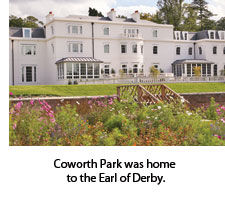 • For a town-and-country option, London estate resorts include the 70-room Coworth Park, a country house, hotel and spa on the Earl of Derby's former 240-acre estate.
• The Duke of Northumberland's Syon Park is now the 137-room London Syon Park, a Waldorf Astoria property.
• Formerly the Earl of Clarendon's home, The Grove has 191 rooms and a golf course.
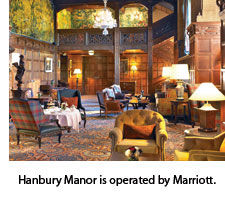 • Marriott operates the 149-room Hanbury Manor.
• The 193-room Luton Hoo is set on 1,000 scenic acres and features golf, a spa and a bespoke meetings wing. A.L.