Our Panel

Russ Burbank
Senior vice president of operations, Talking Stick Resort, Scottsdale, Ariz. (opening spring 2010)

Tony Capuano
Executive vice president of development, Marriott International (JW Marriott San Antonio Hill Country Resort & Spa opened Jan. 22, 2010)

Stephen Deucker
Director of sales and marketing, Ritz-Carlton, Dove Mountain, Marana, Ariz. (opened Dec. 18, 2009)

Susan Helstab
Executive vice president of marketing, Four Seasons Hotels and Resorts (Four Seasons Resort Vail opening summer 2010)

Nancy Longstreth
Director of sales and marketing, Hyatt Regency Clearwater Beach, Fla. (opened Feb. 1, 2010)
Bill McBeath
President and COO, Aria Resort & Casino, CityCenter, Las Vegas (opened Dec. 16, 2009)
Construction timelines and financing agreements stalled or ran aground at an alarming rate in 2009. Project postponements and cancellations were at historical highs in the fourth quarter, according to Lodging Econometrics, the Portsmouth, N.H.-based hotel real-estate consultancy. Yet, a number of companies have overcome adversity and are planning or already celebrating resort openings (see "Meet the Newcomers").
To better understand the challenges facing these properties and how they've had to adjust their marketing and branding in a down economy, M&C spoke with a number of key industry executives, at both the property level and at chain headquarters.
M&C: What are some challenges you've faced by opening a resort in the current economic climate?
Helstab: If you're opening into a destination where demand is soft and it's oversupplied, particularly in the five-star end, it's going to be difficult. We've just opened a hotel in Beirut, and it's going to do phenomenally well because there's more demand in Beirut, which doesn't have a hotel of the caliber of Four Seasons. That's what drives whether it's going to be a really tough opening for a hotel or resort.
Longstreth: The biggest challenge is that our sales team is accustomed to smoother negotiations with meeting planners. In this case, our salespeople have not been in the driver's seat. In the past, not as many concessions were asked of us. Also, where you're opening a resort, the expectation from the ownership group is that return on investment is going to be there as soon as the door opens.
Deucker: Of course there are challenges. But the way I look at is, why wouldn't you open a resort now? We've been building for the past year. All the best trade and construction companies were available when we were building. We were really the only project going on in the Tucson area. From a construction standpoint, that's perfect timing. Three years prior, it would have been different.
McBeath: It was a little terrifying to be opening up into such a soft economy and bringing on new luxury capacity in a market that was shrinking. When you plan these things -- it was a 60-month process for us -- you know that the economy is cyclical. But to be at the narrowest point of its constriction, opening up something of this magnitude? It's been challenging. Obviously, the pricing we had built into our business model has changed significantly, and although we're priced at the top end of the luxury marketplace here in Las Vegas, these aren't the same rates that we enjoyed in 2007. But you build a product for a certain customer who is willing to pay at the highest price points as long as they get the kind of service, accommodation, amenities and perceived value associated with that. So we've maintained our pricing and our market position, and it really wouldn't do me any good to go out and discount further.
M&C: How does marketing and branding a new resort today differ from methods of the past? What are some specific issues you've had to address?
Capuano: I think that today, whether it be a leisure-transient or group customer, what they're seeking right now is value. It's less about the name and the branding of the resort and more about the overall quality and value of the destination.
Helstab: We're selling value a lot harder than we ever have before, and we're reinforcing the importance of service and consistency. We've just changed the frame of the dialogue, and we reinforce all of those things that would help a customer, or a third-party meeting planner, be able to sell Four Seasons or sell a five-star experience with confidence -- to overcome some of the potential resistance.
Longstreth: We are really listening to the customer and, in particular, paying attention to the things that planners require to hold the meeting. We can't give them everything, so we try to prioritize. One of the biggest concessions they ask for is complimentary meeting space. Also, a lot of them are asking for discounts on menu and audiovisual pricing. We've come up with programs to adjust to these requests.
Deucker: This past year there were so many offers to planners for free breaks and other concessions, but when you talk to our most loyal customers, it's not about what you get for free. Ultimately, partnership is more important than a free continental breakfast. Planners want a relationship they can trust, because curve balls will keep happening in 2010. Attendance might still be down, checkbooks won't be opening freely. Having a relationship with the general manager and sales managers is important for when things go wrong. In fact, I don't think relationship-building is talked about enough. And every business is looking at value now. We try to be fair and equitable with pricing, without going rock bottom.
McBeath: We didn't really need another casino and hotel in Las Vegas, so we had to do something different. That's how we came up with the mixed-used development concept. At the same time, Aria was created, branded and marketed to be intelligent, contemporary luxury, and designed to complement Bellagio and the rest of our luxury properties. For the past five years, people have been watching CityCenter, and Aria specifically, come out of the ground. To celebrate its completion, people have come back, or booked a convention or meeting to be one of the first groups to be here.
M&C: Has the very word "resort" presented
difficulties? Do you avoid it when naming new properties?
Capuano:
We name and position our hotels for the long term, and so we're
certainly not going to pretend that the JW Marriott San Antonio Hill
Country Resort & Spa is not a resort. It's got all the attributes
and facilities and amenities of a resort, and that's how such properties
are positioned. I don't think it's creating any sort of enormous
barrier to securing group bookings.
McBeath: I don't think
it scares people away. I think that what "resort" says, vs. Aria Casino
or Aria Hotel, is that it's a full-service destination, with all of the
amenities -- F&B, retail, entertainment and, of course, beautiful
hotel rooms, a spa and a salon. We discussed whether we should put
"casino" on there, because it was so distinctly different from other
casino properties.
Helstab: We really haven't thought
about either renaming a resort or a hotel or not putting the resort name
on any of our properties that we're opening in the near future.
M&C: Have you had to change your pitch to
attract
groups? How have your negotiations changed?
Capuano:
We're being pretty aggressive in terms of programs and deals we're
putting together for meeting planners -- relaxed attrition allowances,
all sorts of point promotions through the Marriott rewards program,
those types of things -- to try and spur a return of group volume. But
our focus is on the long-term. I think our view is that we'd be
ill-advised, on a daily, weekly or monthly basis, to change the way we
pitch our offerings.
Longstreth: For resorts, which are
luxury products, it's about trying to find customers who are able to
come into properties with a more lucrative spend. Something different is
that there has been more targeted marketing toward groups that have
been less effected by the economy, such as law firms and medical
markets. We're also reaching out to international tour groups. That
market remains strong. We've seen the financial markets decline, and
some pharma is scaling back.
One strength we see is the social
group markets [weddings, family reunions, etc.], which have huge blocks
of rooms waiting to come into this type of resort.
The biggest
thing planners are saying is that it's important that we as suppliers
understand the situation they're in. Those conversations take place now
more than ever. The other thing we're dealing with is the customer's
unwillingness to commit to cancellation fees. In the past we would have
put a cancellation fee in the contract. Now we'll hold rooms as long as
we can, but if a new group comes along and wants to book, we'll call the
first customer and let them know. These kinds of transactions are more
transparent now. We depend on the group market to succeed. We could
never survive without all the F&B and ancillary revenues.
Helstab:
We are very intent on making sure that we are competitive in this
environment. And so we're very flexible around rates and other things
that are of interest and concern, like attrition and cancellation
policies, to make sure that people feel that they don't take on a lot of
risk in booking business now. We're finding that we're booking a lot of
business with customers who never thought they could afford a Four
Seasons, who aspired to having some of their meetings at a five-star
hotel, and who now find it affordable. It will be really interesting to
see how we are able to hang onto that business -- you know, convert
those first-timers, and keep them in our hotels as the economy comes
back and as demand comes back.
Deucker: We got creative. A
lot of it was about keeping planners appraised of the resort's
development and progress. If they were concerned about things, we worked
through them one by one. For some, we gave leeway in their contract.
Sometimes we put in a clause that allowed planners to hold the space
until construction was completed -- we would release them from the
contract before then.
McBeath: The fact that we designed
and built a LEED-certified green building campus -- the largest such
development in the world -- demonstrated to our corporate clients how
serious our company was about being green. And if we can establish and
set the precedent with a development of this magnitude, it's hard for
anybody not to say that they are going to make their best efforts to
reduce their carbon footprint for future generations. And that has been a
very strong talking point and sales point for us.
M&C: Are you seeing enough pickup in group bookings
that you can estimate a turnaround time for the resort market?
Helstab:
We will experience the recovery of the business in 2010, but there
will continue to be downward pressure on rate. From the revenue side,
it'll still be a tough year. Forecasting the business for 2010 will
continue to be a challenge because of the short-term nature of it. The
fact that there are leads for 2011 and 2012 is terrific. We're really
excited about that -- it definitely speaks to business and consumer
sentiment.
Burbank: From our booking pace, we see the
upturn coming at the end of 2010 and first quarter of 2011.
Deucker:
Pre-opening, we were selling a dream, which at that point meant
selling concrete and girders. This was particularly challenging about a
year ago, when the doom-and-gloom news stories about financing issues
and foreclosures were everywhere. Customers weren't able to check in and
test out an unfinished product. They would read the newspapers, and
then right after that we would be trying to convince them to book.
Still, we've done pretty well. Since we've been open, we've had about
100 different customers come through, travel agents, planners, etc. It's
easier to sell, now that the fear that we won't open has passed. But
we've battled that fear a lot. Hopefully it's coming to a close.
McBeath:
We're very bullish on the future outlook, specifically for Aria, in
the corporate meetings space. But it's amazing -- we were booking stuff
in December for February. It's one thing to have your individual
traveler or leisure window shorten up and be inside of 30 days, but when
your corporate meetings for 100-plus room blocks start getting inside
60 days, you can see that there's a lot of volatility still around in
the market. This year was really guaranteed to be a tough year for us,
with various issues that we had last spring with our partner and
financial liquidity. No matter what we said, we couldn't guarantee that
we were going to be open, so who was going to book with us in the first
quarter?
M&C: How do you expect
your balance of business to differ by virtue of opening in this climate
vs. in the past?
Burbank: Historically,
our market, Scottsdale, has been split 60/40 business vs. leisure.
Currently, the market is reversed and performs on a 40/60 groups vs.
leisure split. We expect, and have expected, a 50/50 split in our
location.
Capuano: We're pretty optimistic that things are
starting to turn a bit. While groups will probably lag a little bit,
we're seeing a pretty strong return of leisure travel. And so, as it
relates to San Antonio, while we probably won't get our stabilized group
mix as quickly as we might, we're encouraged that we can fill rooms
with a lot of transient business in the interim, while we wait for
groups to return.
McBeath: We're not going to get what we
had originally projected for conventions this year because of those
issues we had last spring. So we're offsetting that through the casino,
through individual travelers and through leisure. But you can see the
trend line; convention booking goes up every week when I get the report.
I think that by 2011 you'll see a more normalized mix that's
representative of the business model we originally had forecasted.
Deucker:
Truthfully, I'd rather be new right now than have to reinvent
ourselves. If you talk to someone who has been at the same hotel for
five years, it's all doom and gloom. We're ahead of the booking base we
thought we'd be at, from a group standpoint. Transient has just started
to book more, but since we just opened, we're expecting that will pick
up. One great thing is that we're not having to shed expenses, as other
hotels have had to do. We're in our honeymoon phase. I think by the end
of the year, business will be coming up again. We're flat right now, but
I feel positive about it.
Meet the NewcomersHere are some recent
and on-deck resort debuts
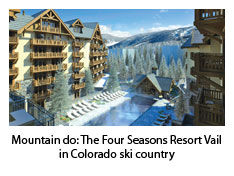 Four Seasons Resort Vail (Colo.)(416) 445-5031; fourseasons.com/vail
Opening: summer 2010
Guest rooms: 121
Meeting space: 8,510 square feet
A "fresh interpretation of the grand alpine hotel," according to Four Seasons, this soon-to-open mountain resort is a short walk from Vail Village. Guest rooms will offer mountain and pool views, along with furnished balconies and gas-burning stone fireplaces. Other offerings include a full-service spa with 13 treatment rooms; a heated outdoor pool and two heated whirlpools; and the Flame Restaurant and the Fireside Bar & Lounge. The resort will offer 8,510 square feet of meeting space, including a large outdoor terrace.
Hyatt Regency Clearwater Beach (Fla.) Resort and Spa(727) 373-1234; clearwaterbeach.hyatt.com
Opened: Feb. 1
Guest rooms: 250
Meeting space: 32,000 square feet
The Hyatt Regency Clearwater Beach Resort and Spa opened last month along Florida's white-sanded Gulf Coast, about a 20-minute drive west of Tampa. The property's 250 guest rooms feature roomy kitchens equipped with refrigerators, microwaves, stoves and dishwashers, plus stunning views of either the Gulf of Mexico or the Intercoastal Waterway.
Upscale dining can be enjoyed at the Shor Restaurant; for lighter fare, the poolside Swim bar and grill and a casual eatery called Skimmers are available. The hotel offers 12,000 square feet of indoor meeting space and 20,000 square feet outdoors. Open-air spaces include an eighth-floor pool deck overlooking the Gulf and a 4,400-square-foot rooftop terrace.
JW Marriott San Antonio (Texas) Hill Country Resort and Spa(210) 403-3434; jwsanantonio.com
Opened: Jan. 25
Guest rooms: 1,002
Meeting space: 140,000 square feet
About a 20-minute drive from downtown San Antonio, in the Cibolo Canyons of Texas Hill Country, the massive 1,002-room JW Marriott San Antonio Hill Country Resort & Spa opened in January. On-site features include a 26,000-square-foot spa with 30 treatment rooms; six restaurants, offering a variety of food ranging from Tex-Mex entrées to sports-bar snacks; and a number of pools, slides and river rides. The property soon will unveil two professional golf courses, designed by Pete Dye and Greg Norman, respectively. Meeting space adds up to approximately 140,000 square feet, including two ballrooms, a 40,000-square-foot exhibit hall and three outdoor venues.
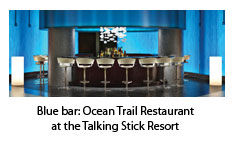 Talking Stick Resort, Scottsdale, Ariz.(877) 724-4667; talkingstickresort.com
Opening: spring 2010
Guest rooms: 497
Meeting space: 100,000 square feet
According to the Salt River Prima-Maricopa Indian Community, owners of the 497-room Talking Stick Resort, the property's name signifies a "calendar stick," or a thin piece of wood on which significant events are recorded using tribal symbols. Set in the desert east of Scottsdale, Ariz., the property will feature 240,000 square feet of gaming, a 13,000-square-foot spa, a fitness center, a cigar and wine bar, and seven restaurants. Meeting space will total 100,000 square feet (both indoors and out), including a 24,000-square-foot ballroom and 21 meeting rooms.
Web exclusive Profiles of three more exciting new resorts, including the mammoth Aria Resort & Casino Las Vegas.
mcmag.com/webexclusives