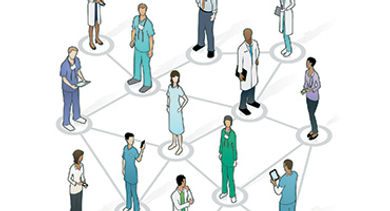
Building a Community
The Reston, Va.-based American Congress of Rehabilitation Medicine has a mission to improve the lives of those with disabling conditions through interdisciplinary research. The interdisciplinary focus is what makes the organization's annual conference unique -- and also a challenge, as the ACRM aims to reach rehabilitation researchers, providers, clinicians and administrators from more than 60 countries and covering nearly 30 areas of specialization.
Despite the inherent complexities, ACRM's annual Progress in Rehabilitation Research conference has grown exponentially, from approximately 171 attendees six years ago to more than 2,500 expected to take part in this year's event. "We are creating something that has never existed before," says ACRM CEO Jon Lindberg. "There has never been a global organization for rehabilitation research."
Before launching the PIRR conference six years ago, the organization faced a quandary. "We had all of these different diagnostics and different job titles we needed to gather," says Lindberg, "and we're global in reach, 65 countries. And we didn't have a penny to market. How would we go about trying to identify and pull in all of the people who were going to fit into the visionary group we were in the process of creating? The answer for us was social media."
Lindberg and the ACRM team set up various special-interest groups, such as for brain injuries, strokes and spinal-cord injuries. "And each time we'd set up a group, we would create conference content from our medical journal, a Facebook page and LinkedIn accounts, and we'd use Google and Facebook and LinkedIn ads to try to find the right people around the world. In doing that, we've been able to build up a database of from zero to more than 30,000."
The ACRM essentially has used social media to structure its conference community. Once targeted attendees were assigned to the appropriate groups, the organization cultivated relationships via those same online channels, primarily Facebook and LinkedIn, to share information and engage attendees between events. Rather than simply using social media as a way to nurture a community, the ACRM used it to build that community from scratch. "Our amazing growth has really been driven by this strategy," says Lindberg.
"Everyone says they want innovation at medical meetings," says Ellen Shortill, director of convention and meetings for the American Speech-Language-Hearing Association in Rockville, Md., "and yet, such meetings are the most resistant to change of any I've ever done in my life." Shortill made that point at a "Future of Medical Meetings" session this past January at the Professional Convention Management Association's conference in Vancouver, British Columbia, and she received applause from a roomful of medical-meetings stakeholders.
One of the factors hampering progress is that many associations in this highly specialized segment discourage the use of social media during meetings, a frustrating if understandable stance in a profession rife with myriad industry- and government-mandated rules, restrictions and proprietary concerns. A case in point is recalled by Berlin-based digital health-care consultant Len Starnes, who spent nearly 20 years in marketing for big pharmaceutical companies. A few years back he created a hashtag for a European medical society's meeting because they hadn't established one. "When I reached out and told them, they said, 'How dare you? Only the medical board will decide if and when and how and who will use the Internet to cover the conference.' And I thought, 'You have no idea what's happening out there, do you?'"
What's actually happening, says Starnes, is that doctors in some fields have very much embraced social media as a means of communication and education, and many societies and associations are awkwardly trying to keep pace. When one medical conference attempted to ban tweeting from presentations last year, the attendees replied with a resounding, "'You've got to be kidding.' They just ignored the ban," says Starnes. "And afterward, the organizers were picked to shreds. They were laughed at."
These incidents shed light on a core tenet of modern technology -- the democracy of information -- and how often that is at odds with traditional organizations. "They still think that they control access to medical-specialty information," observes Starnes. "They really believe that it's their domain. That's why they have real problems with using the Internet and social media -- they lose that position they've always enjoyed. It's a deep-rooted problem."
Freeing the content
Since becoming an independent consultant several years ago, Starnes has made waves with his critiques of traditional business models (one example: "The Medical Conference Is Dead, Long Live the Medical Conference," a slide presentation that looked at the impact of social media and digital technology).
"The classic medical-society conference is deeply conservative," Starnes says. "They've been doing these conferences for almost 100 years and they haven't changed much."
The most visible, obvious reaction to this problem is the FOAM movement, otherwise known as Free Open-Access "Meducation." It's a community and growing trove of medical education resources that can be publicly accessed anywhere and anytime. The FOAM movement's popularity is particularly strong among emergency medicine and critical-care physicians, who regularly share articles and research, and participate in discussions on public social media channels. While the movement is platform-independent, one need only to look at Twitter to see its impact: The #FOAMed hashtag, which didn't exist until June 2012, was used in nearly 900 million Twitter posts in 2014.
As the FOAM movement disrupts the traditional peer-reviewed medical journal process, its implications for medical education and meetings are likely to grow in significance over the coming years. Not only are more medical practitioners using social media as a result of the movement's burgeoning popularity, but the open-access ethos is a direct attack on the traditional medical-society model.
The changing attitudes about medical education and information underscore a real conflict for medical societies, affirms Dr. Steven E. Aks, an emergency physician and medical toxicologist affiliated with Chicago's Cook County Hospital. Aks serves on the board of the American College of Medical Toxicology and also has become an active participant in the FOAM movement. "In general, societies view education as a member benefit, and they want to be the exclusive source of that," he notes. "If it gets outside of their firewall, they lose control of it. And I do think that the FOAM movement is threatening to the societies in that sense."
Aks acknowledges that the lack of peer review and formal processes can be a problem with the FOAM movement, and reading information critically and considering its source is more crucial than ever. By the same token, attempting to muzzle those sources would be pointless, he adds. "It's better to have open access and share the knowledge than to contain it," he says. "And the societies, if they want to survive in this changing environment, have to come up with better content that needs to be delivered on-site in a creative way. So it's really putting new challenges to the specialty societies to up their game as well."
Medical Meeting SMACCdown
In 2013, three Australian intensive-care doctors founded SMACC -- otherwise known as the Social Media and Critical Care Conference. The premiere event, held in Sydney, drew some 700 attendees, achieving this without the benefit of any affiliation with any established society, university or association.
The founding doctors were integral members of the burgeoning FOAM movement, or Free Open-Access Meducation, a community that believes medical education should be free and freely available online, anywhere and anytime. SMACC attendees came from that movement to meet face-to-face, and to share knowledge via TED-style short presentations.
SMACC attendance grew rapidly, to 1,400 attendees in Queensland, Australia, in 2014, and more than 2,000 attendees in Chicago last year, representing more than 60 countries. This year's SMACC, which will take place this June in Dublin, Ireland, was capped at 2,000 attendees and has already sold out.
"It's the first conference I've been to where I felt this is a paradigm shift in the way conferences are happening," says Dr. Steven E. Aks, an emergency physician and medical toxicologist at Chicago's Cook County Hospital who was tapped to present in Chicago. "It just totally destroys the medical conference model."
The social media focus of the event means that the physician attendees all are accustomed to communicating via those channels. "You have an entire audience tweeting," describes Aks. "Everyone's got their Twitter feed open, and it just explodes during the lectures. It's crazy different from any other medical conference I've been to."
From the social media focus to the presentation format, to the fact that all sessions are recorded and posted online, SMACC's innovations stand out among a type of meeting that's too often resistant to change.
Gathering steam
Fueled by the FOAM movement, the use of social media by health-care professionals is gradually growing. "This is definitely not going away," notes Aks. And while pick-up is still very much dependent on the field and specialty, acceptance is increasing, and some tools are easing the way.
Symplur, for instance, has become a go-to source for social data analysis in the medical meetings field, primarily as a result of its Healthcare Hashtag Project. By allowing anyone in the field to register a health-care-related hashtag, Symplur has created a massive database of tweets and conversations on topics of interest to the profession.
Nearly 5,900 health-care conferences have registered hashtags with Symplur to date, allowing the aggregator to collect and analyze literally millions of tweets and better understand the ballooning social component of medical meetings. Real-time analytics are available online for any registered hashtag, while enhanced listings, deeper engagement consultation and comprehensive reporting are available for purchase by show organizers.
Cause for compliance concern
Medical meeting organizers still might be wary of public disclosure of information, and for good reasons. Manufacturers in the space -- pharmaceutical companies, device makers, biotechnology corporations -- must adhere to an array of guidelines and regulations, and for them, erring on the side of caution is generally preferred.
The U.S. Food and Drug Administration has issued guidelines for manufacturers on the use of social media. "They're recommendations," explains Pat Schaumann, CMP, director of professional development, healthcare sector, for the Meeting Professionals International Academy. "But I'm certain that people should be following these."
For instance, a manufacturer can't so much as "like" a page or a post that endorses their product without also specifying the risks of that product -- essentially the same rule that guides commercial advertising for drugs, dictating that a voiceover quickly listing every conceivable side effect closes out a television commercial.
Additionally, a pharma company representative who posts something about that company's product is responsible even for the commentary that occurs on that post. For example, if a doctor were to post an anecdotal comment on that post that a patient had experienced an odd side effect after taking said drug, the pharma company then would have an obligation to report that adverse effect to the FDA within 24 hours. In other words, if it can be proven that the pharma company was aware of the incident, they're obligated to report it.
"We've steered a little clear of the social media space," explains a pharmaceutical company source on condition of anonymity. "The FDA's guidance really wasn't all that specific, and I believe there are still some concerns about the risks we are taking. We don't have the resources to have somebody sitting there 24 hours a day, seven days a week, monitoring these social sites."
Pharmas are equally wary of putting too many risk-mitigation processes in place, such as the need to pre-approve every post or having a third-party monitor the posts. "Once you start doing that, I think you start to lose the moral fiber of social media," the source continues. If no authenticity is perceived in the social media activity, the value of posting on such channels becomes minimal at best.
Some pharmaceutical companies have experimented more than others with social channels, in part to maintain communication with the growing number of physicians who are doing so. Some have created accounts strictly for use at conferences, in fact -- although they take care to make tweets informational ("there's a session starting now in Hall A") rather than anything that can be construed to endorse a specific product.
Ahead of the Curve
The American Society of Clinical Oncology has nearly 40,000 members, and its annual meeting is among the health-care industry's largest, drawing more than 30,000 attendees. Though founded more than half a century ago, the society is far less traditional than some other such medical organizations -- particularly with respect to its embrace of social media. The organization makes all meeting presentations publicly available and it has a presence on no fewer than 16 social media channels.
ASCO views social media as a key tool for sharing knowledge, notes Richard L. Schlisky, M.D., the society's chief medical officer. "Social media is first and foremost a tool of communication," he notes, "but we also see its value in disseminating credible health information, fostering professional development and facilitating knowledge exchange. At meetings, we work with our experts to share credible, timely information across all of our social media channels."
The fact that an established medical society has 16 social media channels is impressive on its own, but ASCO meeting organizers take the sharing one step further, curating posts to cut through the noise of Twitter to offer real value. "Our 'Featured Voices' model highlights selected ASCO members' tweets during meetings," says Schlisky, "so the Twitter community can get a real-time, expert view into the meeting from credible sources. The model connects attendees, engages members and underlines our commitment to innovation."
Doing the right thing
Health-care professionals likewise must adhere to certain guidelines when using social media and public digital channels. They must maintain patient privacy and refrain from discussing case specifics, they must respect proprietary information shared by manufacturers and they have to refrain from publicizing embargoed research data.
Interestingly, according to sources, such guidelines typically are thought of as common-sense measures, and they aren't often specified in on-site signage or registration information.
"We've found that the social media community does a sound job of self-regulating," reports Richard L. Schlisky, M.D., chief medical officer for the American Society of Clinical Oncology, "and we've seen that most social media users observe scientific embargoes." (For more on the ASCO, see sidebar, "Ahead of the Curve," on page 40.)
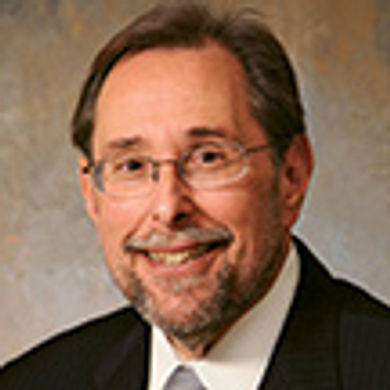 Richard L. Schlisky, M.D.
But some situations are less cut and dried, such as a closed webinar during which attendees may also be tweeting to public channels. "I can see the potential for confusion there," admits an organizer. "We haven't been burned yet, but that's a concern."
This lack of established procedures is relatively typical in the early stages of technology adoption, when everyone is testing the waters and trying to understand the benefits and potential drawbacks of the new advancement. But Pat Shaumann of MPI, who teaches health-care compliance courses, fears many planners just aren't doing enough to mitigate risk. "You have to have rules in place, even for your attendees," she points out.
"There are a lot of privacy to consider at medical meetings," Shaumann adds, not to mention the intellectual property being presented. "Everybody has a phone, and whistle-blowing is bigger in health care than in any other industry. There are people watching for stuff. It's kind of a scary time."
A REAL-TIME SOCIAL DASHBOARD
Despite the conservative nature of so many medical gatherings, some cutting-edge social media tools already are making a mark on health-care meetings. For example, Symplur allows anyone to register a medical-meeting hashtag for free, and returns real-time analytics on the conference's social activity. Anyone can access tweet activity and top influencers -- shown here for the American College of Medical Toxicology's 2016 annual meeting in Huntington Beach, Calif. -- as well as a constantly updated list of a meeting's latest tweets.