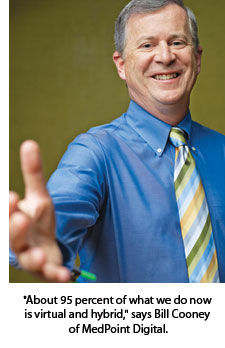
 Ten years ago, face-to-face was the predominate mode for MedPoint Digital (then named MedPoint Communications), a Chicago-area meeting planning company working chiefly in the pharmaceutical and biotech industries. "We were doing a lot of planning for companies like Glaxo Smith Kline, Lilly, Pfizer and Astra Zeneca, to name a few," recalls president and CEO Bill Cooney. But in the intervening decade, a number of trends in the biopharmaceutical industry have grown in significance, pushing clients away from some of the traditional events and more toward virtual and hybrid meetings. "We looked at that and thought, that's an exciting area, why don't we run in that direction?" says Cooney.
Today, MedPoint more often than not leaves the face-to-face logistics to others. "About 95 percent of what we do now is virtual and hybrid," notes Cooney, who adds that his company's planning expertise has been channeled through a different medium -- a shift increasingly being replicated across the medical/pharmaceutical industry.
Why Virtual Makes Sense Slashed budgets combined with technological advances have caused many companies to consider adding a virtual component to meetings, across a variety of sectors. For medical meetings in particular, regulatory forces have shone an even more intense spotlight on budget and payment concerns, adding that much more appeal to the approach. Cooney breaks down some of the reasons for the burgeoning interest in virtual solutions in this highly specialized realm.
• Time constraints. "Our audience is primarily physicians, and physicians are really, really busy," Cooney says. "They have to work harder to make the same amount of money, and they have less time to go to meetings."
• Economic shifts. Doctors aren't the only ones who must work more efficiently to make money. "The economics of medicine have changed for pharmaceutical companies as well," notes Cooney. "They're under a lot of pressure to provide more cost-effective products and lower the costs of promotion."
• Evolving regulations. Industry codes such as PhRMA and AdvaMed, along with state and federal legislation, have placed limits or restrictions on spending and reporting. "There's a whole regulatory regime that's pushing back on travel and costs associated with it," Cooney explains, "like entertainment, dining and so on."
• Technology advances. More sophisticated virtual meeting platforms and increased bandwidth have made meeting this way more natural, and in turn more participants have grown comfortable with it. "It's become a lot more popular and mainstream," says Cooney. "You can do a lot more things today than you could 10 years ago, and just in the last two years the explosion of mobile devices is adding even more to that trend."
Legislating Transparency in the Med/Pharma World
Next year, the reporting requirements of the Physician Payments Sunshine Act will go into effect for pharmaceutical and medical device companies. This provision from the federal health-care package dictates that drug and device companies disclose all payments and gifts made to doctors -- anything that constitutes a "transfer of value." The government will publish that information on the web beginning in 2013, but the data collection must start much sooner; all payments and gifts as of January 2012 must be reported.
What will be the result of this transparency? Some industry sources look at it as just another in a long list of codes and requirements. Bill Cooney, president and CEO of MedPoint Digital in Evanston, Ill., sees it differently. "I think it's going to have a huge impact on public perception," he says. "There have been state-by-state reporting requirements, even voluntary reporting, but nothing like this."
Cooney foresees a lot of health-care providers and employers, who will be eager to avoid any potentially negative perception, instituting policies against their member physicians accepting anything of value. And some doctors have expressed concerns about these policies limiting the exchange of information at industry-funded gatherings.
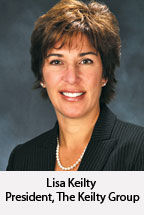
Lisa Keilty, CMP, president of The Keilty Group in Mystic, Conn., provides consulting services on issues of compliance, tracking and reporting for med/pharma clients. "Some are very aware of what is expected and have implemented compliance programs that are now fully operational on the meetings side," she says. "Others are just defining whether they have agreed to abide by PhRMA or AdvaMed codes."
The pressure will heat up in October, though, when the government is due to establish reporting rules. "Pharma and medical device companies are going to be scrambling from October until January to meet those requirements," Keilty predicts.
Companies that do any business with international health-care providers also are subject to an increasingly stringent interpretation of the Foreign Corrupt Practices Act, adds Keilty. Staying on the right side of all these regulations will require careful documentation of all relationships and interactions.
"What's interesting is that many meeting managers, or meeting management companies, don't even realize the value that they can deliver back to their own organizations and clients," Keilty says. "They should say, 'Hey look, I can perform due diligence on who we're interacting with here. And I can provide documentation as to what happened.' So the meeting manager's role really has changed and can continue to change."
This is a crucial opportunity for planners, stresses Keilty. "They should seize it and demand a seat at the table. Because this is important. You can really elevate the perception of your department, and the value of your department, by letting people know you can source this data. You can be a partner in bridging the gap between compliance programs and operations."
The Role of Technology Virtual meeting
elements can play a variety of roles in the med/pharma world; for some
planners, the technology has affected nearly everything they do. "It's
not just a meeting anymore," says Joe Lipman, president of Summit
Management Services in Cedar Grove, N.J., "it's three meetings. We do
face-to-face meetings, face-to-face with an online component and then,
because we're recording the audio and video, we're providing an
on-demand portion afterward for those who couldn't attend."
The
three-pronged approach makes sense for the vast majority of the meetings
Summit does, says Lipman, who works with a number of pharmaceutical
firms. "Our clients get more bang for their buck," he notes.
As
such, about 70 percent of Summit's meetings are hybrid events, with the
majority of participants meeting in one location, face-to-face, and
additional physicians attending remotely, either individually or in
small groups.
While virtual elements are an obvious way to reach
people who can't physically attend a meeting, the technology is useful
in other, more complex ways. For example, one major challenge for
pharmaceutical planners is getting clients one-on-one time with
physicians, even when the doctors are able to travel to an event. Such
was the dilemma facing Pfizer's team at the American Society of Clinical
Oncology's annual meeting, held over three days last year in Chicago.
"With
society members being very busy, only a certain percentage of them can
attend," explains Steve Mapes, vice president of creative services for
meetings and events company Impact Unlimited, of which Pfizer is a
client. "And then even a lesser percentage of those attendees make it to
the show floor where the exhibits are." Impact's challenge was clear,
he says. "Not only was it about how we could extend the reach of the
convention to those present, but how we could extend the reach of the
convention beyond the three days."
To accomplish those goals, "We
developed a virtual exhibit that has the look and feel of an actual
live exhibit," says Mapes. While the idea of a virtual booth itself is
becoming more common, one usually sees them at virtual trade shows.
Designing a virtual booth for a face-to-face trade show, one which had
no "official" virtual trade show floor, was more unique.
An
e-mail blast with an embedded link to the online exhibit went out on the
last day of the show, leading to immediate cyber traffic as physicians
logged on and began requesting information, which was available in a
variety of forms. "They could request abstracts," notes Mapes, "a
pipeline was available, they could enroll in clinical trials, and there
was information about social initiatives and patient programs." Pfizer
reps also handed out USB keys at the physical event, which, when
inserted into a computer, automatically opened up the virtual exhibit
site in a browser. Links were sent out via Pfizer's oncology Twitter
account as well, which also helped to drive traffic.
"The exhibit
was up for three months, and in the end, the show had 30 percent more
contacts than it would have had just from the live presence," Mapes
reports. Since then, Pfizer has added a virtual presence at other key,
global oncology events.
The 'Hybrid Steak Dinner'
"We are doing a lot of virtual speaker programs," says Bill Cooney of
MedPoint Digital, "which would essentially be alternatives to dinner
meetings." Such meetings traditionally have held an important place in
the medical industry, whereby an expert will travel to a location and
address a roomful of local doctors about a specific topic, such as
treatment with a specific drug.
"Due to pressures of time and
perceptions of the interactions within the industry, we've seen a
gradual erosion of the productivity of dinner meetings over the last 20
years," Cooney says. Now, with the implementation of the Physician
Payments Sunshine Act fast approaching (see "Legislating Transparency in
the Med/Pharma World" on page 32), these meetings likely will be placed
under even greater pressure.
"Starting in January next year,
every time a physician in the United States participates in an activity
where there is a 'transfer of value' -- as defined in the Sunshine Act
-- it must be reported to the federal government," Cooney explains. By
2013, that information will be publicly accessible on a government
website. "So that website will say, for instance, that Dr. Smith got a
free $85 dinner from such and such pharmaceutical company from listening
to a talk about this drug," says Cooney. While such transparency is
unprecedented in scope, it remains to be seen what the public or
mainstream media will make of the information.
Virtual speaker
programs now represent the single largest category of MedPoint's
business. An increasing number of those presentations are unbranded --
meaning they focus on hot clinical topics rather than a specific drug.
"They're more credible," says Cooney, "because they're not about your
product, they're about topics that doctors really care about. They get
the reps quality time with the physicians, but the program itself does
not do the selling. It's a professional service." In that sense, says
Cooney, making the program virtual can result in better, more focused
content.
"For a virtual meeting, the overriding principal is you
really have to give physicians what they want if you want their time.
You're not buying them a steak dinner anymore," Cooney points out.
That
isn't to say that everyone has entirely given up on providing meals. On
the contrary, new technology has given rise to what might be called the
hybrid steak dinner.
Restaurant chains such as Morton's and
Ruth's Chris have equipped many of their meeting rooms with the
technology for satellite broadcasts and web conferencing. "We've done
four of those programs in the last year," says Vigdis Tonne, vice
president/director of meeting and event services for Publicis Medical
Education Group in Chicago. "You have a satellite broadcast from a
central location that then goes to 80 different restaurant sites across
the country. In each of those restaurants you have about 15 doctors
coming for lunch or dinner. They come in, they eat, they see maybe a
45-minute satellite broadcast, then they have a discussion in each
location, where people are there to answer questions. So it's a virtual
broadcast with a twist, because it's still a dinner program."
The
programs run generally two or two and a half hours, says Tonne, and
Morton's, for example, provides a turnkey solution for the setting.
"They have the meeting room, they have all the A/V there," she says.
"And because you don't have to have someone run cables and all the food
is already there, it lowers the costs tremendously."
Tale of a Loyal Partnership
During four days in April, the annual Trauma, Critical Care & Acute Care Surgery conference took place at Caesars Palace in Las Vegas. Some 1,250 attendees from around the world participated in sessions devoted to highly technical subjects such as the use of vascular grafts, bariatric surgery and feeding-tube placement. New this year was a timely section on medical disaster response, and by all accounts the event was a great success. But perhaps most remarkable was the fact that this was the 44th year the conference was conducted at Caesars.

"There was just one year when we had to meet next door because Caesars didn't have room, and we couldn't wait to get back to the hotel the next year," says Dr. Kenneth Mattox, professor and vice chairman of surgery in the General Surgery Division of the Michael E. DeBakey Department of Surgery at Baylor College of Medicine in Houston and program director for the conference. "It's all about the relationships we've established with the hotel." In fact, conference organizers refer to much of Caesars' staff as "old friends," from catering to sales to housekeeping. "The staff turnover rate is low, and we have known many of them for decades," notes Mattox, who also serves as chief of the Surgery Service and chief of staff at Houston's Ben Taub General Hospital. "And even though we've interacted with a few different management groups at the convention level over the years, there has been a consistent philosophy of collaboration, and they have a keen perception of our group's needs.
"We also appreciate the layout of the place," adds Mattox. "You can be staying in a tower room, for instance, and go right to the conference rooms without having to walk a mile or cross through the casino. That might be a subtle thing, but it's something our members appreciate."
By Allen J. Sheinman
Research on the Agenda
Hybrid meetings also play an important role in clinical research and
"investigator meetings," at which physicians and researchers gather to
present and discuss findings. For such events, planners needn't do much
to attract attendees, as doctors and investigators are paid to
participate, and their presence is mandatory.
These events can
be quite large, with hundreds of people in attendance. There might be
anywhere from 50 to 200 international study sites for a trial, with two
to four physicians based at each site. "One of the big differences for
clinical investigator meetings is that they're global," notes Cooney.
"These days, in the majority of cases where a company is developing a
new drug, it's a global development program. So we're dealing with big
differences in time zones and big distances to travel, and with travel
just getting tremendously more expensive, there's great pressure to go
virtual."
Often, representatives from several study sites will
convene in various locations; groups from several sites in India, for
example, might meet in one city in that country, while participants in
China also gather in one location concurrently. These events then open
up further to include virtual attendees.
"It's very helpful to
get researchers together in one room," says Cooney. "They can talk to
each other, have good face-to-face interaction, ask questions and have
some discussion in their native language."
Then, Cooney
continues, the virtual portion of the hybrid meetings will typically
happen in English, the international language of research. "That's
where they connect with the far-flung team to present all the sides and
study operations. It's virtual but it's interactive -- there are
questions back and forth."
In addition to the dramatic savings in
travel costs realized with such an approach, clients see a dramatic
boost in efficiency, says Rory Pszenitzki, president of Zki
Communications and Summit Management's technical director. "In the past,
when a pharmaceutical company was confronted with issues of having to
communicate crucial information, the people who were at the meeting had
to 'carry the water back' and share that information with the people who
couldn't attend." That was tremendously inefficient, he adds.
What's
more, Pszenitzki says, there's typically a fairly high turnover rate of
investigators during extended clinical trials. "In the past, each new
participant had to be briefed one-on-one, where an enormous amount of
information was repeated for them." Now, he says, with each meeting
being recorded and so much information available on demand, it's far
easier and more efficient to get participants up to speed.
Because
of the global scale, the clinical research applications are some of the
most exciting uses of hybrid meeting technology, according to Cooney.
"The cost savings, time savings, productivity, carbon savings -- there's
so many benefits to doing it this way," he says. "And it helps studies
get done faster and at lower cost. Ultimately, it's all about making
medicines more affordable."