Conventions are on the rise in Boise, Idaho, thanks to municipal teamwork.
When organizing an event in a convention center, planners can count on two partners to work with them: the center itself, of course, and the destination's convention and visitors bureau. But a key question every meeting professional should ask is, just how well are these two entities working together to meet their event's needs?
It's an issue that has long been dear to Peggy Daidakis, executive director of the Baltimore Convention Center. In 2007, she and Steve Moore, president and chief executive officer of the Greater Phoenix Convention & Visitors Bureau, co-chaired a committee sponsored by Destination Marketing Association International and the International Association of Assembly Managers to examine the working relationship between bureaus and centers, and identify best practices.
"We started out on opposite sides of the room, arms folded and very territorial," recalls Daidakis. "That meeting really gave us opportunities to put the gloves down and talk honestly about the concerns both organizations have in booking the business and servicing the customer. Ultimately, we are really after the same goal."
But that isn't always apparent in the face of competing objectives, different funding resources, tight budgets, increased management oversight and competition for recognition among the staff on both sides. Any or all of the above can lead to power struggles between centers and bureaus -- and leave planners grappling to figure out whose staff is responsible for managing what part of an event.
What follows is a look at how four enterprising cities effectively forged a bond between their convention centers and destination marketing organizations, to the benefit of all.
Finding common ground in Boise
Boise, Idaho, is one of those cities where the relationship between its convention center and CVB has evolved into a well-run partnership as the destination has grown as a tourism and business draw.
Six years ago, the Boise Convention & Visitors Bureau actually was in control of booking events into the Boise Centre in addition to marketing the city. Today, however, the convention center, which is about to double its exhibit space by adding some 36,000 square feet, has its own dedicated sales team, and the CVB now serves as its marketing partner. The two teams attend industry shows together, meet on a monthly basis to review bids and potential business, and share their booking calendars.
"When our funding model changed, everything shifted in the organization," says Carrie Westergard, executive director for the Boise CVB. "Our job is to gather all the materials [from hotels, restaurants, attractions, etc.], sell the group on Boise and deliver them, because we represent the community at large. But if a client wants to see the convention center, we take them there and let the center's team do the talking, because they are the only ones who can address questions like discounts and visuals [booth setups, signage, etc.]."
The close working relationship between the two organizations has paid off, says Mary-Michael Rodgers, communications manager for the Boise Centre. In 2015, the facility hosted 38 conventions and is on track to double that by 2023. "I think planners are surprised and delighted when they find out just how streamlined our process is, because it saves them invaluable time," she notes. "Neither of us can do it alone, so we all benefit from being on one page."
One mission in St. Louis
St. Louis, however, used a different strategy. After years of operating two separate entities, the city turned the running of the America's Center Convention Complex, which houses four distinct meeting facilities under one roof, over to the St. Louis Convention & Visitors Commission, aka Explore St. Louis. The decision was necessary, but not very popular at the time, says Kitty Ratcliffe, president of Explore St. Louis, in recalling the transition.
"Before, there was a lot of confusion from the customer's perspective, because the CVB person might make commitments that the center could not deliver on," says Ratcliffe. "Now, we have one cohesive team, with one budget, that works well together. We understand the operational challenges of the building and what its cost centers are, and that's something most CVBs can't claim."
According to Ratcliffe, convention centers and CVBs operating under the traditional two-entity system fosters competition rather than cooperation. The director of each organization reports to a different board, and the two boards might be providing different -- and sometimes conflicting -- direction. It's a recipe that can set both organizations up for failure, she says.
"I'm the only person reporting to our board, so there is no internal conflict, and there is only one mission," Ratcliffe notes. "We don't have to check with anyone, we don't have to negotiate any internal deals. We just decide what will work best for the client and act." That ease of booking, she adds, has resonated with event planners and translated into multiyear deals for the city. In fact, in the past two years, St. Louis doubled its bookings for new business and is on track to bring in 650,000 room nights annually for the next two years.
Joining forces in Memphis
In January 2011 in Tennessee, after 17 years of management by third-party SMG, Memphis' city government decided it was time for a change. They turned full control of the Memphis Cook Convention Center over to the Memphis Convention & Visitors Bureau, in hopes that bringing the two organizations together would create a synergy that would improve the destination's meeting profile in a rapidly changing market.
"For a CVB or destination marketing organization to manage their local convention center is not for everyone, but for us it made double sense," says Kevin Kane, president and CEO of the Memphis CVB. His charter is to market a long-established center that has to compete against newer facilities in nearby destinations, as well as to stretch any funding that comes from the city's lodging tax.
The one-stop booking platform has made a big difference in how the nine-member convention center sales team and the five-person CVB team attract and retain business. "You never have a situation now where the planner gets to the building, and they feel they are talking to a different person than the one who sold them on the destination," says Kane. "And the beauty for us, internally, is that by streamlining services and leveraging our resources more efficiently, we are ultimately saving the city money."
Over the past five years, the CVB has seen bookings increase at the center. Annual operating losses of $2.4 million per year have been reduced by half, which has allowed the city to make some much-needed capital improvements to the 45-year-old facility. In the fourth quarter of this year, $60 million in upgrades will begin; the work should be finished in 2018.
Seeing eye to eye in Baltimore
In 2007, when Tom Noonan became chief executive officer of VisitBaltimore, the 2008 economic crisis was just around the corner, and the city had recently added about 2,800 new hotel rooms at a time when demand already was beginning to lag. Worse, he says, he discovered a fractured operating system, with the bureau and the convention center at odds over funding and bookings, and hoteliers battling for room nights.
"The board structure was all wrong," says Noonan. First, while Peggy Daidakis of the Baltimore Convention Center, was on the board, she didn't report to it. That meant key stakeholders never heard from her about the center's business status and needs. In addition, just one or two hoteliers were on the board at any one time.
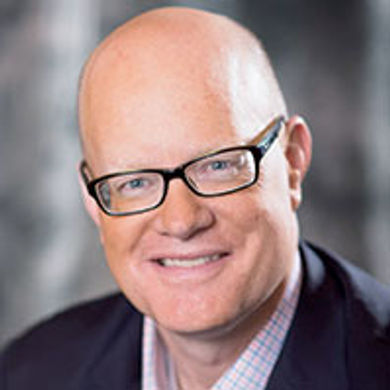 Tom Noonan
VisitBaltimore
Tom Noonan
VisitBaltimore
"I thought, wait a minute, there are three legs to this stool," says Noonan. "Thank goodness the mayor realized we had more in common than not and was willing to change the board structure, so we could come together on common ground and work as one team telling Baltimore's story. That was the only way we could be successful."
Fast-forward nine years: Noonan and Daidakis are a close unit. Their two teams meet every week to share sales and booking updates, brainstorm solutions and bounce ideas off each other. "I think we are doing a pretty good job of evaluating more frequently, so we never end up losing business because of something we couldn't or wouldn't do for the customer," says Daidakis. "Working in tandem means a joint sales process, and then a joint servicing project after that."
The statistics speak loudly for themselves. Since the new working model was put into practice, occupancy levels have increased year-over-year at the Baltimore Convention Center, and the number of citywide conventions has doubled.