 Disneyland in Anaheim, Calif., was the place to be two years ago for the sales and dealer conference held by office furniture manufacturer Steelcase. Most recently, however, the company decided to hold the event in Grand Rapids, Mich. -- its home town.
"Buying local and staying local has been huge lately," says Amy Young, a Grand Rapids-based meeting planner whose 10-year-old company, Grand Connection, organized the Steelcase conference as well as local meetings for two other big corporations.
The decision to meet locally can present challenges for planners used to going to an exciting new location every year. However, as Young says, "I think if the meeting is well organized and well put together, any destination can be fantastic."
Tracking the trendKeeping more corporate meetings local is a growing trend across North America, as corporations respond to the imperatives of the recession as well as increased scrutiny of the bottom line. And research conducted last fall by Worktopia, a White Plains, N.Y.-based company that provides booking tools and solutions for small meetings, shows more than just scrutiny in play. In late October, Worktopia surveyed 60 people involved in planning meetings and found that 71 percent had their meeting budgets cut for 2009.
John Arenas, Worktopia's chairman and CEO, says the survey "revealed something we've been subscribing to anecdotally: When there is pressure on budgets, meetings tend to become more regional and local." Indeed, 14 percent of Worktopia's survey respondents said they would move to local meetings as a way to reduce costs.
M&C's own research supports this trend: In a survey of 152 meeting planners published last September, 44 percent of respondents said they expected to hold more meetings near headquarters in 2009.
Staying closeConnie Tinney, CMP, national director of event management for the Toronto-based Canadian affiliate of KPMG International, a company that provides tax audit and advisory services, is one planner who has had to adjust to local meetings.
Tinney plans national events, including conferences, executive forums and more. Since last Octo-ber, she has been seriously considering local meetings due to mandated, top-down directives from KPMG leadership as well as internal recommendations from her team.
In November and December, Tinney and her colleagues researched holding some company meetings locally. Of course, money could be saved on airfare, as the Canadian arm of KPMG is based in Toronto and fewer people would have to fly in. Also, less money would be spent on ground transportation, since those who live and work in the city have their own vehicles.
Happily, Tinney also discovered that the Toronto hotels were eager to work with her on planning a local meeting.
Detroit says: "Meet in the D!"
 Last May,
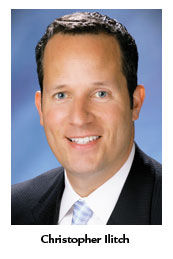
 the Detroit Metro Convention and Visitors Bureau launched a program called, exuberantly, "Let's Meet in the D!" The effort was the brainchild of DMCVB chairman and prominent Detroit businessman Christopher Ilitch, who began by contacting his peers, heads of Detroit-area corporations, and encouraging them to bring at least one meeting back to the city. It worked: Through January, $13.5 million in direct spend has been brought back to Detroit from the program, says the bureau.
Notes Ilitch, "It's a great opportunity to create jobs and spur our economy, as well as improve perceptions people have of our community."
One of Ilitch's companies, Little Caesars Pizza, will bring its worldwide conference to Detroit in early May. "It's just a win-win for Little Caesars," Ilitch says. "Because we are headquartered here, this is going to save us money."
EPrize, a Detroit-based interactive promotions firm that creates sweepstakes and loyalty programs, is for now holding only local meetings, according to vice president of marketing Aleysa Opelt. It's not much of a sacrifice, she adds: "Quite honestly, as more resources have become available here -- more hotels, casinos, venue choices, entertainment, restaurants -- it has made it easier for us to say, 'Yes, we can have these meetings in Detroit.' " -- H.R.S.
Using your CVBHotels, many of which have seen occupancy decline this year, are very willing to accommodate local meetings. At the same time, many convention and visitor bureaus, suffering budget pains from drops in bed tax revenue, are aggressively encouraging companies to keep their meetings in town.
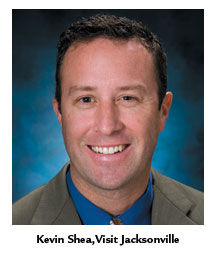 One of those bureaus is Visit Jacksonville (Fla.), which has been holding "Bring It Home" luncheons for local planners since January. Director of sales Kevin Shea says the events were designed to tell clients, "This is what we are, and this is how we can help you."
Before, "a lot of planners were more inclined to host their meetings in other cities, because they weren't thinking about us here," says Shea. "But now that the economy is in the situation it's in, they are more interested in listening."
The response has been very positive. Some who attended had not realized the scope of services the bureau provided. Visit Jacksonville educated planners about the benefits of keeping their meeting local, both in terms of savings and as a boost to the local economy.
Toni Welker, a meeting planner for Jacksonville-based Nemours, a company that owns and operates children's hospitals and pediatric medical centers around the country, says the pitch has gotten her attention. "Visit Jacksonville gave us an overview of all the services they could provide, including restaurant and ground transportation suggestions," she says. "It was really enlightening for me."
A number of cities have begun pushing local meetings over the past year, including Baltimore; Des Moines, Iowa; Detroit; Grand Rapids; Orlando; Philadelphia; and Providence, R.I. (For more on Detroit's Let's Meet in the D! program, see sidebar below.)
Philadelphia's Bring It Home program was introduced last November, notes Jack Ferguson, executive vice president, convention division, for the city's CVB. Its intention is "to make people in the local market think about keeping their meetings in the area," he says.
Bring It Home has experienced some success: Meeting Professionals International's Philadelphia chapter learned of the campaign and decided to hold its annual meeting in the city, whereas some previous chapter meetings had been held at out-of-town resorts. The program is still young, however, and it remains to be seen whether enough Philadelphia-based companies will embrace it.
Fams for the locals Another resource to consider: local planner fam trips. Tourism Toronto is just one bureau that offers these. Julie Holmen, Tourism Toronto's director of corporate sales, says the outings are intended "to re-introduce local planners to all the things we have to offer."
Sixty-one planners have attended one of Toronto's three-day local fam trips, which were held in September and October 2008 and February of this year. The first day focused on area hotels, the second on restaurants and the third on off-site venues. "Both corporate and association planners have attended, though the majority have been corporate," says Holmen. "That may be because corporations have been cutting back the most."
Casie-Lea Carpenter, event manager for McDonald's of Canada, took part in a local fam trip and found it educational. "Because we're based out of Toronto, a lot of our employees live and breathe and have their personal lives here," says Carpenter. "So it can be a challenge to make the city special for them, to find unique venues and parts of the city they are unfamiliar with."
That's where a local CVB can be helpful. As Carpenter says, "Tourism Toronto is a great resource for me to ask, 'I'm looking for a restaurant for this many people -- what's a good place?' "
Making it specialHolding a local event has its own set of unique benefits and challenges. Cindy Pasky, CEO of Strategic Staffing Solutions, a Detroit-based company that has participated in the city's Let's Meet in the D! campaign, says when planning a local meeting, "you really can leverage the relationships and facilities that are available to you."
Planners whose companies want to hold more meetings locally should develop long-term relationships with area hotels, restaurants and event venues, which can provide extra latitude when negotiating.
One big negative, says Pasky, is that "the corporate team doesn't get the benefit of going somewhere."
That's where a planner's skill factors in. "We were forced to get a lot more creative as a result of holding our meeting in town," says Pasky. "If we were going somewhere else, we'd have never been that creative. Our team got to be a lot more hands-on."
Pasky's planners, within Strategic Staffing Solutions' communications department, used their knowledge of Detroit to craft a memorable meeting that included a reception held among the floats of the Parade Co., a longtime Motor City institution.
Safer on perceptionAs KPMG planner Tinney discovered, meeting locally can save a lot of money -- primarily in airfare, hotel accommodation and ground transportation for local attendees. But money isn't all that can be saved: By meeting locally, companies can avoid the negative public opinion so often associated -- at least in recent times -- with a resort destination.
Eric Whitson, director of sales and marketing for the National Conference Center in Fairfax, Va., says his "high-value, low frills" property is exactly what a lot of companies are in the market for these days. "One customer," Whitson says, "recently was told that they can no longer use a high-end hotel chain. We're seeing a bit more of that, and that's an upside for us."
To find value-priced properties, McDonald's of Canada's Carpenter suggests looking at neighborhoods not in the downtown core, such as the outskirts or less-touristy neighborhoods in a city.
Hometown prideAnother of Whitson's customers is Larry Gamache, communications director for Carfax. The vehicle-history report company has 400 people based in its home city of Fairfax, with 150 other employees around the country.
Obviously, it makes economic sense for Gamache, who plans Carfax's meetings, to bring 150 people to meet with the 400 employees near company headquarters than vice versa.
But an overlooked benefit to local meetings, says Gamache, is the beauty of a company's hometown. People tend to disregard the unique attributes of the city in which they live. But, he notes, "Being able to have a meeting on the banks of the Potomac is great. This is a beautiful part of the United States."