When picturing the venue for a typical business meeting, a planner might not immediately think of a historic homestead in Virginia, a cozy lodge in Colorado or a Zen-like sanctuary in New Mexico. But boutique hotels are hoping to change that.
In the face of a tough economy and an increasingly competitive hospitality environment, boutiques, those idiosyncratic bastions of high design and intimate service, are investing in bold marketing efforts as well as offering a variety of new options and incentives to lure meetings and events.
"During a down market, it's tough on everybody. But often it's more difficult on smaller properties because they don't have the critical mass in revenues," says David Gabri, president and CEO of Associated Luxury Hotels International (ALHI). "Consequently, they're using a variety of different means to be aggressive in the marketplace to earn the business."
Getting the word out While group business always has been a cornerstone of hotel success, even for boutiques, today's unpredictable economy and cutthroat market have led independent properties to try to increase, or at the very least maintain, their market share. For many, the first step in this process has meant expanding or reorganizing their sales teams.
At KSL Resorts, a collection of seven boutique golf, spa and ski hotels, one additional small-meetings manager has been has added to nearly every property within the past six months, bringing the count to between two and three meetings professionals per hotel, says Michael Erickson, vice president of sales for KSL. This is partly to pursue new business as well as to handle incoming requests more easily, he says.
"We've found that the booking window has decreased so much that we're getting lots of calls within the same month for those small meetings to come in. So we need to handle those a bit better," Erickson explains.
Kimpton Hotels & Restaurants, which runs a collection of about 50 boutique hotels nationwide, including the Eventi in New York City and the EPIC in Miami, has added city sales managers in key markets to streamline the sales process and up the level of customer focus and support, says Christine Lawson, vice president of sales for Kimpton.
"When it comes to the group market, we have a multi-pronged approach," Lawson explains. Kimpton now has three channels through which planners can get more information and book: a National Group Desk, which is a general point of contact; a Small Group Desk, staffed with agents specifically trained to help planners with bookings of 25 or fewer rooms that require no meeting space or F&B; and Kimptonhotels.com, which features a "Meetings & Events" page.
Meanwhile, the Kessler Collection, a portfolio of 10 design hotels throughout Colorado, Florida, Georgia and New Mexico, has tweaked its approach by centralizing its sales force and adding virtual sales offices in some key markets.
"For instance, some of our properties, such as Savannah [Ga.] or Taos [N.M.], are way off the beaten path from where our customers actually reside," explains Eric Barnett, corporate director of sales for Kessler. "So we have added a lot of virtual sales offices or regional folks in some of the key markets like Atlanta and up in the Northeast, and we now have someone in the Texas market."
Another avenue many boutique hotels have taken involves aligning themselves with national organizations of independent properties like ALHI. For properties such as the 119-room Royal Palms Resort and Spa in Phoenix, such membership "expands their network or their reach into the marketplace to stay focused and keep their identity in front of the customer," says ALHI's Gabri.
Then and now In the past, boutique
properties faced several hurdles when it came to attracting groups. For
one, "There was always a bit of a risk going to a boutique property,"
notes John Moser, chief brand and marketing officer for the Denihan
Hospitality Group, which owns and operates boutique brands such as
Affinia and James. "You knew what the big-box properties would provide,
and you felt secure in that."
But times are changing. Thanks to
the Internet, formerly unenlightened planners now can easily research
boutiques online and read guest testimonials care of sites such as
TripAdvisor and VirtualTourist.
At the same time, both planners
and attendees increasingly are seeking out-of-the-box meeting
experiences to make time out of the office more meaningful and
memorable. A survey of 200 travel agents attending the annual Luxe
Worldwide Hotels Membership Conference last October revealed that a
majority of respondents seek out boutiques over large chains for a
"higher level of service and attentiveness," along with a distinctive
style.
"As brands talk more and more about the beauty of doing
business with the brand, we've found that we're able to stand out more
in providing a unique meeting environment, which is ultimately what's
important," says KSL's Michael Erickson. "Are people going to remember
the 2012 sales conference in some airport hotel, or are they going to
remember when you do a program at a boutique property like the Hotel Del
Coronado in San Diego? They'll remember that one, and it will carry
itself forward in their minds a lot longer."
 Further,
planners can more easily buy out an entire boutique property, making
the group take center stage and creating a 360-degree, almost
retreat-like meeting experience, says Kessler's Eric Barnett. Whether
it's the rustic Beaver Creek Lodge in the European-style alpine village
of Beaver Creek, Colo.; the sanctuary-like, Native American
art-influenced El Monte Sagrado resort in Taos, N.M.; or the English
manor-like environs of the Lodge at Sea Island, Ga., the hotel itself
becomes the meeting space. "Our properties are true destinations on
their own," Barnett says.
Further,
planners can more easily buy out an entire boutique property, making
the group take center stage and creating a 360-degree, almost
retreat-like meeting experience, says Kessler's Eric Barnett. Whether
it's the rustic Beaver Creek Lodge in the European-style alpine village
of Beaver Creek, Colo.; the sanctuary-like, Native American
art-influenced El Monte Sagrado resort in Taos, N.M.; or the English
manor-like environs of the Lodge at Sea Island, Ga., the hotel itself
becomes the meeting space. "Our properties are true destinations on
their own," Barnett says.
Another challenge for boutiques: the
comprehensive reward programs offered by brand-name hotel chains. Not
surprisingly, some planners opt to book at a big-box property because
they can build up points to use as upgrades or apply to future stays.
Today,
however, more boutique properties are finding ways to compete with the
allure of such programs. Some have associated themselves with brands
such as Marriott and Starwood to allow planners to use accrued points at
their own properties. "The introduction of Kessler Collection
properties to Marriott customers and planners through the launch of the
Autograph Collection turned many planners on to a completely new meeting
experience," Barnett says.
The Denihan Hospitality Group opted
to create its own incentive: Stash Hotel Rewards. Moser collaborated
with Jeff Low, the man behind the loyalty program for Expedia, to come
up with Stash, which awards customers points for staying at more than
160 independent properties across North America and the U.S. Virgin
Islands.
Beyond the basics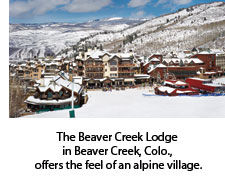 Of
course, online reviews and even points programs are not enough to make
for a successful meeting. Boutique hotels' most attractive qualities, a
result of their being smaller and independently owned, are their
flexibility and ways they can offer services that can personalize and
customize the experience for planners and attendees.
Of
course, online reviews and even points programs are not enough to make
for a successful meeting. Boutique hotels' most attractive qualities, a
result of their being smaller and independently owned, are their
flexibility and ways they can offer services that can personalize and
customize the experience for planners and attendees.
For example,
a majority of boutique hotels now offer unique dining experiences, care
of celebrity-chef-run restaurants and hands-on cooking opportunities.
The Kessler Collection's Mansion on Forsyth Park, for example, features
the 700 Cooking School, a restaurant with an interactive kitchen for
groups.
Meanwhile, Denihan's Affinia brand recently introduced
the Meetings by Design program, which allows planners to customize their
meeting experiences via one of four unique packages intended to inspire
creativity: "Green Meetings," "Brainstorming," "Hi Tech" and "No Tech."
Many
boutiques also have invested in meeting concierges, where planners or
attendees can go for basic business services such as faxing documents or
printing boarding passes, and KSL has added on-site planner suites,
which are flexible, built-to-order spaces for planners to store
materials, strategize or simply escape for a few minutes to work.
It all goes to reinforce a basic idea, says Barnett: "To give a special experience to planners and attendees."