By the Numbers
Following is a sample of resort fees at U.S. properties:
$25 Grand Hyatt Kauai Resort & SpaKauai, Hawaii

$25 Terranea Resort
Rancho Palos Verdes, Calif.

$27 JW Marriott Desert Springs Resort & Spa
Palm Desert, Calif.

$28 Bellagio
Las Vegas

$60 W Retreat & Spa–Vieques Island
Vieques, Puerto Rico

Last year, U.S. hotels collected a stunning $1.8 billion in
surcharges and fees, according to a recent study. And a significant
portion of that sum came from resort fees, the daily charges imposed by
hotels to cover amenities like gym access, Internet use and daily
newspapers, according to the survey's author, Dr. Bjorn Hanson,
divisional dean at the Preston Robert Tisch Center for Hospitality,
Tourism, and Sports at New York University.
The total might be
startling, but the fact that hotels and resorts are levying such fees at
a dizzying pace surprises few meeting planners. More than half of the
144 respondents to a recent M&C Research poll said resort fees have
become more prevalent in the past year. (For full survey results, click here)
And more will join the bandwagon this year, Hanson
predicts, as hotel executives scramble for ways to boost revenues when
there is so much pressure on room rates. Such fees and surcharges
emerged as an industry practice circa 1997 (in some cases as an
"amenities tariff"), says Hanson, and they have grown every year except
for periods after 2001 and 2008, when lodging demand declined. Resort
fees typically fall between $15 and $25, but they can be as high as $60
in some high-end venues.
Now, even properties that can't be
considered resorts are tacking on the extra charge. "These hotels might
have a golf course or just a larger than normal fitness center and
charge resort fees," notes Hanson. In a few cases, he says, properties
are charging fees per person, rather than per room. This can add up when
attendees share rooms or bring a spouse or guest.
Meeting
professionals are understanding -- up to a point. "Just like airlines,
everybody is trying to get as much revenue today as they can," says Mimi
Almeida, an independent planner based in Walnut Creek, Calif. "I don't
blame hotels for charging resort fees, but it is up to us to get the
most value we can obtain for our groups."
However, she and other
planners take exception to five-star properties charging a resort fee
for items that traditionally have been complimentary, such as nightly
turndown service. And they want to negotiate, particularly when the fee
covers services attendees won't have the opportunity to use.
And planners get cranky when hotels won't budge. In fact, 44 percent of those polled by M&C are less likely to book a hotel or resort that refuses to reduce or eliminate resort fees for their groups.
To fee or not to fee It's not surprising that most major hotel chains and individual
properties contacted for this story declined to comment on this
controversial topic. On the other hand, those that have taken a stance
against ancillary fees are very happy to talk. Caesars Entertainment,
for one, openly eschews the concept of resort fees and does not impose
them at its eight Las Vegas properties (including Caesars Palace, Planet
Hollywood, Harrah's and Bally's). The no-fee policy is a cornerstone of
the company's selling strategy to the meetings market, says Michael
Massari, senior vice president, Caesars Entertainment.
It's not surprising that most major hotel chains and individual
properties contacted for this story declined to comment on this
controversial topic. On the other hand, those that have taken a stance
against ancillary fees are very happy to talk. Caesars Entertainment,
for one, openly eschews the concept of resort fees and does not impose
them at its eight Las Vegas properties (including Caesars Palace, Planet
Hollywood, Harrah's and Bally's). The no-fee policy is a cornerstone of
the company's selling strategy to the meetings market, says Michael
Massari, senior vice president, Caesars Entertainment.
"We are
in the hospitality business, not in the business of bucketing things up
and charging planners for things they may or may not use," says Massari.
"I believe our job is to identify what our customers want and deliver
that. We never charged resort fees in the Vegas market. We just became
more public about it recently." Instead of all-encompassing fees,
Massari explains, Caesars properties give planners the option of
choosing the services they'll use. "Some of them are value-added, some
come for a fee, but the key is someone isn't deciding for you which ones
you will get."
Given the lucrative revenues resort fees
generate, Massari admits that failing to impose them is a hard business
decision for properties to make, but "for us, resort fees are too big a
dissatisfier. They are not hospitable and they are not transparent."
Caesars' research, adds Massari, shows that overall customer loyalty and
satisfaction have increased as a result of the policy.
For many
hotel companies whose individual properties make such decisions, it's
more complicated. "There's no consistency, even within the same brand,"
says Nikki Nestor, president and CEO of Carlsbad, Calif.-based World
Class Travel by Invitation. The amount charged -- and what it covers --
can vary widely.
At Marriott, just 30 resorts in the company's
global portfolio of 3,600 properties charge a resort fee, says a
spokesperson, and those are in locations where such charges are the
norm. The fees, which vary by property, can cover services such as
parking, phone calls, use of the fitness center, bottled water, beach
chair service, shuttles, guided hikes, driving range access and Internet
service.
At Joie de Vivre Hotels, which has a portfolio of 30
boutique properties and resorts chiefly in California, only three hotels
charge resort fees. "It's up to the property to decide if there will be
a fee," says a spokesperson. At the chain's Saguaro Palm Springs
(Calif.), which opened last month in a leisure destination, resort fees
are $18 per room, per day, and include parking, Wi-Fi, yoga, access to
the exercise room, local phone calls, pool service and towels. "We will
be flexible on this with groups, depending on size and time of year,"
says Joseph Jenci, director of sales.
At the 60-room Ventana Inn
and Spa, a Joie de Vivre property in Big Sur, Calif., the resort fee is
$28 per day and includes morning yoga, a guided property hike, a hosted
wine and cheese reception, and shuttle service to local shops and
restaurants. Fees are extremely important to the property's overall
revenue base, says sales manager Francisco Carrasco. However, he adds,
he is "somewhat flexible" about negotiating or eliminating them for
meetings or incentives -- particularly if the business brings "high
group room rates and a large number of room nights." (For more insight, click here.)
Value or Rip-Off?
Some amenities typically covered by resort fees offer real value to planners, while others are simply irritating, many sources told M&C. Here's what meeting professionals say they do -- and don't -- appreciate seeing when they break down the bundle.
WORTH IT• Unlimited Internet access throughout the property• Bottled water in guest rooms, especially in warm destinations
• Free parking, but only if many attendees will drive in or use rental cars
WASTED• Free local and toll calls. Um, is anyone still using the in-room phone instead of theircell phones?
• Evening turndown service. A five-star hotel should offer it as a matter of course; at a lower-end hotel it isn't expected -- and isn't worth adding a line-item cost.
• Exercise classes. If fees include leisure activities and your group is in meetings all day, this warrants a reduction in the resort fee, planners agree.
• Parking. If most attendees will fly to the event and take taxis or shuttles to the property, planners don't want to pay a fee that includes parking.
Value proposition Hoteliers
who charge resort fees argue that they're not only sound business
decisions for the property, but they add value for the planner. Lindsay
D. Curry, director of sales for the 236-room Enchantment Resort in
Sedona, Ariz., and the 106-room The Tides Inn in Irvington, Va., makes a
compelling case. "Due to the nature of our destinations, it is
difficult to find guests who are strictly visiting on business, with no
intention of taking advantage of the amenities the resort fee covers,"
she notes. At the same time, she demonstrates how the fees represent
substantial savings over what these services would cost if purchased
individually. Resort fees -- $25 at Enchantment and $24 at The Tides --
include the following:
• Evening turndown service with a bottle of water for each guest (estimated retail value, per Curry: $17-$22);
• Morning newspaper delivery to room with fresh chilled orange juice (retail value, $4.50-$6.50);
• Access to spa and fitness facilities and resort amenities such as tennis, golf, etc. (retail value, $10-$25);
• High-speed Internet access in guest rooms (retail value, $12);
• Participation in all scheduled resort activities, including wine
tastings, cooking demonstrations, art classes and guided tours (retail
value, $15-$45), and
• Parking (retail value, $10).
"Overall, I feel the resort fee is better than hitting guests for every charge associated within the fee," Curry says.
As planners see it
Many planners would agree that the surcharges can provide good value.
"In many cases, these fees are helpful," says planner Mimi Almeida. "You
don't want to be nickled and dimed at every turn, and you don't want
attendees always reaching into their own pockets for things like bottled
water in their rooms."
"I don't get upset over them," adds Nikki Nestor. "They are a reality and a way of covering legitimate costs."
Small
groups that meet in high-end properties tend to be more open to paying
the fees, observes Amy Durocher, director of global accounts for
site-selection firm Global Synergies in Scottsdale, Ariz. Yet, larger
groups often balk at the charges, she says. Because of the volume of
their business, they think they should get a break.
What many
planners do take issue with is properties that won't budge on the dollar
amount, even when the group is bringing in a substantial piece of
business. Worse, they say, is when the charges include amenities their
attendees won't be able to take advantage of. Says Almeida, "Nothing is
more annoying than getting a bill for services that you didn't use."
Nikki
Nestor agrees. "I have a problem paying a resort fee if my group is in
Las Vegas for a heavy training meeting," she says. "The attendees are in
sessions all day and have no time for things like the pool or spa, and
at night they are out on the Strip, and not in the host hotel."
Another
problem area for resort fees is disclosure. Planners want to know at
the outset if there is a charge and what it includes. Amy Durocher asks
about fees as early as the request-for-proposal stage of her selection
process. "I've never had the experience of a property trying to be
sneaky about resort fees -- they tend to be up-front," she says.
NYU's
Bjorn Hanson agrees that hotels are more transparent today and
typically disclose fees to both planners and independent guests in a
forthright manner -- during negotiations, on websites, and with tented
signs and notices in guest rooms. But not all properties are so
forthcoming. Planners should be on the lookout for contract clauses that
state "all customary charges and fees apply," says Hanson. That's a red
flag that requires a detailed explanation and discussion, along with
more specific contract language about those charges and fees.
Need more negotiating advice?
Exceptions are the rule
Fortunately, many planners report that it is possible to get some
relief on fees. A surprising 70 percent of professionals polled by
M&C have been successful in having the charges removed, and 84
percent have been able to get them reduced.
And hoteliers, for
the most part, say they are willing to consider cutting or tweaking
resort fees. Among the factors they weigh: group size, number of room
nights, the season during which the meeting will take place and the
agreed-upon room rate.
Planners who have negotiated resort fees
down or away say the key is to ask as early in the negotiation process
as possible and, if fees aren't eliminated, trying to get additional
value or perks packaged into the price.
"We generally are
successful in having the charges removed," says Deborah K. Gaffney,
director of conference planning at the Washington, D.C.-based Tax
Executives Institute. "But occasionally, when we are at the sort of
resort where there is plenty of demand, we will acquiesce because the
desirability of the location for a particular meeting outweighs the
pesky fee." In those cases, she will ask that the fee also cover
something else the group needs, such as unlimited in-room Internet
access.
"Just be sure that what they offer you is something your group will truly use," stresses Mimi Almeida.
Almeida
was able to successfully negotiate a $25 charge down to $10 at a Lake
Tahoe resort after pointing out that her attendees would not use many of
the amenities included in the fee, such as free gondola rides into the
village. "I told them we only needed in-room Internet access and the
gym," she says. "It's all about knowing what your group needs."
Almeida
advises planners to ask plenty of detailed questions when evaluating
the amenities covered by resort fees. For example, she found out the
gondola at Lake Tahoe didn't operate on Sundays, and that was the only
day most of her attendees would have had a chance to use it. "Take
nothing for granted," says Almeida. "Have everything explained and
spelled out before signing the contract."
A Hotelier's Point of View
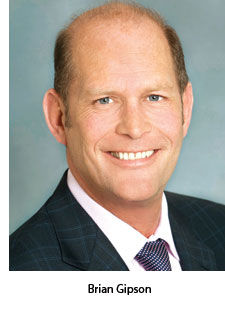 Few hoteliers
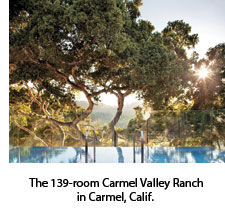
are willing to discuss resort fees on the record, but Brian Gipson,
director of sales at the 139-suite Carmel Valley Ranch in California, a
Joie de Vivre resort, recently explained his property's policies in an
interview with M&C.
Few hoteliers
are willing to discuss resort fees on the record, but Brian Gipson,
director of sales at the 139-suite Carmel Valley Ranch in California, a
Joie de Vivre resort, recently explained his property's policies in an
interview with M&C.
Does the Carmel Valley Ranch charge a resort fee?
Yes; the cost is $25 per room, per day.
 What amenities are covered in the fee?
Gratuities
for bell staff, doormen and maids; in-suite and public area wireless
Internet access; unlimited business center usage; admission to any of
the 50 to 70 fitness and other classes weekly, including The Bee
Experience -- a beekeeping class -- organic garden tours and guided
hikes; fireside s'mores every night; parking; in-room bottled water,
replenished twice daily; an in-room snack basket with trail mix, sports
bars and fresh fruit; coffee makers; a daily New York Times; a DVD
library and Blu-ray players in all suites, and access to the River Ranch
activity areas that include two pools and two hot tubs.
How flexible are salespeople allowed to be with respect to resort fees for meetings or incentive groups?
Everything
is up for negotiation, but we culturally do not like to waive the fee.
If we do waive it, then we need to charge for porterage and maids'
gratuities and Internet usage, so it really isn't a value to go without
the daily fees.
Do planners generally accept the fees, or do they complain about them in negotiations?
Once
we explain the overall value to them of all amenities covered in the
fee, 99 percent of the time it becomes a non-issue. The value really is
very strong.
Would you consider lowering or eliminating resort fees to win group business?
Of course we would consider doing so, depending on the needs of the property and the seasonality of the program.
How important are resort fees to overall revenue base?
The
resort fee is more to cover costs of the experiences we deliver to the
guests, whether on a program or there for leisure. Everyone drinks
water, uses the Internet, needs to tip the maids and bell staff. We do
not look at it as a revenue generator but more as a fee to cover the
significant costs of the extra value we offer.