The Planner's Perspective
Increasingly strapped for manpower due to corporate
downsizing, and grappling with ever-tightening meeting budgets, many
planners are digging deep for cost-free solutions. Third parties, which
are compensated directly by hotels for their work -- typically with 10
percent of the total group room rate revenue -- require no additional
line-item payout on the planner's part and offer an extremely attractive
answer.
One recent convert to the cause is
Deborah Young, CEM (above), director,
convention and meetings, for the Alexandria, Va.-based National
Association of Elementary School Principals. In 2010, she was the sole
surviving member of her meetings department, the result of downsizing
and the organization's freeze on new hires. Already a client of
Experient, to whom she had previously outsourced housing and
registration, Young decided to turn to them for help managing the
association's national three-day conference and expo, which is expected
to draw 3,000 people next month to Seattle's Washington State Convention
Center.
"Logistically, it made complete sense. They were already familiar with
our program, the numbers, our attendee's booking process," says Young.
"There was still a learning curve, but I think next year will be
smoother."
One corporate planner who firmly believes in the value third parties
bring to the meetings industry is
Ronli Merlis, CMP, CMM (above). As
senior project manager, events, meetings and conventions, for Cambridge,
Mass.-based Millennium: The Takeda Oncology Co., she and her team
handle more than 400 meetings a year and rely heavily on HelmsBriscoe
for site-selection support. "Their buying power is phenomenal," she
says. "We do a ton of international business, and the time out of the
office they save me can't be measured. It's just an amazing resource to
have."
Selling senior management on such benefits, Merlis points out, can
sometimes be a challenge because top executives do not necessarily
understand the nuances of the meetings industry. However, she adds, it
is one worth pursuing. "I had to get permission to use HelmsBriscoe,
whom I had worked with at my previous company, when they got us out of a
$60,000 attrition problem," she says. "My manager could not believe
they came at zero cost to us."
As recently as a decade ago, third parties -- independent
meeting planning firms -- were seen as bit players in this industry.
They were viewed as having little, if any, serious professional clout
and only one real service angle: site-selection expertise. Today,
however, the major third-party players have gained such depth and reach
across every segment of the industry, that all stakeholders -- hotels,
convention and visitor bureaus, tourism officials, destination
management companies and technology providers -- are clamoring for their
attention. Clearly, third parties are the new power brokers in the
meetings realm.
Not only have the major players expanded
internationally, opening dozens of offices across Africa, Asia, Europe
and South America, they have swelled their associate ranks to number in
the hundreds. They have strategically formed preferred partnerships with
hotels and destination management companies around the globe, and
forged key alliances with CVBs and destination marketing organizations.
Add formidable client lists that read like a Who's Who of Fortune 500
firms and major national associations, and it is obvious why third
parties wield such tremendous negotiating power.
Their
bread-and-butter service of site selection has been in hot demand in a
tough economy, as planners pressed for time and resources have turned to
third parties to ease their workload -- at no additional cost
(third-party fees are paid by the hotels that win the business).
But
there's more: Going head-to-head with smaller independents, the
third-party giants now offer a full slate of professional meeting
services, from social media marketing and contract expertise to
strategic meetings management. Such services typically involve a
negotiated fixed fee based on the needs of the client and the scope of
the project. Factors determining price might include the number of
estimated work hours, including on-site execution and post-convention
wrap up; level of staffing required; travel expenses; and any customized
services the client might require, such as visa applications for
attendees.
HelmsBriscoe is the personification of third-party
evolution. The Scottsdale, Ariz.-based company, which celebrates its
20th anniversary next month, booked 4.5 million group hotel room nights
in 2011, worth an estimated $1.3 billion in total meetings spend -- $100
million more than the firm generated in 2010. Committed business on the
books for first-quarter 2012 has the company on track to achieve
another record-breaking year, according to president and chief executive
officer Roger Helms.
"Not only have we had phenomenal
international growth and greater traction with existing accounts, but
what has been really surprising is the amount of first-time corporate
accounts that have come to us," says Helms. "They want us to handle
their total hotel meeting spend, which places our associates directly in
their procurement process. That's a huge shift in the purchasing
model."
Forging Alliances  Last
year, Twinsburg, Ohio-based Experient ramped up its product offerings
with the launch of two new partnerships; one extended its meetings
management services, the other its international reach. Those alliances,
says Rick Binford, CMP, president of the company's Event Management
Services division, directly reflect where Experient's clients are
placing business and the areas in which they are turning to the company
for assistance.
Last
year, Twinsburg, Ohio-based Experient ramped up its product offerings
with the launch of two new partnerships; one extended its meetings
management services, the other its international reach. Those alliances,
says Rick Binford, CMP, president of the company's Event Management
Services division, directly reflect where Experient's clients are
placing business and the areas in which they are turning to the company
for assistance.
In July 2011, Experient and technology provider
StarCite teamed up to launch MeetingsComplete, a new product aimed at
designing management solutions for small to mid-size companies with a
total meeting spend of at least $1 million. It's a service, says
Binford, that came out of a direct response to customers' needs. "We've
seen a lot of hesitancy among some of our clients, because they feel
they don't have an entire road map to their meetings operation. They
don't know where to start or how far to go," says Binford.
"MeetingsComplete is a quick start, an easy way for them to turn on the
strategic management strategy within their organization."
The
second partnership was initiated last October, when Experient signed an
exclusive deal with Incon, a select group of 10 conference and event
management companies that operates in 130 destinations around the globe
and employs 3,000 people. That alliance gave Experient immediate boots
on the ground and strengthened the company's ability to confidently meet
customer demands in specific global markets. "Last year we did events
in some 35 countries that a number of our clients had little prior
knowledge of," notes Binford. "Incon strengthens our resources in places
like India and Russia, and we will open another half-dozen new offices
in new destinations by May of this year."
Also leveraging the
power of alliances is Scottsdale-based third-party firm Hospitality
Performance Network Global, which estimates it sources 500 meetings per
month, generating a million room nights per year. Last year HPNG, which
has grown to 210 associates, signed preferred partnerships with two
well-established destination management organizations, Ovation South
Africa and Brussels, Belgium-based Euromic, a 35-year old international
consortium of destination companies with representation in 36 countries.
Those two deals gave the company immediate cachet in multiple
international locales and significantly boosted the credentials of its
international division, which HPNG has been focused on growing since
2010, when it merged forces with former site-selection firm Meetings
International and added "Global" to its name.
Likewise, Los
Angeles-based ConferenceDirect has seen a growing need for meeting and
event management among its client base and set about filling it several
years ago. Today, the third party's conference management division is
one of its fastest growing, racking up double-digit increases
year-over-year. To grow its team, the company set about actively
recruiting seasoned planners, many of them former in-house planner
clients downsized by their corporations and associations.
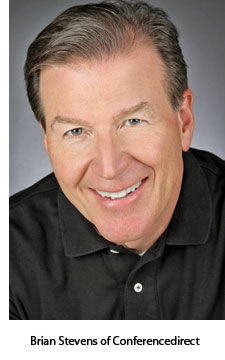 Today,
the typical planner on ConferenceDirect's conference management team
has more than 10 years of experience. One example: Debbie Draper, global
project manager (and winner of the firm's 2011 Conference Manager of
the Year award), joined the team after a decades-long career with the
Dallas-based American Heart Association, where she was director of
national hotel contracts and meetings, overseeing a group handling 300
meetings per year. "That kind of experience gives our clients tremendous
confidence in our ability to handle their event and get it right," says
Brian Stevens, president and chief executive officer. "It doesn't
matter if we have five years or five weeks lead time."
Today,
the typical planner on ConferenceDirect's conference management team
has more than 10 years of experience. One example: Debbie Draper, global
project manager (and winner of the firm's 2011 Conference Manager of
the Year award), joined the team after a decades-long career with the
Dallas-based American Heart Association, where she was director of
national hotel contracts and meetings, overseeing a group handling 300
meetings per year. "That kind of experience gives our clients tremendous
confidence in our ability to handle their event and get it right," says
Brian Stevens, president and chief executive officer. "It doesn't
matter if we have five years or five weeks lead time."
In 2011,
ConferenceDirect, which has grown to 350 associates, booked more than
2.5 million room nights for 1,500 clients, and Stevens says the company
is acquiring new customers daily.
Q&A With a Third-Party Pro
As Global Cynergies approaches its four-year anniversary, the Scottsdale, Ariz.-based third-party firm is fast carving out a niche on the international front among corporate clients. That's not surprising, considering that founder and managing director Pat Durocher once headed up HelmsBriscoe's international division. Now at the helm of her own company, which has grown to 45 associates with representation in 90 countries, Durocher recently spoke with M&C and offered her insights on why third parties are thriving.
> What's different about third parties today vs. when you started out? We are doing much more international business. We are booking business in places that planners can't even pronounce. There is an awful lot of product coming and going, and contracts are constantly changing, which means we really have to be on top of our game as negotiators.
> Do you think "site-selection company" is still a relevant term to describe third-party firms like yours?
It doesn't really explain what we truly do. When we are helping a client site select, we are looking at all aspects of their program, from where they are coming from, their F&B spend and local transportation issues, and we're also assisting them with contract terms and negotiations. So we are acting more as consultants.
> What's challenging about placing group business internationally?
For one thing, your frame of reference is not the same as that of the supplier you are doing business with. In North America, if you don't respond in 24 hours, you've lost the business. In other countries, that's not the case. Also, in the U.S., 80 percent of the hotel product is branded, but elsewhere it is the reverse. There is a lot of stunning hotel product internationally that has nothing to do with a brand. We always include them in the mix.
> Does procurement's growing involvement change the client relationship?
I am a certified CPA, so I love to go head-to-head with procurement. I get the fact that they have to work with sales and marketing. Sometimes, by drilling down and getting the facts, some people pass over the value of the bottom line.
> Are there any trend destinations for groups on your radar?
China is big, because a lot of business is being driven there; India, too. Ireland is back now as a value destination. In the U.S., Houston is a great value. And Canada -- what their government does to bring business is incredible.
Hotel Connections
Gone are the days when hotel companies openly viewed third parties as
intruders, stepping on their sales team's turf in hopes of scoring a
group booking and a quick commission payout. That animosity has been
replaced -- at least publicly -- by a group hug, with hotels courting
third parties, jostling for a presence at their annual conferences and
sitting on their advisory boards.
"They are absolutely critical
to us, because so much meetings business is sourced through them," says
Kaaren Hamilton, CMP, vice president, global sales, Carlson Hotels, who
manages a worldwide sales force of 100 people. The Minneapolis-based
chain has preferred partnerships in place with all the major players and
deploys sales and marketing resources targeting that market.
Once
primarily North American in operation, notes Hamilton, third parties
have grown their base of associates with such sophistication and
cutting-edge technology that hotels see them as an extension of their
own sales teams. "In the last five years, we have received much more
business from them internationally," says Hamilton. "HelmsBriscoe, for
instance, has literally marched across the board setting up teams
throughout Europe, and as we continue our expansion there and open
hotels, our relationship with them is key."
It's a sentiment
echoed by Christie Hicks, senior vice president of global sales for
Stamford, Conn.-based Starwood Hotels & Resorts Worldwide. Third
parties are invaluable in helping the hotel company place group business
in Asia, she says, where its portfolio of brands in the past five years
has expanded exponentially. "They have really helped us in China," says
Hicks, "and we have done some very strategic things together, helping
each other work through some really big Chinese accounts."
The
importance of those partnerships will only grow, believes Hicks. "These
are now big, multimillion-dollar companies with even higher revenues in
terms of what they direct and influence," she says. "If they are going
to act on behalf of the end user, then we need to act on their behalf,
too. And what we are seeing is more corporations allowing them to
procure for them."
At Chicago-based Hyatt Hotels Corp., about
one-third of all group business is booked by third parties, estimates Ed
Smith, director of worldwide accounts, who overseas a global sales
force of 85. Not surprisingly, Hyatt has set up an account team
dedicated solely to assisting third-party providers.
"We
definitely see them as a partner and extension of our sales force,"
Smith notes. "We rely on them to know our brands and to guide their
clients to our hotels. Our role as a hotel company is to educate them on
our properties, product and culture, so they have the knowledge and
tools to promote our hotels."
While such on-the-record cheering
is unanimous, plenty of hoteliers still harbor resentment for third
parties. "The increase in commission payments to these companies is a
cause for concern among hotels, especially in the current economic
environment," admits one representative of a major chain. Other sources
concurred that hotels would rather book group business directly via
their hard-earned relationships with end users -- at noncommissionable
rates -- but they would be foolish to ignore the power of the middlemen.
Boosting Bureaus Back in 2009, the
Fort Worth (Texas) Conventions & Visitors Authority fielded a total
of 32 potential leads, representing 51,209 rooms, from the three major
third parties. In 2011, that number jumped to 218 leads representing
246,934 rooms. John Cychol, vice president of meeting sales for the
FWCVA, says it's a power shift that many bureaus did not see coming but
have wholeheartedly embraced.
"Third parties seized the moment
and gained a foothold, thanks to corporate downsizing and the economy,"
says Cychol. "They filled a gap that existed in our business that we
destination management organizations should have recognized. I think we
failed to seize the moment, and now we are all focused on creating a
liaison with them."
In fact, third-party-generated business has
become so significant to the FWCVA that in 2011 the bureau struck
proprietary partnerships with ConferenceDirect, Experient and
HelmsBriscoe, the three big companies responsible for generating the
bulk of its third-party business. "They feed us information about groups
they have booked in Fort Worth, whether they came through the bureau or
not," says Cychol. "That gives me a real value to put on the books. Why
do you think we are all trying to outbid each other on who gets to host
their annual meetings?"
Last month, the Reno Sparks Conventions
& Visitors Authority hosted HelmsBriscoe's annual conference, an
event that drew more than 2,000 people; next month, the bureau will roll
out the welcome mat for Experient. It was a major double coup for the
Nevada destination, trumping much higher-profile competitors for the
bragging rights.
"Having them here is a huge undertaking, but it
gives us tremendous exposure," says John Leinen, vice president of
convention and tourism sales for the RSCVA. "These third parties have
multiple buying opportunities, which is what we think is so very
valuable. If you build relationships with them effectively, they send
you off to other people within their organizations. It is now reaching a
point where if you're doing business with them, they truly represent
the client's decision. They don't have to ask permission to sneeze. What
we are talking about is billions of dollars in potential revenue."
It's
an opportunity not lost on the Orlando/Orange County Convention &
Visitors Bureau, thanks to the business acumen of Fred Shea. A former
longtime Hyatt executive as well as a former senior vice president at
ConferenceDirect, Shea has a unique insider's perspective on the
third-party model. Since joining the Orlando bureau two years ago as
vice president, strategic partnerships, he has made building alliances
with third parties a cornerstone of the bureau's strategy.
"When
I first got to Orlando, I immediately started putting in place
relationships with all the third parties," says Shea. "When I reported
back to the board how much business they were doing in Orlando, they
were astounded. They had absolutely no idea of the overall volume the
third parties were producing. It was such important data to have that we
immediately consolidated our sales force, which was very fragmented, to
make it easier for them to work with us."
Shea and his team now
hold monthly webcasts for third parties, giving them the inside scoop on
Orlando beyond the usual hotel openings and renovations -- information
not necessarily gleaned unless you're a savvy local with an ear to the
ground. A recent webcast offered insider details on a major medical
mart under development on the city's outskirts, which Shea claims will
be one of only three such venues in the world (the other two are in
Dubai and Singapore). While the mart won't be open for a while, the
bureau, working with city officials and the site's management, has begun
arranging hard-hat tours for interested third parties who might have
potential clients in the medical field.
"The big third-party
companies grew so big, they didn't see the bureau as relevant anymore,"
notes Shea. "So we have changed dramatically. We are focusing more on
being destination experts, so they see us as an extension of their force
and not a competitor. We are building trust so they will work with us,
because we want to grow our share of the business that comes from them."
That
strategy helped The Peabody Orlando score ConferenceDirect's annual
conference next month, and HelmsBriscoe's in 2013. It's an opportunity
Gregg Herning, vice president of sales and marketing for Peabody Hotels,
calls priceless. "What better way to market your product than to get
them all at your property in one fell swoop," says Herning, who plans to
roll out the red carpet for both conferences. It doesn't hurt that the
1,641-room Peabody Orlando recently wrapped up a $450 million
renovation, which expanded its meeting space to 300,000 square feet and
added a slew of new amenities.
"The experience they have here at
the hotel is what they are going to take back to their clients, who
number in the thousands," says Herning. "We can't possibly reach that
many potential clients on our own, which makes the relationship-driven
process with them so incredibly important."