In an increasingly crowded hotel landscape, competition is fierce for portfolio growth and global expansion. And in the intense jockeying to attract new business, deliver on customer expectations and draw legions of loyal guests, several hotel companies are investing heavily in repositioning their core brands. As the market enjoys a swift recovery, hotel owners have a choice: Spend big to uphold brand standards or find a new flag.
"Most hotel franchise companies relaxed their standards during the 2008-2010 industry recession in an effort to acknowledge the financial stress being experienced by their franchisees," says Mark Woodworth, president of Atlanta-based Colliers PKF Hospitality Research. "That was yesterday. As the economy continues to improve, the customer is becoming more discerning as well as demanding." According to PKF's preliminary estimates, profit growth for the hotel industry in 2010 was up 6.3 percent over 2009. Profit is projected to reach almost 11 percent this year and soar to 19 percent for 2012.
"There is a philosophy that suggests the quality of a brand is equal to the weakest link in the chain," says Woodworth. "To the degree that this is true, hotel companies recognize that the integrity of a brand is critical to delivering financial returns, which makes maintenance of brand standards absolutely paramount."
For the details and philosophy behind the branding and repositioning of well-established global chains, M&C spoke with senior executives at five major hotel companies: Best Western International, Crowne Plaza Hotels & Resorts, DoubleTree by Hilton, Holiday Inn Hotels and Resorts, and Radisson Hotels & Resorts.
 BEST WESTERN> Parent company: Best Western International
> Portfolio: 4,000 hotels in 80 countries
> New in 2011: Galveston, Texas; Nashville; Winterhaven, Fla.; Bangladesh; Berlin
> In the pipeline: Several hundred
In February of this year, 65-year-old Phoenix-based Best Western International officially launched a three-tiered branding system in North America. The goal: to bring consistency to the company's unwieldy and often confusing portfolio of 2,200 hotels, which range from roadside motels to upscale, full-service conference properties.
Under the new branding system, hotels will be defined one of three ways: Best Western, Best Western Plus, or Best Western Premier. "We expect to do more group business, because now planners know which hotels to book based on their individual needs," says Wendy Ferrill, managing director of worldwide sales for the chain.
Here's what the new "descriptor" system means. Best Western hotels, at the economy end of the scale, typically carry a two-diamond rating by AAA and generally offer complimentary high-speed Internet access, parking and breakfast. A notch above is Best Western Plus, usually three-diamond properties that provide a more premium experience, with higher-quality bedding, upgraded in-room amenities and contemporary furnishings.
In the rebranding effort, 1,047 economy hotels were offered the chance to invest in their product and upgrade to the ‘Plus' level. Approximately 815 of them took the challenge and are expected to achieve their new designation by the end of this year.
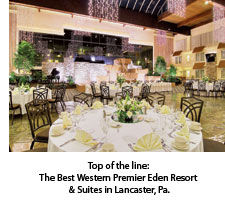
Best Western Premier properties are the crème de la crème of the chain. Launched in 2003, the line is 100 strong in Asia and Europe. To date, however, the North American portfolio consists of just six hotels (in Cincinnati; Denton, Texas; Harrisburg and Lancaster, Pa.; Miami; and Napa, Calif.). This select group sports four-diamond ratings and is comprised mostly of new-builds and historic properties.
Premier hotels must feature 33 services and amenities beyond what Best Western offers. Among them: larger guest rooms with luxury bed linens, 42-inch flat-screen televisions, bathrobes and room service. The 115-room Best Western Premier Ivy Napa Hotel, which opened in Napa, Calif., this past January, is the quintessential example, featuring airy, loft-style guest rooms, a 24-hour business center, an outdoor heated pool, a full-service restaurant and 7,000 square feet of meeting space. More than a dozen Premier properties will be added to the brand's North American portfolio by year's end.
Hotels won't be able to rest on their new Plus and Premier status for too long, though. The initial rating is good for only three years. After that, properties will be reassessed yearly.
Customer service is a key part of the core strategy for all tiers in the chain. "Best Western has an ongoing customer care program known as ‘I Care.' It is one of the most intensive training programs in the hospitality business," says Ferrill. "All Best Western hotels, regardless of their descriptor, must meet those strict standards of customer care."
Sheraton Gets the Starwood Treatment
In 2009, White Plains, N.Y.-based Starwood Hotels & Resorts
Worldwide wrapped up a three-year, $6 billion overhaul of its Sheraton
brand, which has grown to more than 400 properties in 70 countries. Of
that, $4 billion was invested in the chain's North American hotels. The
brand's revitalization effort included the following initiatives.
• The installation of 100,000 new Sheraton Sweet Sleeper beds;
• The renovation of 70,000 guest rooms (50,000 in North America alone);
• 300 lobby makeovers; and
• 98 full property renovations, 12 of those in the Starwood Convention Collection group.
Last
September the company launched Shine for Sheraton, a global spa
concept that includes customized products and five signature
treatments. The new program will be available in all Sheraton properties
by year's end. "We plan to make spa a cornerstone of the Sheraton brand
experience," says Hoyt H. Harper II, senior vice president for
Sheraton.
Next,
Starwood says it will invest approximately $5 billion to add more than
50 new properties to the Sheraton portfolio by the end of 2013. Much of
that expansion will go to beefing up a presence in China, the brand's
largest market after North America. With 16 new hotels opening there
this year, Sheraton will increase its China portfolio to 53 by year's
end.
 CROWNE PLAZA HOTELS & RESORTS> Parent company: InterContinental Hotels Group
> Portfolio: 376 hotels in 60 countries
> New in 2011: Charleston, S.C.; Minneapolis; Bangkok, Thailand; Guangzhou, China; New Dehli, India
> In the pipeline: 125
Even
as Atlanta-based InterContinental Hotels Group enters the home stretch
in wrapping up the dramatic $1 billion rebranding of its Holiday Inn
brand, the hotel company already has unveiled its master plan for a
sweeping repositioning of its midsize, upscale Crowne Plaza brand, one
of IHG's fastest-growing product lines.
"Crowne Plaza is a big
rock for IHG, which means it's one of the most important things we need
to get right," says Stacy Bedsole, director of global guest experience
for Crowne Plaza. "As we did with the relaunch of Holiday Inn, we will
take stock of our portfolio around the world and ensure that all hotels
have a clear vision of what it means to be a Crowne Plaza, and that all
hotels are meeting that high standard."
This year the brand will
begin rolling out a slew of new initiatives, currently being tested at
nine hotels. Its main customer target is the business traveler. In fact,
groups represent fully 40 percent of Crowne Plaza's business, and the
aim is to capture and keep that market. New concepts include a lighter,
brighter color palette throughout all properties, along with upgraded
guest rooms that emphasize delivering a "premium sleep experience."
In-room dining menus are being revamped as well, to offer a greater
range of options.
Also high on the list of priorities is revamped
meeting rooms. Crowne Plaza's new Creative Meeting Space concept,
piloted at its Atlanta property, promises to take the ho-hum out of
traditional meeting rooms and transform them into spaces that spark
creativity, explains Bedsole. The redesigned spaces will feature vibrant
colors, modular seating, cutting-edge technology, interactive
whiteboards, interesting artwork and handheld toys, like Rubik's Cubes.
The
concept has been an immediate hit. "The general manager of our test
hotel in Atlanta said he could sell more meeting space like it -- if he
just had more," says Bedsole.
Also rolling out this year is a
new global service program designed to support Crowne Plaza's
repositioning. In addition to mandatory employee training sessions, the
program will identify a "Brand Champion" employee at each property who
will be given the role of literally "championing" the commitment to
higher service standards amongst the troops.
"Competitors can
copy our designs and our products, but they can't copy our service,"
says Bedsole. "Service is something that can differentiate us from other
hotels and give our guests a reason to choose Crowne Plaza."
DOUBLETREE BY HILTON> Parent company: Hilton Worldwide
> Portfolio: 240 hotels in 15 countries
> New in 2011: More than 30, including Cleveland; Los Angeles; Raleigh, N.C.; Bangkok, Thailand; Istanbul, Turkey; and Panama City, Panama
> In the pipeline: 45
"Small
in number but mighty in determination" could certainly be DoubleTree by
Hilton's motto. The brand, which got its start in 1969 when the first
hotel opened in Scottsdale, Ariz., became part of Hilton's family of
hotels 30 years later, after a merger between Hilton and Promus Hotels
Corp. Today, DoubleTree is in the midst of a major rebranding
initiative, its first important revamp in 15 years, and an explosive
expansion. Early this year, Hilton Worldwide introduced a new brand logo
and added its muscle to the chain's name -- DoubleTree by Hilton -- as
part of the first phase of a major business strategy to relaunch the
full-service brand on a global scale.
"The rebranding is much
more than the new logo," says John Greenleaf, vice president of
marketing for DoubleTree by Hilton. "The service we deliver is critical
to the core culture and the success of this brand, and that sometimes
get lost in the rebranding story."
Beginning this year, all
DoubleTree by Hilton employees, from the upper echelons of management to
groundskeepers, will be put through a new training program designed to
support the brand's commitment to delivering a unique experience with
the promise of exceptional service. "It includes how to work with an
on-site group, which has different demands than the individual
traveler," notes Greenleaf.
The initiative will emphasize
strength and style for a brand that often has been eclipsed by some of
its own family members, namely Embassy Suites, which benefited from a
major multimillion-dollar repositioning in 2007. This new effort
includes delivering a more refined, upscale product, from bedding to
lobby bars and beyond. The brand's new Sweet Dreams sleep experience,
for example, features a custom-designed mattress, plush pillows and high
thread-count linens.
"People focus on a laundry list of
amenities when they talk about rebranding," says Greenleaf. "We are
focusing on unique upgrades that add something our guests have told us
they truly desire during their stay, like really great fitness centers,
flat-screen TVs and a business center for meeting groups."
The
addition of "by Hilton" in the DoubleTree name is a major endorsement
for the brand, giving it significant leverage as it pushes for a higher
profile in international markets. In fact, in the past several months
alone, DoubleTree has signed multiple deals in Europe and Asia. Now a
little more than four decades old, DoubleTree is on an aggressive
expansion trajectory -- 30 new hotels are scheduled to open by year's
end -- making it the fastest growing brand in the Hilton portfolio.
HOLIDAY INN HOTELS AND RESORTS> Parent company: InterContinental Hotels Group
> Portfolio: 1,241 hotels worldwide (not including Holiday Inn Express)
> New in 2011: Houston; Phoenix; Bogotá, Columbia; London
> In the pipeline: Almost 900
In
2007, after several years of research and in-depth customer and client
surveys, Atlanta-based InterContinental Hotels Group set in motion an
unprecedented $1 billion overhaul of its iconic Holiday Inn brand. The
ambitious three-year project -- seeded with $60 million of IHG's own
money -- is now reaping rewards. With rising guest satisfaction scores
(its best since 2005) and a 3 to 7 percent jump in revenue per available
room at relaunched properties, the brand is fast-tracked to regaining
its status and full-service shine.
"We knew that Holiday Inn had
not remained relevant, and we set out to bring it back," says Gina
LaBarre, vice president, brand management, for IHG brands, Americas.
"Now, it's a completely different brand. Actually, it's really brand
new."
Say goodbye to the chintzy floral curtains, tired
carpeting, and those drab and dowdy lobbies. Holiday Inn is going for
airy, light, contemporary comfort. The rebranding effort, which began
with a quality inspection and assessment of each hotel, demanded
physical upgrades, such as lobby and guest room transformations,
including new bedding, linens and in-room amenities; the ramping-up of
food-and-beverage offerings; and the implementation of the new brand's
new signage, which features a large green and white "H" above the words
Holiday Inn.
In addition, every Holiday Inn employee has had to
take part in a training program dubbed "Stay Real," which emphasizes the
brand's new service philosophy. To underscore its commitment to
delivering on service, the newly created position of Guest Experience
Champion has been added at each hotel. "We sent teams to every hotel
around the world to put our Holiday Inn employees through the training
program," says LaBarre. "The service is genuine and a very important
element of the relaunch."
For many owners, the capital investment
required to meet the brand's new quality standards were too costly, and
ultimately hundreds of hotels were jettisoned from the portfolio by
year-end 2010. Today, 40 percent of Holiday Inn hotels have been in
business for 10 years or less, which emphasizes the brand's new fresh,
contemporary image. Among those properties that invested in
multimillion-dollar transformations:
• The 521-room Holiday Inn Chicago Mart Plaza Hotel has completed a $25 million top-down makeover;
• The 200-room Bridgeport Holiday Inn Conference Center in Bridgeport, Conn., recently wrapped up a $7.5 million renovation; and
•
The 220-room Holiday Inn Tulsa City Center completed an $11 million
renovation last year, and in the process earned IHG's 2010 Renovation of
the Year Award.
The official three-year relaunch might be
wrapping up, but IHG has still more plans in store for Holiday Inn, such
as the installation of "Social Hubs" -- spaces where guests can work
during the day and socialize at night -- at each property. A research
and development team currently is tinkering with a foam model at a
warehouse in Boston. The first Social Hub will be rolled out at later
this year at a hotel in the Atlanta area.
"We are not done
cultivating the culture of this brand," says LaBarre. "Everything from
individual items on the menu to what the F&B areas look like, we are
examining. We want this brand to be relevant to our guests and
consistent in what it delivers."
Hotels of the Future
As hotel companies tweak their brand images to keep up with guests' evolving needs, what should we expect a decade from now? Travel technology and distribution provider Amadeus commissioned Fast Forward Research to study the topic. The resulting report, Hotels 2020: Beyond Segmentation, offers predictions along with advice to hoteliers for keeping up with the marketplace.
Among trends of note for the coming decade, says the report, are significant advances in sustainability; a convergence in technology, media and telecommunications; a focus on personalized experiences, aided by technology; and immersive technology -- with respect both to the personal gadgets of the guests and what those travelers will expect to find in their hotel rooms. That last point is where hospitality and sci-fi really meet.
Tech that could be widely used in 2015 includes in-room concierges, which will initially take the form of tablet computers (before more robotic options are available); in-room entertainment all built into a multimedia canopy bed; and mind-control headsets allowing guests to control computers, video games or even appliances through thoughts and facial expressions.
By 2020, we could well be using heads-up displays -- to read Trip Advisor reviews, for instance -- projected onto our glasses or contact lenses. Personal robots may serve as in-room butlers, or as porters or housekeepers. Developments in haptics technology, through which one can "feel" virtual objects on a screen, may overlap with increased usage of 3-D holographic displays that provide tactile feedback. In other words, meeting face-to-face may continue to take on new meaning, as will the idea of the virtual handshake.
With respect to meeting support, researchers envision videoconferencing and virtual and hybrid events to be in widespread use by 2015.
By Michael J. Shapiro
 RADISSON HOTELS & RESORTS> Parent company: Carlson
> Portfolio: 425 worldwide
> New in 2011: Chicago; Minneapolis; Cairo, Egypt; Dubai; Istanbul, Turkey
> In the pipeline: 107
In
February 2010, at its annual global business conference,
Minneapolis-based Carlson unveiled Ambition 2015, a bold strategic plan
that centered on increasing its global hotel footprint by 50 percent and
overhauling its Radisson brand. Today, the company is well on its way
to achieving those goals.
"Radisson's story in North America is
about transformation more than growth," says Thorsten Kirschke, chief
operating officer of Carlson Hotels and president of Carlson Hotels, the
Americas, in explaining the brand's progress. "We are sticking to our
original plan, which was to improve the backbone of this brand, property
by property."
Carlson's ultimate vision for Radisson is to have
it achieve a status in North America equal to what it has enjoyed for
decades in Europe, that of a leading upscale, full-service brand with
terrific service. So far, 80 percent of the brand's hotel owners have
committed more than $500 million toward implementing property
improvements needed to meet the new global standards. Carlson is
projecting that 70 percent of all Radisson properties in North America
will be in compliance by year-end 2013. Those that won't commit to
meeting the new standards will be purged. Indeed, since the plan's
implementation, about 12 percent of hotels are no longer in the Radisson
portfolio, and Kirschke expects as much as another 15 percent attrition
by the end of next year.
Unlike many hotel companies that
insist brand consistency can be achieved only through conformity of
design and service options, Carlson is giving its owners license to
reflect the uniqueness of their individual markets. "We are absolutely
turning away from a one-size-fits-all model, because we think that for
our hotels to really thrive and meet guest expectations, they must
reflect the characteristics of their individual, local culture," says
Kirschke.
Radisson hotels will be challenged to add exciting new
restaurants and F&B concepts that showcase local cuisine, as well as
ensure that meeting spaces are loaded with cutting-edge technology and
guest rooms are remodeled to a higher standard.
In addition, "We
are taking service at Radisson to a whole new dimension," according to
Kirschke. "No one will get a free ride. Everyone from management right
on down will have to take part in the new training model."
While
Radisson's North American hotels and resorts -- including the 301-room
Radisson Plaza–Warwick Hotel Philadelphia and the 303-room Radisson
Hotel at Opryland in Nashville -- are enjoying multimillion-dollar
transformations, Carlson will move ahead with plans to introduce U.S.
planners to its upper-upscale Radisson Blu brand, which already
encompasses a global portfolio of more than 200 properties, primarily in
Europe. First up will be the flagship 334-room Radisson Blu Aqua Hotel
Chicago, which debuts this fall with approximately 27,000 square feet of
meeting space. In Minneapolis, the 501-room Radisson Blu at Mall of
America will feature 23,000 square feet of meeting space and will be
connected to the mall upon opening in 2012.