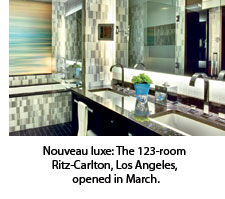
 Luxury hotels are the elite athletes of the hospitality industry, superstars with iconic status and loyal fans. In 2009, though, arguably one of the worst years on record for the U.S. hotel industry, luxury's muscle and resolve were sorely tested. Most properties struggled to maintain their status quo, and many found themselves burdened by financial woes on an unprecedented scale. Some players, industry experts predict, might never recover. Yet, as 2010 unfolds, executives of luxury chains are optimistic that the worst is over, and they are actively planning for the inevitable economic rebound.
"Last year, meetings was a dirty word, right up there with banker bonuses, and the AIG effect was on the news every night," says Frits van Paasschen, president and chief executive officer of White Plains, N.Y.-based Starwood Hotels & Resorts Worldwide. "Today, the paranoia and taboo around resort and luxury destinations for meetings is subsiding. For example, at the Phoenician in Scottsdale, the very definition of luxury, group room nights [for first quarter 2010] are up 32 percent from last year."
 Simon Cooper, president of the Ritz-Carlton Hotel Co., agrees with van Paasschen's assessment. Last year, he notes, group business at the Washington, D.C.-based luxury chain's North American hotels, which account for 40 percent of total revenue, literally dried up overnight.
"A big sucking sound was heard around September 2008, as we inhaled and held our breath when the financial crisis first broke," says Cooper. "Then the daily media and the political campaign against ‘luxury' meetings began, and financial companies, our biggest clientele, pulled all their meetings."
But, Cooper believes an upward trend is definitely afoot. Business from the financial sector is gradually making its way back onto Ritz-Carlton's books. "When we come out of the first quarter of this year, we will be well ahead of last year," Cooper told M&C in late February.
A mixed forecast In a generally awful
year for all segments of the economy, the luxury segment took an
especially major hit in 2009. According to Hendersonville, Tenn.-based
Smith Travel Research, RevPAR (revenue per available room) for the
luxury sector was in a continuous free fall, dropping 23 percent from
the previous year to a paltry $149.49 -- almost 7 percent worse than the
industry's average decline, and a low not seen since June 2004.
Likewise,
that segment's average daily rate declined by more than 16 percent,
almost 8 percent worse than the overall industry average, as the titans
resorted to wholesale discounting in a frantic effort to drive business.
"That type of pricing came at a tremendous cost to their rate
integrity," says Chad Church, industry research manager for STR.
In
late January of this year, STR issued its revamped 2010 U.S. hotel
industry forecast, which projected that while average occupancy would
continue to hold at 55 percent, there would be further declines in both
RevPAR and average daily rate. "It will take the better part of 2010 for
the hotel industry to regain its footing," says STR president Mark
Lomanno. "Momentum will build in the second half of 2010, which will
lead to the beginning of a turnaround in 2011."
However, adds
Lomanno, when improvement begins, it will come from the top down, with
luxury properties rebounding most rapidly. Still, he cautions, "It is
very safe to say it will take more than five years from now for most
segments to get back to previous high-water marks." For the luxury
sector, that last peak would be April 2008, when RevPAR reached a record
$207.66.
Among some other trends noted by hospitality experts
are the following.
• Bankruptcies will continue. The
number of hotels defaulting on their mortgage payments and filing for
bankruptcy in the past 18 months has skyrocketed. The situation is
particularly grim in the luxury sector, where much of the distressed
debt involves high-end resorts that either opened or underwent
multimillion-dollar renovations between 2005 and 2007, their grandiose
plans driven by dreams of tapping what was then a seemingly endless
revenue stream from the corporate meetings and incentives market.
According
to New York City-based mortgage data firm Trepp LLC, five times more
hotel loans were behind on their payments in 2009 compared with the
previous year. Furthermore, the number of properties falling into the
distressed category is going to get much worse, predicts hotel industry
lawyer Jim Butler, chairman of Los Angeles-based Global Hospitality
Group. "Right now, something like 2,000 hotel mortgages are in loan
default," Butler says, "and some people think that number could exceed
12,000 within the next year or two."
Among those swept into
Chapter 11 last year were The Greenbrier, a historic hotel with 721
rooms in White Sulphur Springs, W.Va., which spent approximately $50
million on renovations in 2007 in an effort to regain the coveted Mobil
Travel Guide (now the Forbes Travel Guide) five-star rating, and the now
infamous 400-room St. Regis Monarch Beach in Dana Point, Calif., which
hosted the well-publicized $440,000 AIG incentive in the fall of 2008,
and which subsequently drew a firestorm of media attention.
Faring
even worse, however, were the 164-room Dafuskie Island Resort &
Breathe Spa on Hilton Head Island, N.C.; the 348-room Ritz-Carlton, Lake
Las Vegas, in Hendersonville, Nev.; and the 180-room Four Seasons Great
Exuma Resort in the Bahamas. All were permanently shuttered.
•
More rooms are on the way. "More properties entering the market
will absolutely kill some hotels," says former Starwood veteran David
Scypinski, now a senior vice president with Los Angeles-based
third-party firm ConferenceDirect. "Nobody in their right mind wants
more product entering the market this year, but they are under
construction. You can't stop it."
However, the robust development
cycle of the past decade is drawing to a close, according to
Portsmouth, N.H.-based Lodging Econometrics, because lending for lodging
real estate has all but dried up. The number of projects under
construction is the lowest it has been in four years, and many have
stalled while in progress. The 3,800-room Fontainebleu Las Vegas, for
example, was scheduled to open in late 2009 but by last June was only 70
percent complete, with construction halted as cash-strapped developers
ran out of money and failed to find additional financing.
Still,
another 717 hotels, representing 82,620 rooms, will open in 2010, and
that's on top of the 146,929 new rooms the industry absorbed in 2009. Of
course, not all of these projects will be in the luxury sector, but
more overall supply will inevitably further weaken the diminished
demand, as already struggling hotels are forced to compete with shiny
newcomers (see chart, "Luxe Influx," below).
Major markets about to get
even more saturated with new product include New York City, which
captured the top development spot from Las Vegas in 2009, as well as
destinations like Atlanta, Dallas, Houston and Washington, D.C. Other
domestic debuts include four new properties from luxury brand JW
Marriott in Chicago, Miami, Los Angeles and San Antonio.
The Big
Apple, which added 30 new hotels last year, and which saw its RevPAR
drop by 28.1 percent, has an additional 73 properties under
construction. Several of those will open this year, including The James,
with 114 rooms; the 217-room W New York Downtown; and the 607-room
LEED-certified InterContinental Times Square, with 10,000 square feet of
meeting space. Another newbie, the 391-room Trump SoHo, with 10,000
square feet of event space, opened in February this year.
"It
will be interesting to see how well New York City absorbs all of the new
rooms coming online in 2010, given that room rates already are heavily
discounted," says Duane Vinson, vice president of content management at
STR.

• Services will continue to erode. With survival at
all cost being the prevailing business strategy of 2009, hotel operators
found themselves butting heads with owners more focused on dwindling
profit margins than upholding cherished brand standards. "The model for
managing hotels has shifted from an emphasis on service to a profit
mentality, and that is what is killing the luxury brands," says
Scypinski. "When the pendulum swings so far in one direction, like it
has now, it really leaves the other side in a lurch."
Last year
saw staffing levels reduced, and hotels quietly trimmed away at services
and amenities by reducing operating hours for room service, spas,
restaurants, executive lounges, retail outlets and concierge desks. Not
so subtle was the outright closing of the dining room at the
Ritz-Carlton, Buckhead, in Atlanta, one of only 16
five-diamond/five-star restaurants in the country, and Aujord'hui, the
14-year-old, five-diamond French restaurant at the Four Seasons Boston.
In
a 2009 financial filing, Chicago-based Strategic Hotels & Resorts,
which owns 20 luxury and upper-upscale properties, including the Four
Seasons Hotel Washington, D.C., and the Ritz-Carlton, Laguna Niguel, in
Dana Point, Calif., stated its contingency plans to reduce costs,
included "reducing, when possible, the implementation of certain brand
standards."
Likewise, Sunstone Hotel Investors, the San
Clemente, Calif.-based owner of some 38 hotels, including several
Fairmont, Hilton and Hyatt properties, acknowledged in a May 2009 filing
that "there are limits to how much our operators can reduce expenses
without affecting the competitiveness of our hotels."

Exactly how tough was it in 2009 for
hotels to reach the financial goals set by owners? Bethesda, Md.-based
Marriott International, which earned $1.1 billion in combined flat and
incentive management-fee revenue last year, said incentive management
fees -- the additional plum for achieving owners' financial goals --
were down 56 percent from 2008. In fact, only 77 of the chain's North
American hotels earned those fees. The rest, according to Arne Sorenson,
Marriott's president and chief operating officer, "did not achieve
their owners' priorities."
InterContinental Hotels Group's
Americas division, which recorded a 19 percent drop in profits for
2009, found itself in the precarious position of having to pay out $91
million to the owner of a group of its hotels because IHG had failed to
achieve the "guaranteed owners' priority returns."
• Demand
will gradually increase. Between mid-2008 and year-end 2009, STR
estimates there were 215,000 fewer hotel rooms sold every day than
during the preceding similar period. In dollar terms, that precipitous
decline in demand cost hotels $42 million in lost revenue.
There
does, however, appear to be a glimmer of hope. According to
Atlanta-based PKF Hospitality Research, 45 of the 50 cities for which
the firm produces local lodging forecasts are expected to enjoy an
increase in demand in 2010. "History tells us that extraordinary
declines lead to above-average recoveries, and such will be the case
with the current episode," says STR's Mark Lomanno. Some hoteliers say
the demand, which began in the last quarter of 2009, has continued to
build momentum into the early months of this year.
"We booked
400 more meetings for the first half of this year than we did for the
same period last year," says Christie Hicks, senior vice president,
global sales, for Starwood. "Financial companies, which did nothing last
year, are back on the road, and we are also seeing some good
business-training business." And bookings for same, she adds, are coming
in fast -- often in under four weeks. "Companies are definitely
loosening up their purse strings. We have seen the booking cycle shrink
by 20-plus days, and that bodes well for our industry," says Hicks.
In
early February, speaking at Marriott International's fourth quarter
2009 results teleconference, Arne Sorenson said domestic group room
nights, which had been down 3 percent year-over-year, finally were
coming back. "Corporate demand is picking up, and 2010 group booking are
ahead of our expectations," said Sorenson, who added that the upswing
in occupancy was greatest in the company's luxury sector.
•
Rates will climb back up. After months of watching their average
daily rates get chipped away, hotels are chomping at the bit for more
pricing power. While the strategy of rate discounting helped to drive
guests through their doors, it also cut into lucrative profit margins,
which not even aggressive cost-control measures could offset.
Marriott
International says it will get more aggressive on its room rate pricing
as demand picks up over the course of this year. "As occupancy builds,
we will have greater confidence in raising rates. And business meetings
coming back will replace the heavily discounted promotional business
that we relied on in 2009," says Sorenson.
Starwood's van
Paasschen echoes that sentiment. "I think at some point we'll see
occupancies hit a consistently high level, especially Monday through
Thursday, and rates will shoot back up,"
he predicts.
Like
its competitors, Ritz-Carlton was not immune to the desperate
discounting game that played out in 2009. The luxury icon, however, is
firmly committed to recapturing the higher rate ground in 2010 because,
insists Simon Cooper, price is intrinsically linked to brand perception
and brand integrity. "There was no doubt we had little pricing power in
2009, because of the growth in luxury," he says. "The segment added
another 9 percent in supply last year. It will take a while for pricing
to come back, but when demand comes back, so will rate integrity."
The new lures Over the past several months,
hotels have rolled out a slew of value-driven offerings and
specialty-booking programs aimed directly at generating corporate
meetings business. All of them, say hoteliers, were designed based on
feedback received from meeting planner clients. And planners, they say,
can expect to see even more launched this year.
• No
attrition? No problem. In 2009 Irving, Texas-based Omni Hotels &
Resorts launched its Zero Attrition program, which waived attrition
fees for meetings picking up a minimum of 150 room nights on peak night.
It was so popular, the program has been extended through the end of
2010, and room nights have been increased to 175 on peak night.
"This
program came about because planners told us they wanted to proceed with
their meetings but were concerned about their room pickup," says Tom
Faust, vice president, sales, for Omni. "Well, when you waive attrition,
the biggest concern is always, what will your pickup be relative to
what was booked? When we added up the numbers for the groups in the Zero
Attrition program, there was only a difference of 1 percent."
•
Tapping creativity from within. In February of this year, Starwood
launched Planner's Edge at more than 100 of the company's North American
properties. The program encourages planners to take advantage of
several different on-site themed specialty events that range in price
from $10,000 to $75,000. Offerings include a Wii tournament, a Bourdeaux
blending experience with a sommelier, and hands-on cooking courses or
sushi rolling with an executive chef.
"Planners were telling us
they were struggling with their budgets, and they didn't want to deal
with unwanted media attention if they held an event outside the hotel,"
says Dave Dvorak, CMP, vice president, catering and convention services,
for Starwood. "This gives them creative in-house choices, and it saves
them money because they don't have to spend on transportation."
•
Giving back to good causes. Some 18 months after its launch,
Ritz-Carlton's Meaningful Meetings still resonates with planners. The
program, which allows groups to have 10 percent of their total room
revenue split up and donated equally to a charity of their choice and
the Community Footprints Fund, the socially responsible program
sponsored by the luxury chain, has to date raised more than $1.4 million
for charities. "It is strongly supported and still alive and well,"
says Ritz-Carlton's Cooper. "I would say it has become the closing tool,
if a group is worried about whether they should be staying at one of
our luxury properties."
Ritz-Carlton also has developed several
volunteer activities that planners can incorporate into their meetings
program, from spending a day in the field with Habitat for Humanity to
harvesting crops from a hotel garden for donation to a local food
pantry.
 • Adding value. To help
capture group business in
2010, Starwood launched a companywide value-driven offer across all of
its chains that gives planners a 4 percent discount off their master
bill and 2,500 Starpoints for every 25 room nights -- up to 100,000
points that can be used toward a future meeting at another Starwood
property. And early birds who booked business between Jan. 5 and April
30 of this year were rewarded with another 1 percent off their master
bill, for a total of 5 percent, plus a free meeting room.
• Adding value. To help
capture group business in
2010, Starwood launched a companywide value-driven offer across all of
its chains that gives planners a 4 percent discount off their master
bill and 2,500 Starpoints for every 25 room nights -- up to 100,000
points that can be used toward a future meeting at another Starwood
property. And early birds who booked business between Jan. 5 and April
30 of this year were rewarded with another 1 percent off their master
bill, for a total of 5 percent, plus a free meeting room.
To
direct business to its resorts, in particular, Starwood is offering
groups the same deal as the early birds, plus added incentives like a
complimentary reception, for events occurring through December 2011.
"Travel
is essential to growing business and an essential part of what is going
to drive this recovery," says Frits van Paasschen. "Meeting planners
want programs that are streamlined, efficient and budget friendly,
especially now that companies are shifting their focus to once again
growing their business and profitability. We are working to provide
added value to get them back on the road."
Web Exclusive For an incisive Q&A with Dave
Akin, director of marketing for the Four Seasons Resort Scottsdale
(Ariz.) at Troon North, go to mcmag.com/webexclusives