Giveaway Trick
To save a little money and still build a decent goody bag, Jim Rye of the site-selection firm Rymark International suggests asking invited vendors to bring giveaways they might have in their supply closets. "Everybody has leftovers," he says. "Don't make it mandatory, but say, hey, send me 100 of these and I'll put them in the goody bag. They like it because it promotes their goods or services, as well."
 When battling budget woes, some might argue that a golf event is a perk that can be skipped. And that could be true -- or it could be a very bad business decision. Consider the following scenarios.
• The sales team's relationships depend on the hours of uninterrupted nurturing time that a friendly outing allows.
• Cutting the event also cuts a major opportunity to garner new clients or solidify existing client relationships in this tough year.
• Canceling the tournament eliminates the chance to lure much-needed donations back to the organization or a designated charity.
For these solid reasons -- and many others -- the game should go on.
The ROI sand trap
When evaluating the worth of hosting any meeting, solid return on investment makes the best argument. In the scheme of things, measuring golf outings with a charity element is relatively simple. Some parts of the cost of the event are tax write-offs; the attendee response and the amount raised for the charity through entrance fees can dictate whether it is worthwhile to hold again. Getting sponsors to underwrite the tournament gives them the opportunity to look good and cuts your organization's expenses.
But when planners are asked about measuring the ROI of a corporate golf outing, where increased sales is the overt or unspoken objective, the conversation can get a little cloudy.
"I don't think you can say, 'If we do a golf tournament, we'll get x amount of business over time,' " says Jim Rye, president of Rymark International, an Orlando-based site-selection and event management company. In partnership with M&C, Rye hosts one golf and one ski trip each year, bringing his sales team, meeting supplier representatives and meeting planners. While he hasn't laid out the details in an Excel spreadsheet, Rye says he knows about 85 percent of his business comes directly or indirectly from those two events.
For his part, ROI specialist Jack Phillips, Ph.D., refutes the claim that a golf event's ROI can't be measured. As chairman of the Birmingham, Ala.-based ROI Institute and co-developer of the Phillips ROI methodology, he has studied the outcome of every kind of meeting imaginable, including golf outings.
In the book, Proving the Value of Meetings & Events, written with Monica Myhill and James B. McDonough, Phillips details the case of a CEO who was speaking at an annual shareholders' meeting when he was asked about the value of the company's annual golf tournament. Unprepared to answer the question, he came away from the meeting determined never to be in that position again, and he had the event analyzed.
The evaluation showed that 87 percent of the guests said their interaction with the company's executives and sales personnel had a direct and positive impact on whether they would continue to do business with the organization. Also, the study found that the company gained $3 for every $1 spent on the outing. "They did end up having a positive ROI," says Phillips. "I think there are a lot that do. It's a difficult thing to monitor, but it can be done."
Getting feedback
The process of measuring a corporate golf event starts with subtly setting up the attendees to expect some follow-up questions. Phillips stresses the importance of that subtlety, since most golf events begin with the organizers telling players they should just go out and have fun, rather than positioning the event as a chance to talk business. Without laying the proper groundwork, it's hard to go back to the attendees and ask them pertinent questions to calculate the worth of the outing.
The ultimate goal, Phillips notes, is to learn from players "the extent to which the increase in sales you are getting from their company is connected to your golf event."
Phillips outlines a four-part process for evaluating an outing. Level one sets the stage, laying out the messages to be delivered during the event and how the host organization should be perceived as the guests leave at the end of the day. Do you want the company to be seen as selling quality service? Do you want to be seen as an innovative company or as a long-term player in the market?
You also should decide in advance how long after the outing you will measure the guests' response -- whether you'll be looking at sales three, six or nine months later, or at contracts signed by clients who attended or at services sold to them.
Level two is determining if those messages were delivered, which can be accomplished by having salespeople ask the right questions of their clients during cocktail-hour chats or other low-key networking moments on the golf cart or at a meal function held after the event.
Level three is the application: "Did they do what you wanted them to do?" asks Phillips. "Did they check out your products, welcome a sales visit or a briefing?" The fourth part is the tangible impact. Did they buy more? Did sales go up? Was a contract signed?
"It's an expensive process," says Phillips, as hiring a consultant to do the study could cost $15,000 to $20,000. "But if I as an executive wanted to know the real worth of the event, I'd go down this path. If you don't know the answer, you're setting yourself up for some criticism."
Anatomy of a Sales Outing
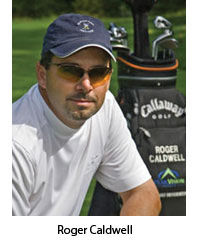 Roger Caldwell,
 president of Mission, Kan.-based Great Golf Events, offers the following blueprint to get the most out of a $15,000-to-$20,000 outing for up to 40 people.
Perfect the pairings. Ideally, each team should be made up of a salesperson, two prospects and an existing client who can talk up the practical application of the organizer's products or services.
Offset costs. Caldwell recommends approaching three or four company suppliers to help pay for the event. Allow the sponsors to bring a group of eight people, made up of their own clients and salespeople. You can also offer vendors the opportunity to play with the CEO or your own director of sales for a price. "Maybe this way, you'll put out only $5,000," Caldwell says.
Don't skimp on the prizes. Give the contest and tournament winners unique, quality items, such as official PGA memorabilia, customized with the name and date of the event, the host organization's logo and the award name (first place, closest to the pin, etc.).
Play to the crowd. Make sure the executives on hand meet all the current and prospective customers. At one event Caldwell ran for a major software company, the vice president of sales spoke to every single attendee and was prepared with questions specific to the business needs of each organization represented.
The intangibles
Still, some executives don't want to examine whether the event is producing a positive or negative ROI; they're convinced of the outing's value as a relationship-building opportunity. As Tom Pasha, president of St. Cloud, Fla.-based Contact Planning and executive director of the Golf Event Managers Association (golfeventmanagers.com), puts it: "You'll never learn more about a person than you will after three to five hours on a golf course."
Jim Rye points out that much of the success of a corporate golf event depends on the effort put out by those from the host organization who take part. "How often have I seen three sales guys play together and the customer plays alone?" he asks. "Somebody needs to make sure the right people are together -- that the salesperson shares a cart with the client. That's where the business gets done."
The other beauty of playing golf with potential clients is seeing how they behave in tough situations. "You get to see how people react if they hit a bad shot," says Roger Caldwell, president of Great Golf Events in Mission, Kan. "It gives you an idea of how they will be if you deal with them long-term." He adds, "It's such a great, nonthreatening environment. It's not going to win you the business, but it can help move the deal along."
The incentive side
The perception of the incentive golf trip definitely has changed this year, but such events still are taking place as organizations move away from pure awards outings and adding clients to the guest list instead of just the winners. This changes the profile of the event from a pure funfest to one that supports more obvious business objectives.
"Companies have moved the threshold up, so a smaller number of people win the trip," says Pasha. "We have one insurance company client that used to host more than 20 events a year. They increased the threshold for the salespeople to get to the event and increased the number of clients they invited. They now do 10 very good events with a small number of highly qualified salespeople and a larger number of qualified clients. They got a huge return on investment."
Still, pure incentives do exist. And where there's a desire to reward, there's no reason not to offer time on the links. "It doesn't make sense to cancel the golf element," says Rye of Rymark. "It's one of the least expensive incentive elements out there."